
Subcutaneous injection is a clinical procedure that the wellness market routinely teaches as casually as how to apply a face cream. The technique is simple but unforgiving. Three details (route, syringe, and site rotation) account for almost every infection, lipohypertrophy nodule, and inconsistent-result complaint that ends up on peptide forums. This guide covers how to inject peptides safely in 2026, framed as the procedural floor a protocol assumes rather than as a clinical recommendation in itself.
Subcutaneous is the only correct route for peptide self-injection, never intramuscular#
Almost every peptide a self-injector encounters in 2026 is formulated for subcutaneous (SC) administration. That is not a stylistic choice; it is the route the molecule's pharmacokinetics were optimised against. Subcutaneous tissue (the layer of fat just beneath the skin and above the muscle) acts as a slow-release reservoir; the peptide absorbs into the systemic circulation gradually over hours, which is what gives weekly GLP-1 dosing its half-life curve and what makes growth-hormone secretagogue protocols hit physiologic timing windows.
Intramuscular (IM) injection delivers the molecule directly into muscle. Absorption is faster and the peak is sharper, but the duration is wrong for nearly every peptide on the market and the technique is meaningfully more painful, more invasive, and associated with more bleeding events. Even more importantly the syringe is different (longer needle, larger gauge), the angle is different (90 degrees always, no pinch), and attempting IM with an insulin syringe usually lands the dose in the SC tissue anyway, just deeper than intended and with a higher risk of bruising.
The FDA-approved labels for the GLP-1 peptide medicines are explicit on this point. Wegovy, Ozempic, and the broader subcutaneous peptide injection class are administered "for subcutaneous use" in the abdomen, thigh, or upper arm. Research-only peptides (BPC-157, TB-500, Ipamorelin, GHK-Cu in injectable form, the rest of the catalogue) follow the same SC-only convention, both because their preclinical data was generated subcutaneously and because no clinical evidence exists to support an alternate route.
A practical heuristic: if a forum protocol or peer recommendation has the user injecting "deeper" or "into the muscle for faster effect," the protocol is almost certainly wrong. Peptide injection technique is built around SC, not around personal preference.
Insulin syringes are the right tool, tuberculin syringes are not interchangeable#
The standard tool for peptide self-injection is an insulin syringe with a permanently attached fine-gauge needle. Specifically: U-100 (one hundred unit) graduation, 29 to 31 gauge needle, 5/16 to 1/2 inch needle length, and either a 0.5 mL (50 unit) or 1 mL (100 unit) barrel depending on dose volume.
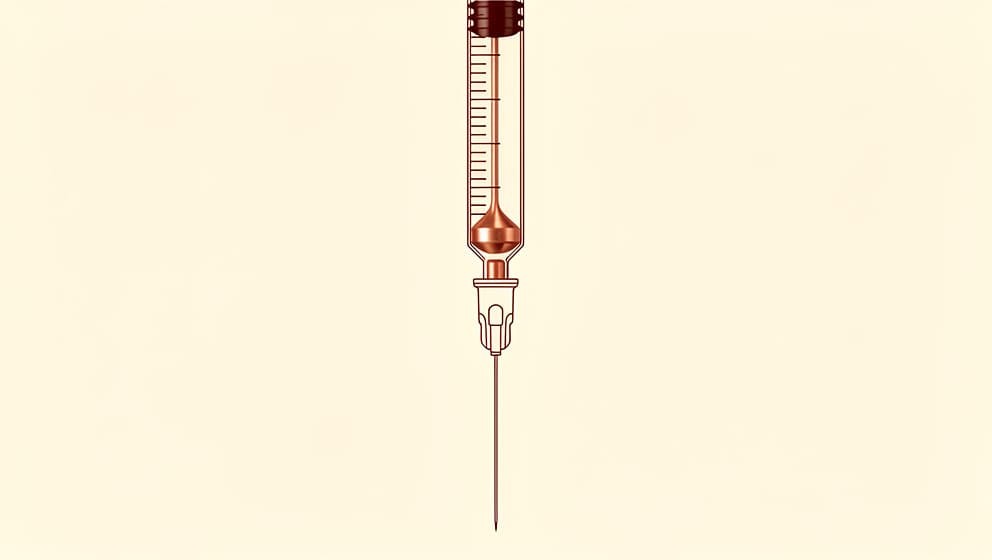
Insulin syringes are the right tool for three reasons. First, the gauge is fine enough that the needle insertion is barely felt, which matters for daily or twice-daily injection schedules where pain accumulates over weeks. Second, the needle is integrated and pre-attached, eliminating the contamination and dosing-loss steps that come with attaching a separate needle to a Luer-lock barrel. Third, the U-100 graduation maps neatly onto the small volumes peptide doses live in: a 250 mcg BPC-157 dose drawn from a 5 mg vial reconstituted with 2 mL of bacteriostatic water is exactly 10 syringe units, which the Klarovel reconstitution calculator computes for any vial size.
Tuberculin syringes look superficially similar but are not interchangeable. Tuberculin needles are 26 to 27 gauge (thicker), 1/2 to 5/8 inch in length (longer), and the syringe is graduated in mL not insulin units. The combination is designed for intramuscular administration of small-volume vaccines and similar IM-route preparations. Using a tuberculin syringe for peptide injection introduces unnecessary needle pain, increases the chance of unintentional IM placement (which delivers the wrong PK), and complicates the dose math when the conversion is between mL and insulin units. The insulin syringe peptides protocols use is the only sensible choice for SC self-administration; there is no scenario where a tuberculin syringe is the better tool.
The needle length question deserves a one-sentence answer: 5/16 inch (8 mm) is the right default for most adult body types, with 1/2 inch (13 mm) reserved for individuals with a thicker subcutaneous fat layer who would otherwise risk hitting a fibrous-tissue plane at 5/16. Both lengths are subcutaneous-appropriate; both are clearly distinct from the longer 1 inch and 1.5 inch needles used for IM administration.
Four primary sites, abdomen, anterior thigh, upper arm, upper glute, and the abdomen is the gold standard#
Treat this as a subcutaneous peptide injection guide read in order, start to finish. This page is the end-to-end sequence. Two companion guides go deeper than a walkthrough should: the site-by-site protocol guide covers absorption and rotation per site, and the injection technique primer covers needle gauge, angle and aseptic handling.
Sites are not arbitrary. The four primary sites the FDA-approved peptide labels and the broader clinical literature converge on are the abdomen, the anterior or lateral thigh, the posterior upper arm, and the upper outer glute. Each has different absorption pharmacokinetics; the abdomen is the gold standard for most peptide classes.
Abdomen: stay at least two inches (5 cm) from the navel, work in any direction from there. The abdominal subcutaneous tissue has the highest adipocyte-to-fibrous-tissue ratio of the four sites and the most consistent capillary density across body types, which is why peptide-injection pharmacokinetics studies show the most predictable absorption curves with abdominal dosing. Research has shown that the abdomen typically delivers faster onset and tighter inter-individual variability for SC peptides and proteins compared to thigh or upper arm.
Anterior or lateral thigh: the front or outer surface of the upper thigh, mid quadrant, well away from the knee and the hip joint. Easier to reach for self-injection than the abdomen for some users; absorption is slightly slower and slightly more variable, which matters less for weekly-dosed peptides than for daily-dosed ones.
Posterior upper arm: the fatty area on the back of the upper arm, behind the triceps. Hardest of the four sites to reach without help (most users cannot pinch a fold of triceps with the same hand they inject with), so this site is more practical for users with a partner or for occasional rotation rather than as a primary daily site.
Upper outer glute: the upper outer quadrant of the buttock, well away from the sciatic nerve which sits deeper and more medially. Reasonable absorption, easy to reach for self-injection if the user contorts slightly, and useful as the fourth quadrant in a rotation cycle.
The non-obvious detail: research suggests absorption variability is higher when users switch between body regions across consecutive doses than when they rotate within the same region. For consistency-sensitive applications (insulin, GLP-1 weekly dosing, growth-hormone secretagogue cycles where the dose response is being titrated against subjective feedback), the practical implication is to keep an entire cycle within the same region (e.g., abdomen-only) and reserve cross-region rotation for when the goal is just to give a region a rest from frequent dosing.
Site rotation across 8 to 12 zones is what prevents lipohypertrophy#
Repeated peptide injection into the same exact spot, even with sterile needles and correct technique, causes lipohypertrophy: localised overgrowth of subcutaneous fat tissue accompanied by fibrous changes that reduce blood flow and produce a visible or palpable nodule. Lipohypertrophy is the most common chronic complication of long-term self-injection and is the single complication peptide injection rotation discipline is built around.
The clinical literature on insulin (which has the longest peptide-self-injection track record by an order of magnitude) is unambiguous: rotation discipline is the difference between clean tissue and progressive lipohypertrophy. Studies have shown that lipohypertrophy is far more common in users who do not rotate systematically than in users who do, and the reduction in absorption predictability is associated with corresponding swings in clinical effect.
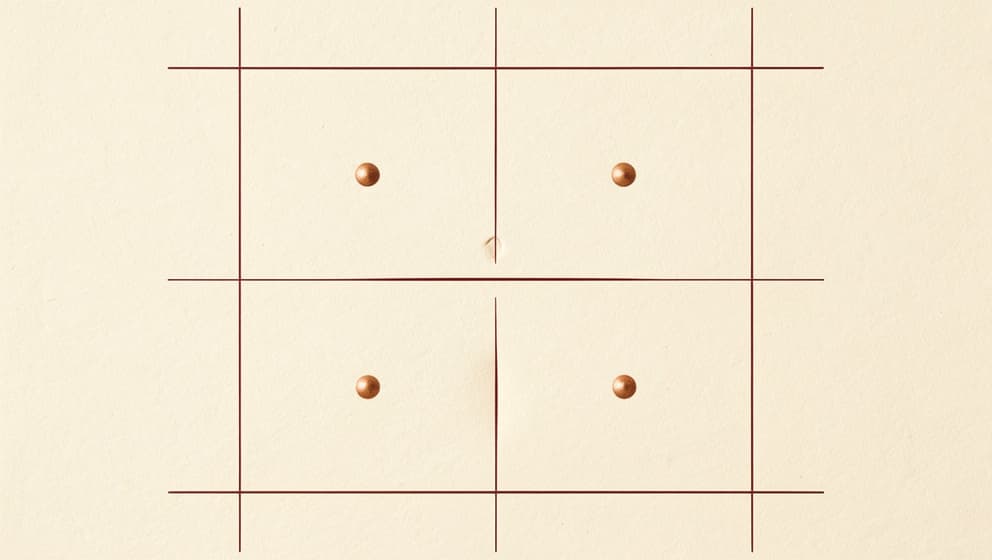
The practical rotation system most insulin-trained clinicians teach, and the one that translates cleanly to peptide protocols, is the quadrant method:
- Divide each chosen region into a grid of 8 to 12 distinct zones, roughly an inch apart in each direction
- Use a different zone for each consecutive injection
- Within a zone, vary the exact insertion point by at least 0.5 inch from the prior dose
- Do not return to the same exact spot for at least 1 to 2 weeks
For an abdomen-only peptide injection rotation, that translates to four quadrants (upper left, upper right, lower left, lower right) cycled in order, with the user mentally tracking which zone within each quadrant was last used. A small notebook or a phone-note log resolves the memory question if rotation is harder than it sounds in practice.
The two early signals that rotation has slipped are: a visible bump or thickening at one site that does not resolve within 24 to 48 hours, and a noticeable reduction in injection-site sensation (because the fibrous changes affect the local nerve density). When either appears, the answer is to abandon that exact spot for at least four weeks and let the tissue normalise.
The injection itself: angle, pinch, slow inject, 5 to 10 second hold#
Step by step, applicable to every SC peptide whether approved (Wegovy, Ozempic, Mounjaro, Tesamorelin) or research-only:
-
Wash hands with soap and warm water; dry on a clean towel. The single highest-yield infection-prevention step in the entire protocol.
-
Reconstitute the vial if it is not pre-mixed (most lyophilised research peptides are not). Klarovel's reconstitution guide covers the math, vial preparation, and bacteriostatic-water selection. Do not skip the bacteriostatic step in favour of plain saline; the bacteriostatic water guide explains why.
-
Draw the dose into a fresh, single-use insulin syringe. Compute the syringe-unit volume from the vial concentration; the peptide calculator handles the conversion for any vial size.
-
Select the site per the rotation log. Inspect the area for any redness, swelling, hardness, or tenderness from a recent injection; if any of those are present, choose a different zone.
-
Swab the site with a 70 percent isopropyl alcohol pad, work in a single outward circular motion, and let the area air-dry for 10 to 15 seconds. Injecting through still-wet alcohol stings, can drag residual alcohol into the SC tissue, and may impair local peptide stability.
-
Pinch a fold of skin and subcutaneous fat between thumb and forefinger of the non-dominant hand. The pinch lifts the SC tissue away from underlying muscle and gives the needle a clean target.
-
Insert the needle at 90 degrees if at least one inch of pinchable fat is present, or at 45 degrees if the SC layer is thinner. Both the FDA-approved Wegovy label and the Johns Hopkins Arthritis Center patient guide endorse this angle decision logic.
-
Push the plunger steadily at a slow constant rate. Rapid plunging causes more discomfort and increases the chance of medication backflow at the puncture point.
-
Hold the needle in place for 5 to 10 seconds after the plunger has bottomed out. The Wegovy and Ozempic instructions for use specify this hold window because withdrawing immediately leaks a small fraction of the dose at the puncture; 5 to 10 seconds is enough for the SC tissue to seal around the needle track.
-
Withdraw the needle at the same angle it entered. Apply gentle pressure with a fresh cotton ball or a clean alcohol pad if a small amount of bleeding appears. Do not rub the site; rubbing spreads the bolus unevenly through the tissue and can cause more bruising than the puncture itself.
-
Discard the syringe in a designated sharps container immediately. Never recap a used needle (the recap step is the most common stick-injury cause in self-injection); never reuse a syringe.
A small bump, mild redness, or a brief sting at the injection site is normal and resolves within an hour. Persistent redness, warmth, fluctuant swelling, fever, or a hardened lump that does not resolve within 48 hours are signals to stop and consult a clinician.
In Norway, peptide self-injection sits under research-only import rules and apotek-routed sharps disposal#
The Norwegian framework for SC peptide self-injection is structurally different from the US one. Under DMP rules, almost every research-positioned peptide arrives in Norway as an unregistered medicine subject to forskrift 2004-11-02-1441 § 3-2 enforcement. Tolletaten intercepts and destroys postal shipments of unregistered peptides at the border regardless of how the package is labelled, which means the upstream supply chain that the peptide injection technique guide above assumes (the user has the vial in hand) is itself the regulatory grey zone Norwegian self-injectors operate in. The full picture sits in Klarovel's guide on the legal status of peptides in Norway.
For approved peptide medicines (Wegovy, Ozempic, Mounjaro, Tesamorelin under the Egrifta brand for HIV-lipodystrofi), the supply chain is the Norwegian apotek system on resept, and patient education on injection technique is provided by the prescribing clinician and the Felleskatalogen monograph. The technique steps are identical to the SC walkthrough above; the difference is the regulatory and clinical-supervision frame around it.
Equipment is widely available. Apotek1's injection-equipment catalogue sells insulin syringes, BD insulin pens, alcohol pads, and sharps containers without resept. Most apotek branches accept used sharps containers as klinisk risikoavfall (clinical risk waste) and route them through Norway's medical-waste incineration framework rather than household waste; the DMP guidance on opened-medicine handling is the authoritative reference for the disposal side. The practical advice for Norwegian self-injectors: pick up a small sharps container at any apotek when buying syringes, fill it, and return it sealed to the same apotek when full.
Beyond equipment and disposal, the regulatory frame matters because peptide self-injection in Norway carries no malpractice or supervision umbrella. There is no clinician monitoring titration, no IGF-1 or HbA1c retest schedule built into the protocol, and no reporting infrastructure for adverse events. The honest framing for a Norwegian reader is that peptide injection technique discipline (this guide) handles the procedural risk; it does not handle the clinical-supervision gap. Klarovel does not sell, source, or fulfil peptides. How you obtain the compounds covered by this technique guide is outside the platform.
Where injection skill sits in the broader protocol#
Knowing how to inject peptides is the procedural floor of any SC self-administration protocol. It does not, on its own, make a protocol clinically appropriate. Reconstitution, dose calculation, contraindication screening, and clinical supervision are the upstream layers; regulatory and acquisition framework is the layer above that.
Klarovel's editorial position is that the technique itself is straightforward enough to teach in a single guide (this one), but the surrounding clinical and regulatory questions are not. Technique is only one layer of what peptide therapy involves, which spans screening, dosing, cycling, and monitoring. For protocol-level structure, the questionnaire maps health profile and goals to evidence-supported peptide options with explicit screening for contraindications. For the dose math the technique guide assumes is already done, the peptide calculator handles any vial size and target dose. For the regulatory framing on research-positioned products, the disclosures page explains the Klarovel partner-catalog model.
Peptide self-injection is a clinical procedure performed at home. Treating it as a clinical procedure is the line that separates protocol discipline from forum-protocol drift.
Frequently asked questions
Keep reading
Wegovy Pill Dosage Chart: Why 25 mg Is Not a Misprint
The oral Wegovy ladder runs 1.5 to 25 mg daily. The injection runs 0.25 to 2.4 mg weekly. Same molecule, different scale, and the two get conflated constantly.
MOTS-C peptide dosage chart: doses, cycles and goals
A MOTS-C peptide dosage chart with the starting dose, upper bound, frequency, timing and cycle length the research catalog supports, plus goal-by-goal notes.
Wolverine peptide stack: definition, doses and duration
The Wolverine peptide stack means BPC-157 plus TB-500. Some clinics extend it to four compounds. Dosing tables for both readings, and the cycle length.