

Sermorelin is a synthetic copy of the first 29 amino acids of growth hormone-releasing hormone (GHRH). Injected under the skin, usually at bedtime, it signals the pituitary to release its own growth hormone rather than replacing it. The FDA approved it as Geref for children with growth hormone deficiency; the maker discontinued Geref in 2008, and the FDA later determined it was not withdrawn for reasons of safety or effectiveness (Federal Register, 2013). In the US today sermorelin is available only as a compounded drug, prepared on prescription by 503A pharmacies. Adult use is off-label and rests on small trials: the best controlled one, in 19 adults aged 55 to 71, raised nocturnal GH and IGF-1 within two weeks. This guide covers the pharmacology, that evidence, dosing and the limitations, from primary sources rather than clinic marketing pages.
Key takeaways#
- Sermorelin is the first 29 amino acids of endogenous GHRH and retains full biological activity at the pituitary GHRH receptor.
- Plasma half-life is roughly 11-12 minutes after subcutaneous injection, but the resulting GH pulse persists for 2-4 hours and IGF-1 shifts occur over weeks.
- Adult controlled data are limited. The key trial gave 19 adults aged 55-71 a close sermorelin analog for 16 weeks: GH and IGF-1 rose in both sexes, lean mass and insulin sensitivity improved in men only.
- The most common adverse effect is injection-site reaction, reported in roughly 1 in 6 patients in the original clinical trial population.
- In the US sermorelin is a prescription drug prepared by compounding pharmacies; there is no marketed FDA-approved product. Klarovel does not sell sermorelin or any other peptide.
Sermorelin is a truncated GHRH, not a growth-hormone substitute#
Sermorelin acetate is a synthetic peptide corresponding to the biologically active N-terminal region of human growth hormone-releasing hormone. Sermorelin, a 29 amino acid analogue of human growth hormone-releasing hormone (GHRH), is the shortest synthetic peptide with full biological activity of GHRH. The full endogenous ligand is 44 amino acids long, but the receptor-binding and signalling activity sits entirely in residues 1-29, which is why the truncated molecule reproduces the physiological effect.
Mechanistically, sermorelin binds the GHRH receptor (a G-protein-coupled receptor) on anterior pituitary somatotrophs. Receptor activation raises intracellular cAMP, which drives synthesis and pulsatile release of endogenous growth hormone. Intravenous and subcutaneous sermorelin specifically stimulate growth hormone secretion from the anterior pituitary. Because the pituitary remains under normal somatostatin feedback, sermorelin cannot force GH levels arbitrarily high the way exogenous recombinant GH can. That built-in ceiling is the pharmacological argument for the whole GHRH-analog class.
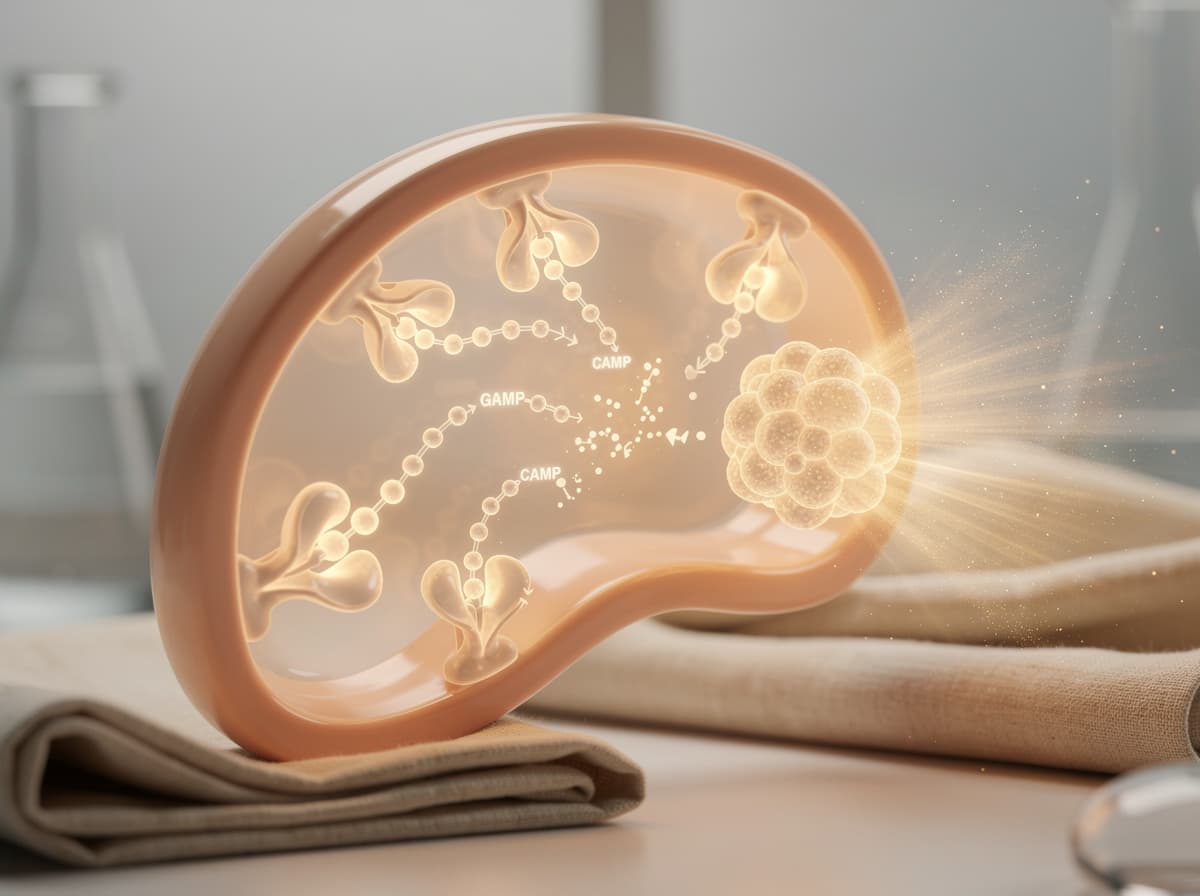
The regulatory history matters for anyone trying to interpret the literature. Sermorelin was approved in the US as Geref, for diagnosing and treating growth hormone deficiency in children, and discontinued by its manufacturer in 2008. In 2013 the FDA determined that Geref was not withdrawn for safety or effectiveness reasons (Federal Register, 2013). There is no USP monograph and no marketed approved product, so US patients get sermorelin as a compounded drug from 503A pharmacies on an individual prescription. Outsourcing facilities (503B) may not compound it in bulk, because it is not on the 503B bulks list (University of Maryland report for FDA). Norwegian and broader EU access is more restricted and requires a licensed prescriber.
The half-life is short, but the biological effect is long#
Sermorelin has one of the shortest plasma half-lives of any peptide in circulation. In the reference pharmacokinetic dataset, after subcutaneous administration of 2 mg to healthy volunteers, peak concentrations were reached in 5-20 minutes, with the half-life of sermorelin was short, 11-12 min after either intravenous or subcutaneous administration. Absolute bioavailability by the subcutaneous route is roughly 6%.
This is the single most misunderstood aspect of the compound. The plasma half-life describes how fast the peptide molecule is cleared, not how long the downstream effect lasts. The GH pulse triggered by a single injection persists for several hours because it takes time for the pituitary to release stored granules and for the liver to translate that GH signal into circulating IGF-1. IGF-1 itself has a plasma half-life of roughly 12 hours because most of it circulates bound to IGFBP-3 in a ternary complex.
The practical consequence: repeat dosing within a 24-hour window does not accumulate the peptide, but it does risk desensitising the receptor. That is why almost every adult protocol converges on once-nightly dosing rather than split doses.
Adult clinical data are modest, targeted, and older than most people assume#
The pediatric evidence for sermorelin in idiopathic growth hormone deficiency is solid and long-standing. The adult evidence is thinner, and honesty about that gap matters.
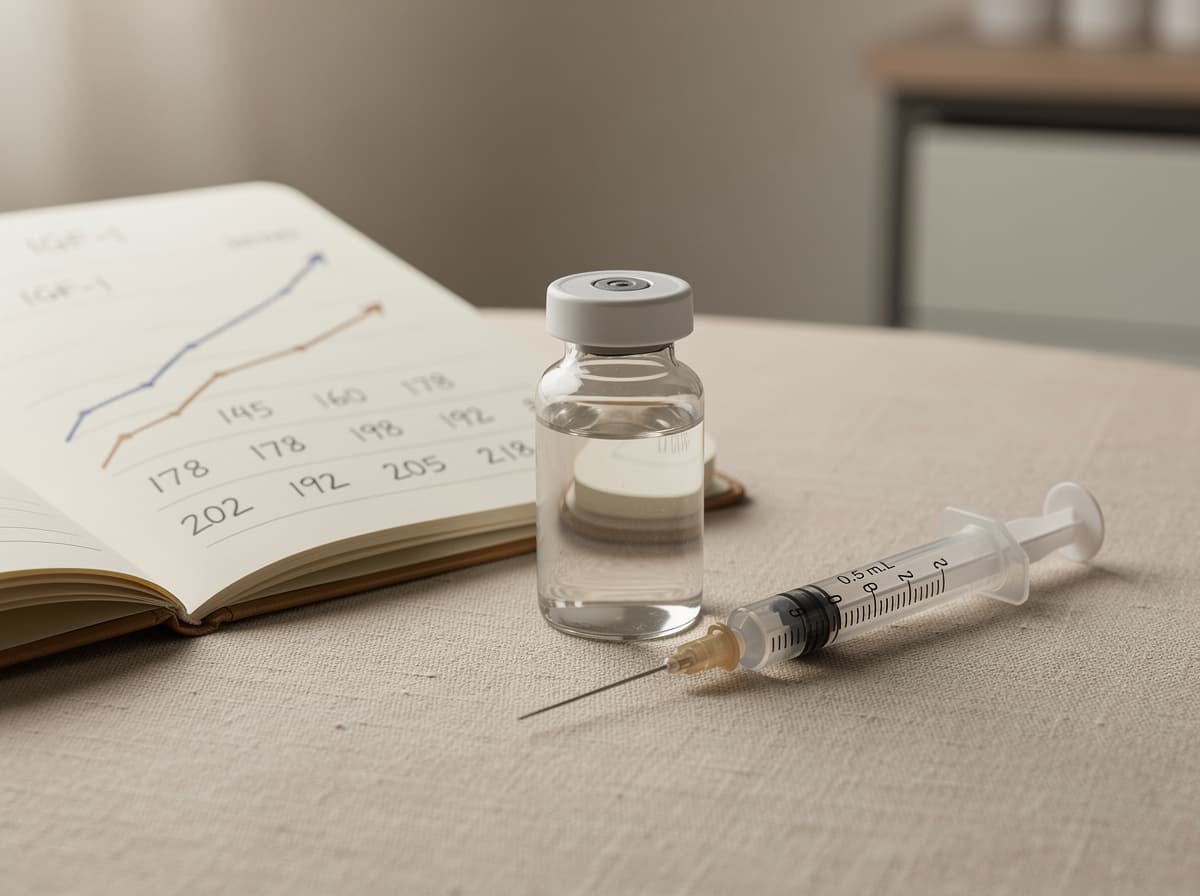
The single most-cited adult trial is Khorram et al. (1997), a single-blind, randomized, placebo-controlled study in 19 adults aged 55 to 71: four weeks of nightly placebo injections, then 16 weeks of nightly [Nle27]GHRH(1-29), a close sermorelin analog, at 10 mcg/kg (Khorram et al., JCEM 1997). Nocturnal GH rose in both sexes, and IGF-1 and IGFBP-3 rose within two weeks, stayed elevated for about 12 weeks, then drifted back toward baseline by week 16. Skin thickness increased in both sexes; lean body mass, insulin sensitivity, general well-being and libido improved in men only. The only adverse effect was a transient rise in blood lipids that resolved during the study. The analog is not chemically identical to sermorelin, but it acts on the same receptor and is the closest controlled adult data the class has.
Preclinical data points and small open-label series report similar directional effects: modest lean-mass gains, small reductions in visceral fat, and subjective improvements in sleep and recovery. Effect sizes are consistently smaller than what recombinant GH produces, which is the expected trade-off for preserving physiological feedback. The overall body of modern adult randomised evidence remains limited, and much of the current prescribing rationale rests on mechanism plus extrapolation from tesamorelin (a longer-acting GHRH analog with FDA approval for HIV-associated lipodystrophy).
Research has shown that IGF-1 response is the most tractable objective marker: it is stable enough to track month-over-month, it reflects integrated GH exposure, and it is what most compounding-pharmacy clinicians target.
Dosing math and lab monitoring#
The Geref label dosed by body weight: a single 1 mcg/kg intravenous dose for diagnostic testing, and 30 mcg/kg subcutaneously at bedtime for treating children. Adult protocols use fixed nightly doses instead. Klarovel's curated range starts at 100 mcg a night for someone new to peptides (target 150 mcg, ceiling 300 mcg) and runs to 300-500 mcg for experienced users, injected subcutaneously at bedtime; many protocols use five nights on and two off to limit receptor desensitization. This is a reference range, not a prescription, and sermorelin itself must come from a licensed prescriber.
Timing matters more than most users realise. Endogenous somatostatin (the GH-inhibitory signal) is at its lowest during the first 90 minutes of slow-wave sleep, so a bedtime injection lands on a pituitary that is maximally responsive. Injecting after a high-carbohydrate meal blunts the pulse because postprandial insulin and free fatty acids suppress GH release. A reasonable rule is to inject 60-90 minutes after the last meal, immediately before sleep.
Baseline labs before starting: IGF-1, fasting glucose, HbA1c, TSH, and (for men over 45) PSA. Recheck IGF-1 at 6-8 weeks. Target IGF-1 remains in the age-appropriate reference range; pushing above the upper reference limit is where the theoretical risk profile changes. The peptide dosing calculator handles the reconstitution volume and unit-conversion math, which is where most self-directed users make errors.
Sermorelin vs CJC-1295, ipamorelin, and tesamorelin#
Sermorelin is the oldest molecule in the GHRH-analog category and it is not necessarily the best choice for every use case. The comparison worth making:
CJC-1295 (without DAC) is a modified GHRH analog with a slightly longer half-life than sermorelin. Paired with ipamorelin (a selective GH secretagogue that hits the ghrelin receptor), it produces a larger and more sustained GH pulse than sermorelin alone. The two peptides target complementary receptors, which is why the combined response is amplified rather than merely additive. This stack has become the default in most adult peptide clinics.
CJC-1295 with DAC extends the half-life to days by binding albumin, producing sustained rather than pulsatile GH elevation. That is pharmacologically further from physiology, and its adult clinical development was interrupted. Preliminary evidence exists but the safety database is thinner than sermorelin's.
Tesamorelin is the only GHRH analog with a current FDA approval (HIV-associated lipodystrophy; sermorelin's own approval, as Geref, ended with its 2008 discontinuation) and by far the strongest RCT dataset. It is also considerably more expensive.
Sermorelin's remaining edges are cost, decades of accumulated safety data at the doses used, and the argument that its short half-life produces the most physiological pulse pattern of anything in the class. See the how-it-works page for how Klarovel structures the protocol layer around these trade-offs, and the related tesamorelin comparison guide for a deeper head-to-head.
Safety profile and honest contraindications#
Sermorelin has one of the cleaner short-term safety profiles in the peptide space, which is part of why it has survived nearly four decades of use. In the original clinical trials, the most common treatment-related adverse event was local injection reaction (pain, swelling, or redness), occurring in roughly 1 in 6 patients. Other treatment-related adverse events had individual occurrence rates of less than 1% and include: headache, flushing, dysphagia, dizziness, hyperactivity, somnolence and urticaria.
Studies have shown that these effects are typically transient and manageable with rotation of injection sites and standard injection technique. Although rare adverse events such as nausea, facial flushing, and redness at the injection site were noted, sermorelin appears to have a very favorable safety profile. Future large, longitudinal studies are needed to better characterize sermorelin's potential complementary role in management of hypogonadal males and men with SH.
The contraindications that actually matter:
- Active malignancy or history within five years. IGF-1 is a growth factor and has been associated with proliferation of hormone-sensitive tumours in preclinical models. This is a mechanistic caution rather than a demonstrated clinical harm, but it is the standard exclusion criterion.
- Uncontrolled diabetes or significant insulin resistance. GH is counter-regulatory to insulin. Small increases in fasting glucose during the first weeks are common; large ones warrant reassessment.
- Pregnancy and lactation. No adequate human safety data.
- Untreated hypothyroidism. Blunts the GH-IGF-1 response and should be corrected first.
Long-term safety data past 12 months in healthy adults are limited. Anyone running longer cycles should treat annual comprehensive metabolic and IGF-1 panels as non-negotiable.
Direct comparisons: CJC-1295 vs sermorelin, Ipamorelin vs sermorelin.
The bottom line#
Sermorelin is a well-characterised GHRH analog with a modest, measurable effect on the GH-IGF-1 axis, a clean short-term safety profile, and a regulatory status that requires the user to do more work than a standard prescription compound would. The peptides worth taking seriously are the ones with primary-literature backing and honest monitoring protocols, and sermorelin meets both bars. If you are building a protocol around GH-axis support, the next step is to model the dosing math and lab-monitoring cadence explicitly rather than eyeballing it. Start with the peptide calculator, review the disclosures, and then register to get the curated protocol layer that connects the science to a real workflow.
Frequently asked questions
Keep reading
Wegovy Pill: How It Works, How to Take It, and Results
The Wegovy pill is semaglutide 25 mg taken daily, FDA-approved for weight loss in December 2025. How to take it, how well it works, and how it compares.
5-Amino-1MQ Guide: What the NNMT Evidence Actually Shows
5-Amino-1MQ is sold for fat loss, but every published result is preclinical. Read the NNMT mechanism, the circulating dosing range, and its FDA status.
Peptides for Men: What Works by Goal and Evidence Stage
Men search peptides for seven goals: muscle, fat loss, libido, hormones, recovery, hair, longevity. Here is the FDA status and trial evidence behind each.