

The phrase "best peptides for fat loss" gets typed into search engines roughly 1,600 times a month, and the answers floating around the internet rarely line up with the trial data. Some are years out of date; others promote molecules whose pivotal trials quietly failed. This guide ranks the field by what the human evidence actually shows in 2026, separates incretin heavyweights from niche GH-axis tools, and flags where the marketing has outrun the science.
Key takeaways#
- Tirzepatide is currently the most effective approved peptide for total body weight reduction, with SURMOUNT-5 reporting a 20.2% mean weight loss at 72 weeks versus 13.7% for semaglutide.
- Retatrutide, a triple GLP-1/GIP/glucagon agonist, has shown up to 24.2% mean weight reduction at 48 weeks in phase 2, with phase 3 TRIUMPH data suggesting deeper losses with longer exposure.
- Tesamorelin is selective for visceral fat: a ~15% VAT reduction at 26 weeks without substantial total weight change.
- AOD-9604 failed its pivotal phase 2b human trial: development was terminated in 2007 after a 24-week study found no significant weight loss versus placebo.
- Roughly 20-30% of weight lost on GLP-1 agonists comes from lean tissue, making resistance training and protein intake non-negotiable adjuncts.
Tirzepatide leads the approved field on total weight loss#
The strongest human data for any peptide framed around fat loss belongs to tirzepatide, a dual GIP/GLP-1 receptor agonist. The head-to-head SURMOUNT-5 trial published in NEJM enrolled 751 adults with obesity (without type 2 diabetes) and ran for 72 weeks. Results show the least-squares mean percent change in weight at week 72 was −20.2% among those administered tirzepatide compared to −13.7% among those administered semaglutide . A separate analysis reported a 47% greater relative weight loss on tirzepatide compared with semaglutide .
Real-world evidence tracks the trial data closely. In a 1-year retrospective cohort of nearly 10,000 patients, patients treated with semaglutide 2.4 mg and tirzepatide had a mean weight loss of −14.1% and −16.5% at 1 year, respectively, which represents a clinically meaningful weight loss with both therapies . A 12-month observational program reported more aggressive numbers: the tirzepatide cohort achieved a mean weight change of −22.9 kg (−22.1% of starting weight), whereas those in the semaglutide cohort lost −18.1 kg (−17.1% of starting weight) over a 12-month period. These outcomes substantially exceed the clinically significant threshold of 10% weight loss, with 95.2% of tirzepatide participants and 83.1% of semaglutide participants achieving this milestone .
The tolerability story is consistent: gastrointestinal events dominate early, then fade. Higher doses of tirzepatide were associated with increased risk of nausea, diarrhea, and decreased appetite, but not vomiting , and remission of these effects over time is well documented.

Semaglutide remains the most prescribed, but no longer the most effective#
Semaglutide is the entry point for most people researching fat-loss pharmacology, and it remains a solid choice when tirzepatide is unavailable or poorly tolerated. Semaglutide, a long-acting GLP-1 receptor agonist, has gained significant attention for its substantial weight-reducing effects. Administered once weekly, it enhances satiety, delays gastric emptying, and reduces food intake . Research suggests the STEP trials anchor it as a reliable 14-15% weight reduction option in the right population.
The honest framing in 2026 is that semaglutide is the floor, not the ceiling, of incretin pharmacology. It has been shown to consistently deliver clinically meaningful loss but is now bracketed above by tirzepatide and (in trials) retatrutide.
Retatrutide is the most aggressive molecule in late-stage development#
Retatrutide adds glucagon receptor activity to GIP and GLP-1 agonism. The phase 2 trial, published in NEJM in 2023, was unusually strong. At 24 weeks, retatrutide met the primary endpoint, demonstrating a mean weight reduction up to 17.5% (18.7 kg). In a secondary endpoint, retatrutide demonstrated a mean weight reduction up to 24.2% (26.2 kg) at the end of the 48-week treatment duration .
Critically, the curve had not flattened. Participants treated with the highest dose achieved a mean weight reduction of 24.2%; given that participants had not yet reached a weight plateau at the time the study ended, it appears that full weight reduction efficacy was not yet attained . Preliminary evidence from the TRIUMPH phase 3 program supports this: a TRIUMPH-4 readout points to roughly 23.7% weight reduction at 68 weeks on the higher dose. Retatrutide remains investigational and is not approved by the FDA, EMA, or MHRA.
CagriSema delivers strong numbers but missed its bigger ambitions#
Novo Nordisk's CagriSema, a fixed-dose combination of cagrilintide (an amylin analog) and semaglutide, has been one of the most-watched late-stage candidates. In REDEFINE 1, participants lost an average of 20.4% of their body weight with CagriSema at week 68, compared to 11.5% with cagrilintide, 14.9% with semaglutide, and 3% with placebo. When accounting for full treatment adherence, weight loss with CagriSema rose to 22.7% .
The molecule has been shown to outperform either component alone, but the head-to-head story is murkier. REDEFINE 4 reported 23% weight loss for CagriSema versus 25.5% for tirzepatide on the all-adherent estimand, and failed its noninferiority margin. Research suggests CagriSema is a meaningful option, but it has not displaced tirzepatide as the dual-mechanism benchmark.
Tesamorelin targets visceral fat selectively, not total weight#
Tesamorelin is a growth hormone-releasing hormone (GHRH) analog approved for HIV-associated lipodystrophy. It belongs in this comparison because of one specific property: it shrinks visceral adipose tissue (VAT) without substantially changing total body weight. At 26 weeks of 2 mg daily dosing, tesamorelin produced a ~15% reduction in visceral adipose tissue measured by CT scan, compared to a ~5% increase with placebo. Trunk fat, waist circumference, and waist-to-hip ratio all improved significantly. What makes this finding noteworthy is the selectivity. Tesamorelin preferentially targets visceral fat without significantly reducing subcutaneous fat, limb fat, or overall body weight .
A more recent post-hoc analysis in patients on modern integrase inhibitor regimens reinforced this: the median reduction in visceral fat approximated 16% over 12 months, which is roughly equivalent to the effect size of 15-18% observed in the original Phase III trials . Studies have shown tesamorelin also reduces hepatic fat, which is meaningful for MASLD-adjacent populations.
The clinical takeaway: if the goal is visceral and hepatic depot reduction (not total weight loss), tesamorelin is the only peptide with FDA approval and replicated phase 3 data for that endpoint. If the goal is dropping 15-25% of total body weight, the incretins are the correct category.
AOD-9604 has a clean safety profile and a disappointing efficacy record#
AOD-9604 is the lesson in this list. Marketed for years as a targeted fat-loss peptide, its human data are weaker than the marketing implies. Despite completing six human clinical trials involving over 900 participants, AOD-9604 failed to achieve statistical significance in its largest Phase IIb trial and development was terminated in 2007. The peptide lacks regulatory approval from any major health authority worldwide .
The trial record is more specific than "it failed". In a 12-week randomised trial, participants taking 1 mg per day lost an average of 2.6 kg against 0.8 kg on placebo, and that is the result the marketing still leans on. The effect did not hold over a longer course: the same review records that development was terminated in 2007 after a 24-week trial found no significant weight loss versus placebo. No meta-analysis of AOD-9604 has been published.
Why does it keep surfacing in "best peptides for fat loss" articles? Two reasons: the preclinical signal in rodents was strong, and the safety profile in humans is genuinely clean. The mechanism is plausible. The safety signal in trials was clean. The efficacy signal, in the one well-powered trial that asked the right question, was negative. Anyone promising dramatic fat loss from AOD-9604 alone is overstating what the human data support . Preliminary evidence does not justify positioning AOD-9604 as a primary tool.

Lean mass loss is the real problem nobody markets around#
The number nobody puts on the marketing page: a meaningful fraction of weight lost on incretins is not fat. Evidence from preclinical studies and randomized clinical trials indicates that while GLP-1-based therapies predominantly reduce adipose tissue, including visceral and ectopic depots, they also produce absolute reductions in lean mass, generally representing 20-30% of total weight loss .
The mitigation strategy is unglamorous and well-established. Strategies to preserve lean mass with GLP-1 therapies include achieving protein intakes >1.2 g/kg/day, evenly distributed across meals, combined with aerobic activity and structured resistance training . Research has shown that resistance training intensity (65-85% of 1RM) matters more than sheer volume for muscle retention under caloric restriction.
This is where protocol design starts to matter as much as molecule choice. A poorly designed tirzepatide cycle with no resistance training and inadequate protein can produce a worse body composition outcome than a more modest semaglutide cycle paired with disciplined lifting. The peptide calculator helps with dose math, but the lifestyle layer is what determines whether the lost weight stays off and whether the lost mass is fat.
Ranking the field for 2026#
A practical hierarchy, based on the evidence:
- Tirzepatide. Strongest approved option for total weight reduction. ~20% at 72 weeks.
- Retatrutide (investigational). Likely to displace tirzepatide post-approval; 24%+ in phase 2, deeper in phase 3.
- Semaglutide. Reliable 14-15% loss, broad supply, most clinical familiarity.
- CagriSema (investigational). Comparable to tirzepatide in some trials, did not meet noninferiority in REDEFINE 4.
- Tesamorelin. Not a total-weight tool; the right answer for visceral and hepatic fat specifically.
- AOD-9604. Clean safety, no efficacy signal. Not a primary fat-loss intervention.
Anyone screening these options should also be honest about endpoint definition. "Fat loss" is not a single goal: total body weight, body composition, visceral depot reduction, and metabolic health markers all respond differently to different molecules. The Klarovel protocol framework is built around matching molecule to endpoint rather than chasing the loudest molecule on the market.
The honest ranking is a moving target, and that is fine#
The best peptide for fat loss in 2026 is tirzepatide if you can access it, semaglutide if you cannot, and tesamorelin if your target is visceral fat specifically. Retatrutide is likely to reshuffle this list by 2027. AOD-9604 belongs in the historical-context column, not the recommendation column. None of these molecules works without the boring infrastructure: protein, training, sleep, and a protocol someone is actually willing to follow for 12+ months. Klarovel built the protocol layer for exactly that handoff. Create an account to map a peptide selection against your endpoint, your training reality, and your tolerance profile, or open the peptide calculator to model the dosing math before anything else.
Frequently asked questions
Keep reading
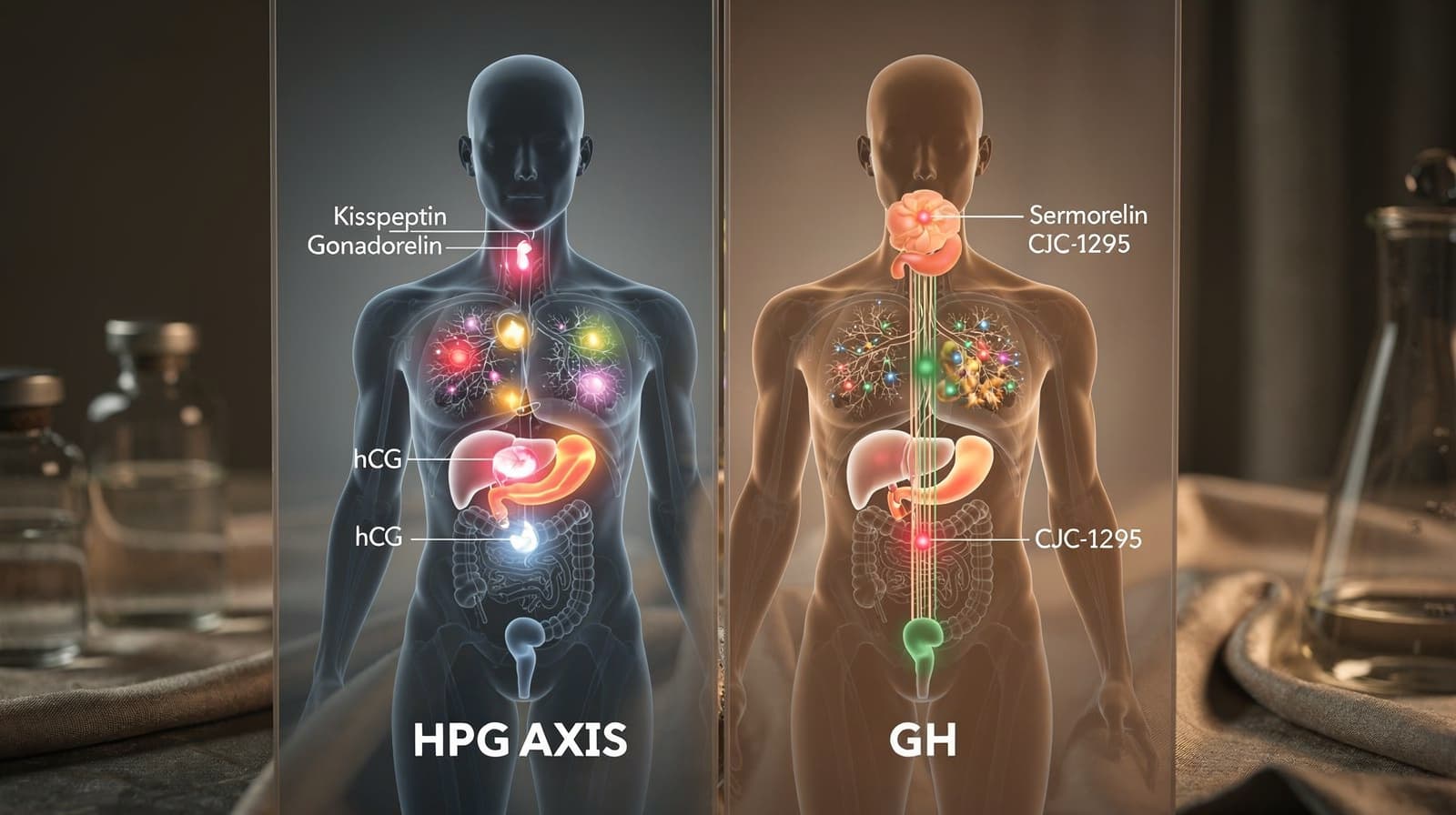
Peptides for Testosterone: Which Axis Actually Works
Most peptides for testosterone act on the growth hormone axis and never touch LH. Here is which compounds have measured serum testosterone in men.
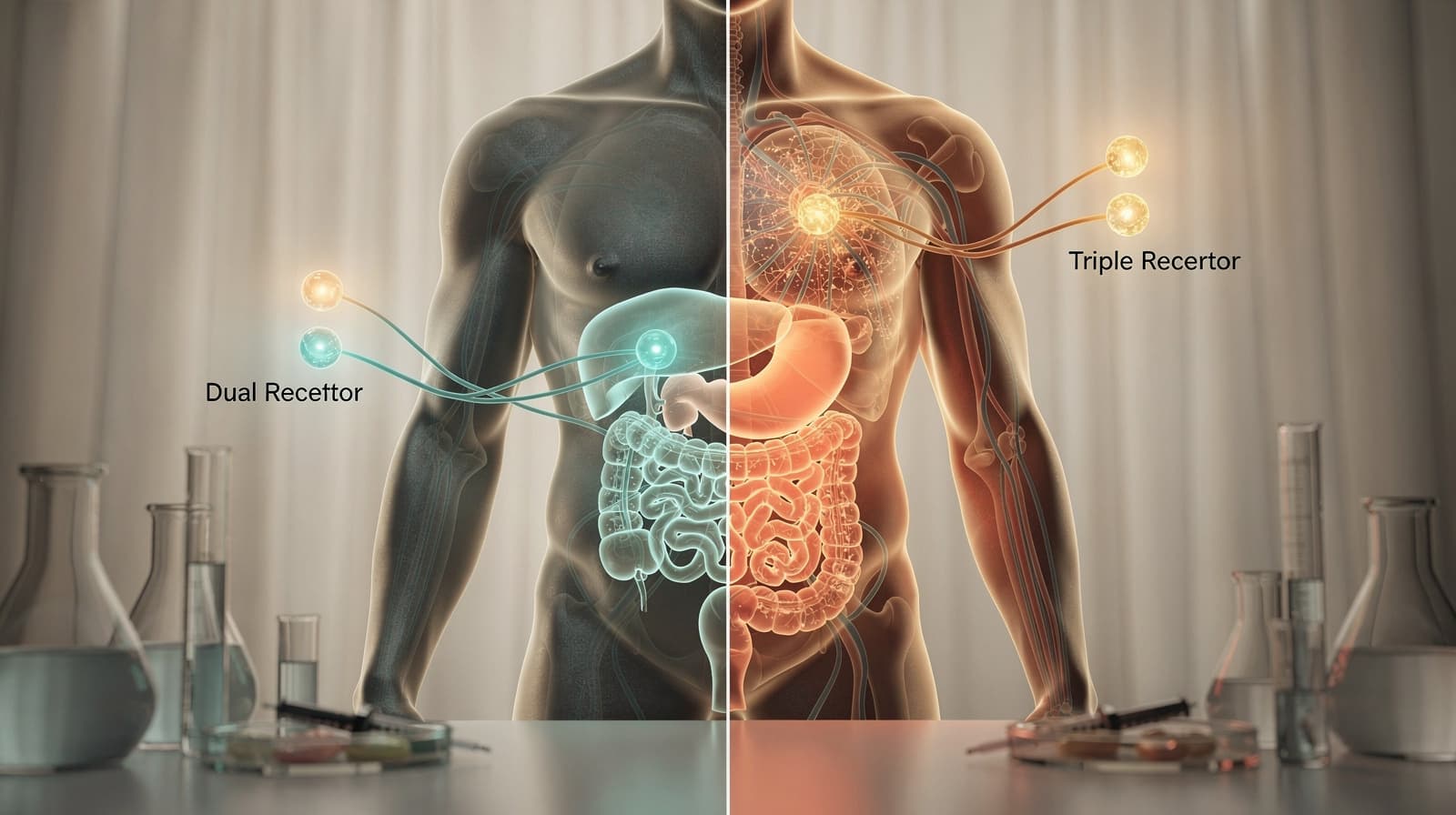
Tirzepatide vs Retatrutide: What the 2026 Data Show
Retatrutide reached 28.3% weight loss at 80 weeks; tirzepatide 20.9% at 72. A side-by-side of receptor targets, trial data, tolerability and status.
Semax vs Selank: Mechanism, Evidence, and Stacking
Semax and Selank share a Moscow lab and an intranasal route, but hit different targets. Mechanism, Russian trial data, dosing logic, and 2026 FDA status.