

Bodybuilding forums treat GH-axis peptides as a shortcut to leaner physiques and faster recovery. The published human trials tell a narrower story, one closer to hormonal restoration than the dramatic transformations circulated on social media. This piece walks through what the primary literature actually documents on MK-677, CJC-1295, ipamorelin and BPC-157, and where the WADA line sits for anyone who competes.
Key takeaways#
- Oral MK-677 at 25 mg daily has been shown to raise IGF-1 into a young-adult range and add roughly 1.1 kg of fat-free mass over one year in healthy older adults, without meaningful strength or function gains.
- CJC-1295 with DAC produces sustained, dose-dependent elevations in GH and IGF-1 for days after a single subcutaneous injection; no long-term physique outcome trials exist.
- Every GH secretagogue named in this article (MK-677, ipamorelin, CJC-1295, hexarelin, GHRPs) sits inside WADA class S2 and is prohibited in and out of competition, at any dose.
- BPC-157 shows consistent tendon and muscle repair signals in rodent models, but human controlled trials are effectively absent, and WADA names it explicitly under S0 (non-approved substances), prohibited at all times.
- Physique benefits scale with training and nutrition; peptides amplify the hormonal environment, they do not replace the work.
GH-axis peptides work on two receptors, not one#
The growth hormone system is driven by two receptor classes on pituitary somatotrophs: the GHRH receptor and the ghrelin receptor (GHSR-1a). Research has shown that GHRH analogues and ghrelin mimetics stimulate GH release through distinct intracellular signalling pathways, and pairing them produces supra-additive GH pulses rather than simply additive ones.
That mechanistic split explains why the popular peptides fall into two families. CJC-1295, sermorelin and tesamorelin are GHRH analogues. MK-677, ipamorelin, hexarelin, GHRP-2 and GHRP-6 are ghrelin mimetics. Stacking one from each family, typically CJC-1295 with ipamorelin, is the rationale most physique protocols cite, although published human trials of that specific pairing remain limited.
Pulsatility matters. Exogenous recombinant GH produces flat, non-physiological elevation. Secretagogues preserve the pulsatile secretion pattern the pituitary evolved to use, which is why the safety signal in the older literature is comparatively mild at studied doses.
MK-677 has the strongest human dataset, and it is still modest#
MK-677 (ibutamoren) is the most extensively studied GH secretagogue in humans because it is orally active. The two-year randomised placebo-controlled trial by Nass and colleagues in Annals of Internal Medicine enrolled healthy older adults on 25 mg oral MK-677 once daily. Serum GH and IGF-I rose into the range seen in healthy young adults, and fat-free mass increased by roughly 1.1 kg over the first year versus a small decline on placebo.
Two details matter for physique work. First, fat-free mass increased but strength, function and quality of life did not, at least on the tested endpoints in that older cohort. Second, preliminary evidence from the earlier Chapman group work documented significant increases in fasting glucose during 4 weeks of 25 mg/day dosing, with fasting glucose rising from 5.4 to 6.8 mmol/L (97 to 122 mg/dL) by week 4.
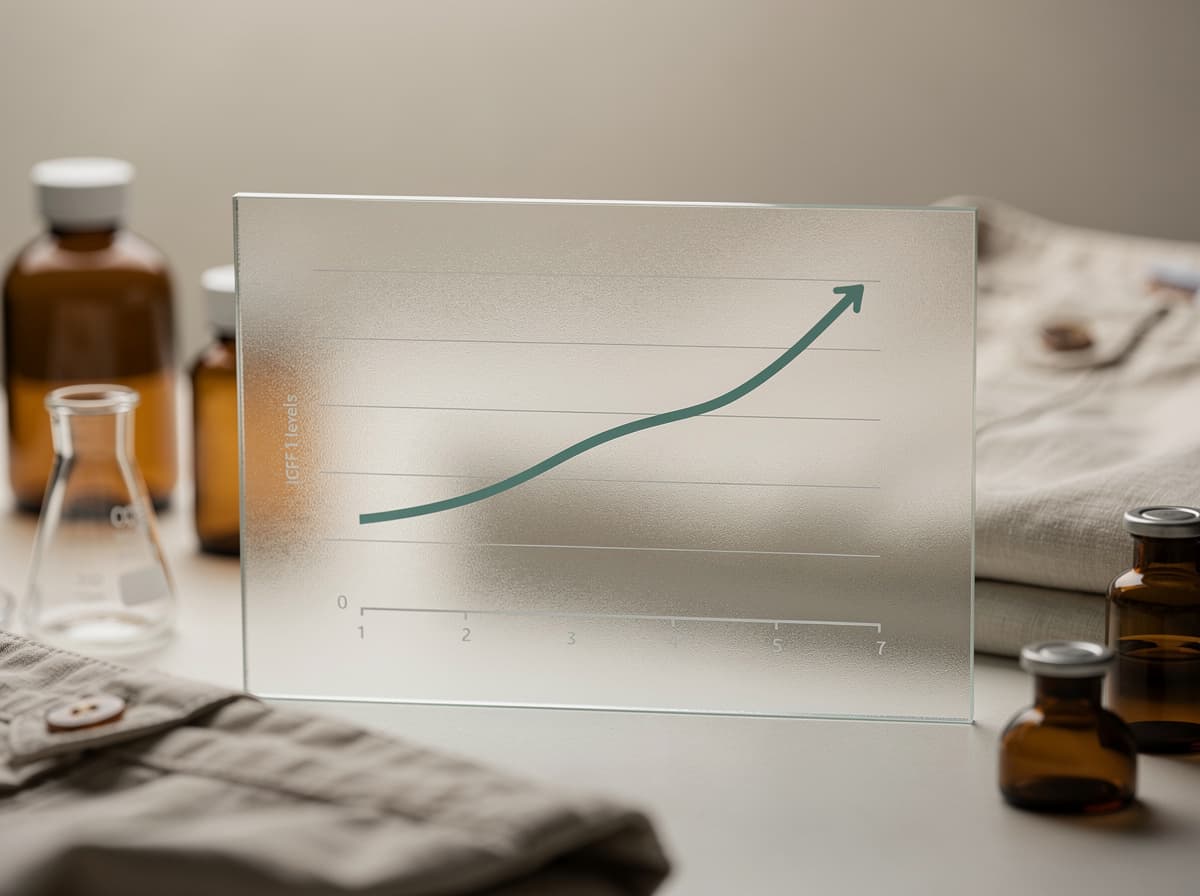
Every published human trial that showed meaningful body composition results used 25 mg/day, and there is no published evidence that going higher produces proportionally better outcomes. Water retention, appetite spikes and glucose elevation scale up predictably with dose. The community habit of running 50 mg has no supporting outcome data in the published record.
CJC-1295 and ipamorelin are studied more for pharmacokinetics than for physique#
CJC-1295 with DAC is a modified GHRH(1-29) analogue engineered for a long half-life. Studies have shown that its drug affinity complex binds covalently to serum albumin, extending the half-life from minutes to roughly 6 to 8 days in humans. A single subcutaneous injection can hold GH and IGF-1 elevations for a week or longer, which is why weekly dosing schedules dominate the observational literature.
Ipamorelin sits on the ghrelin receptor with high selectivity. Its terminal half-life in healthy human volunteers is approximately 2 hours, with peak GH response around 40 minutes after a 15-minute intravenous infusion. Unlike GHRP-2, GHRP-6 or hexarelin, it did not raise ACTH or cortisol in the original animal studies, even at very high doses, which is the main reason it displaced the older GHRPs.
What is missing from the record is the outcome data physique users care about. There are no published human randomised controlled trials of the specific CJC-1295-plus-ipamorelin combination exist. The stack is rationalised from component pharmacology and from older GHRH-plus-GHRP work in the 1990s, not from direct combination trials. Anyone framing this pair as documented physique enhancement is extrapolating.
The WADA S2 line is absolute, and it applies year-round#
If a reader competes in any WADA-code sport, this section is the practical answer. The 2026 WADA Prohibited List added further examples and clarifications to class S2 (Peptide Hormones, Growth Factors, Related Substances and Mimetics), which is prohibited at all times, both in-competition and out-of-competition.
The banned peptides most relevant to bodybuilding include:
- Growth hormone secretagogues: anamorelin, capromorelin, ipamorelin, ibutamoren (MK-677), macimorelin, tabimorelin.
- GH-releasing peptides: alexamorelin, hexarelin, GHRP-1 through GHRP-6, pralmorelin (GHRP-2).
- GHRH analogues: sermorelin, tesamorelin, CJC-1293, CJC-1295.
- Thymosin-beta-4 and derivatives including TB-500, plus IGF-1 and IGF-1 analogues.
These substances are classified as non-specified on the WADA list, which means the strictest presumption of intent applies to a positive test. There is no dose threshold and no off-season window. BPC-157 is named explicitly on the 2026 list, as an example under S0 (non-approved substances), which is also prohibited at all times.
For non-competing recreational lifters, the WADA line itself carries no legal force, but the pharmacology is identical, and national law can still apply: in Norway, CJC-1295, ipamorelin, ibutamoren (MK-677), tesamorelin, sermorelin, BPC-157 and TB-500 have been on the national doping list since 15 September 2026 (FOR-2026-09-14-1794), which makes acquiring, possessing or using them without lawful authority illegal for everyone. The compliance framing matters for one more reason: US federal warning letters and EMA statements consistently place these compounds outside the standard supplement regulatory regime, and apart from FDA-approved tesamorelin, none of them is an approved medicine.
BPC-157 has a compelling animal file and almost no human data#
BPC-157 keeps surfacing in bodybuilding recovery conversations because the rodent work is genuinely consistent. A 2025 systematic review in the HSS Journal by Vasireddi and colleagues concluded that in preclinical models, BPC-157 improved functional, structural and biomechanical outcomes in muscle, tendon, ligament and bone injuries, associated with increased growth hormone receptor expression and enhanced angiogenesis.
Preclinical data points to a plausible mechanism. In cultured rat tendon fibroblasts, BPC-157 dose-dependently upregulated growth hormone receptor expression, which would amplify local IGF-1 signalling at the healing site. Angiogenesis, collagen synthesis and reduced inflammatory cytokine activity round out the mechanistic picture.
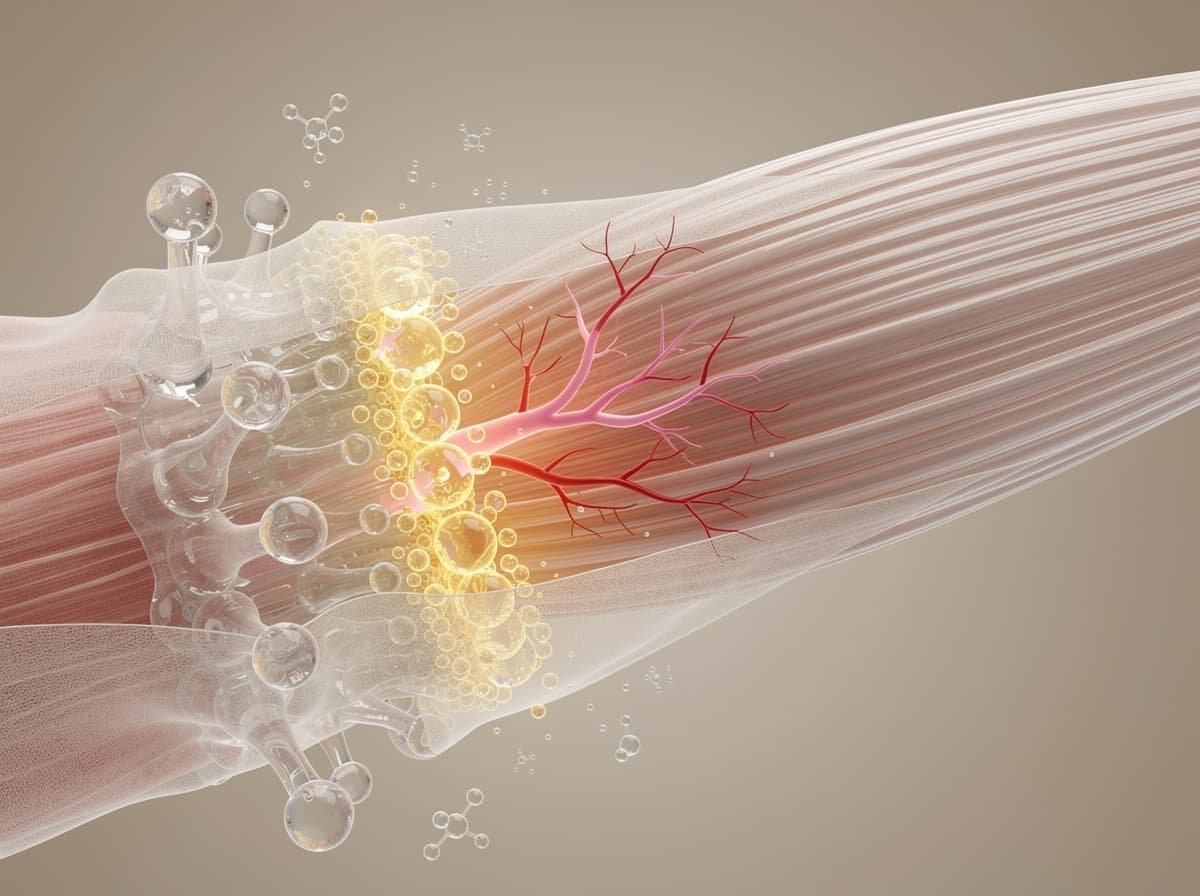
The gap is on the human side. The same systematic review flagged that no controlled human trial has assessed BPC-157 for musculoskeletal healing at meaningful scale; the human record consists of retrospective chart reviews with small samples and a first-in-human safety pilot involving only two participants. That is not enough to guide protocols, and it is not enough to make outcome promises. Any source claiming otherwise is overstating a preclinical file.
Realistic protocol frames used in the human literature#
The following are the dose windows that appear in the published trials and clinic protocols. They are described here for research context only. Individual response varies more than any published mean would suggest, and none of this substitutes for clinician oversight.
MK-677 is dosed orally at 10 to 25 mg once daily in the trials. The 25 mg dose is the level that produced the fat-free mass and IGF-1 outcomes in Nass 2008. Cycling 8 to 12 weeks on with a matching off-period is a common frame in clinical use, driven by the sustained IGF-1 elevation and the glucose signal.
CJC-1295 with DAC is dosed weekly in the published pharmacokinetic literature. Weekly frequency reflects the multi-day half-life. Ipamorelin is dosed subcutaneously in shorter windows in the human volunteer work, typically pre-sleep to align with the endogenous nocturnal GH pulse.
IGF-1 LR3 sits in a separate risk tier. It bypasses the pituitary entirely, carries meaningful hypoglycaemia risk and downregulates its own receptor over time. Preliminary evidence in trained lifters does not currently justify the additional risk, and it is banned under S2 without ambiguity.
For anyone modelling reconstitution volumes or dose conversions in a research context, the Klarovel peptide calculator handles the arithmetic without the fingertip errors that make injection volumes drift.
This page covers the GH-axis case specifically. For the wider view across every mechanism, including the non-GH options, see peptides for muscle growth.
Where Klarovel fits#
Klarovel does not sell peptides. What Klarovel does is curate the protocol layer around them: research summaries, calculator tools, and a research-log workflow that keeps your dose history, IGF-1 labs and side-effect notes in one auditable place. That layer is where recreational research typically breaks down.
If GH-axis work is on your radar, start by reading the primary trials linked in this article, understand where the WADA line sits for your sport, and read the Klarovel disclosures so you know exactly what commercial relationships sit behind our content. When you are ready to structure a protocol log, create a free Klarovel account or walk through how the platform works before you commit to a cycle.
Frequently asked questions
Keep reading
Wegovy Pill: How It Works, How to Take It, and Results
The Wegovy pill is semaglutide 25 mg taken daily, FDA-approved for weight loss in December 2025. How to take it, how well it works, and how it compares.
5-Amino-1MQ Guide: What the NNMT Evidence Actually Shows
5-Amino-1MQ is sold for fat loss, but every published result is preclinical. Read the NNMT mechanism, the circulating dosing range, and its FDA status.
Peptides for Men: What Works by Goal and Evidence Stage
Men search peptides for seven goals: muscle, fat loss, libido, hormones, recovery, hair, longevity. Here is the FDA status and trial evidence behind each.