
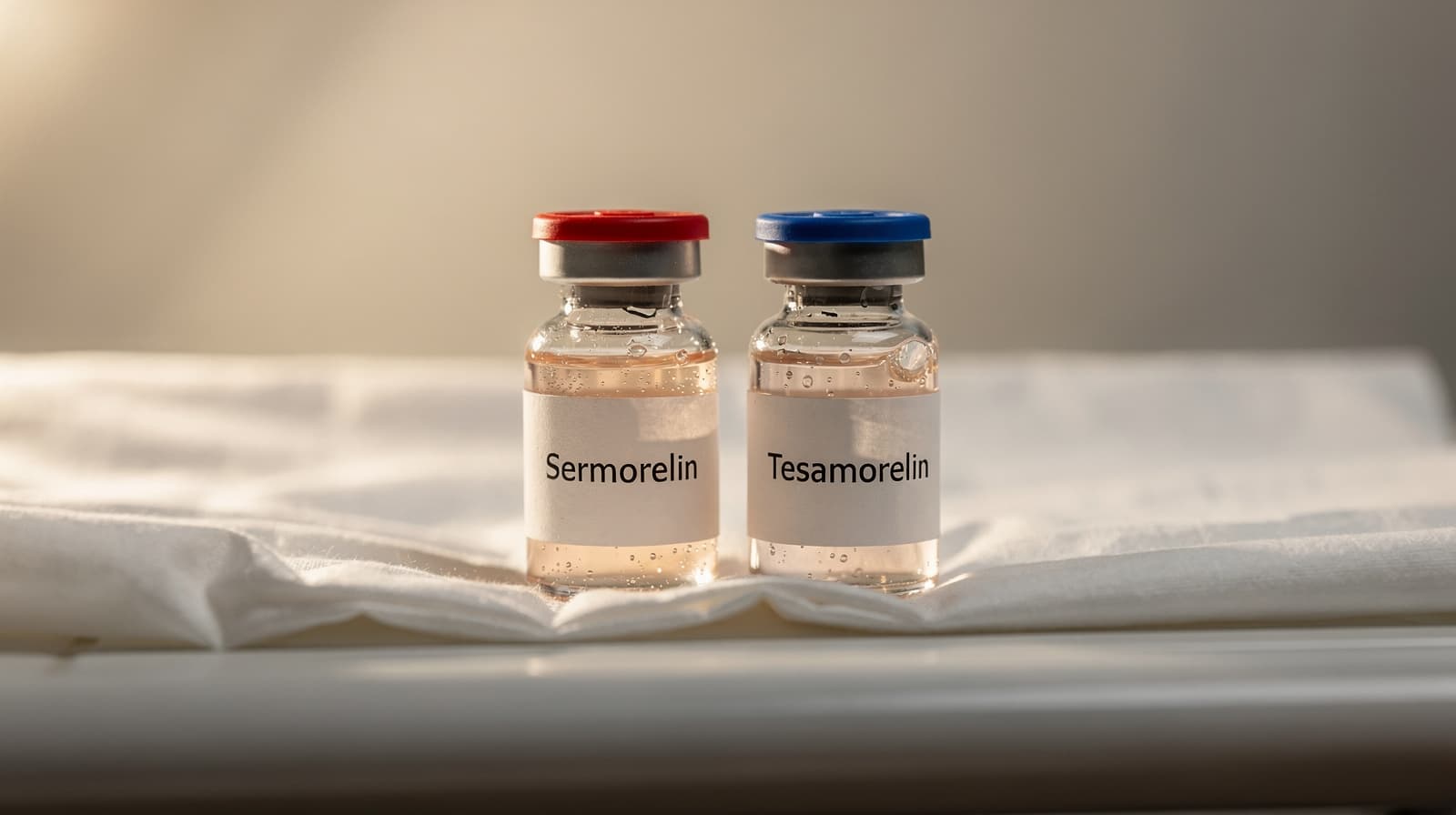
Sermorelin and tesamorelin are often pitched as interchangeable GHRH peptides. They are not. One is a 29-amino-acid fragment with a 10-minute half-life and a longevity-clinic reputation; the other is a stabilized 44-amino-acid analog that is the only GHRH peptide with FDA approval and Phase III visceral fat data. This comparison walks through the pharmacology, the trial evidence, and the user states where each makes editorial sense.
Key takeaways#
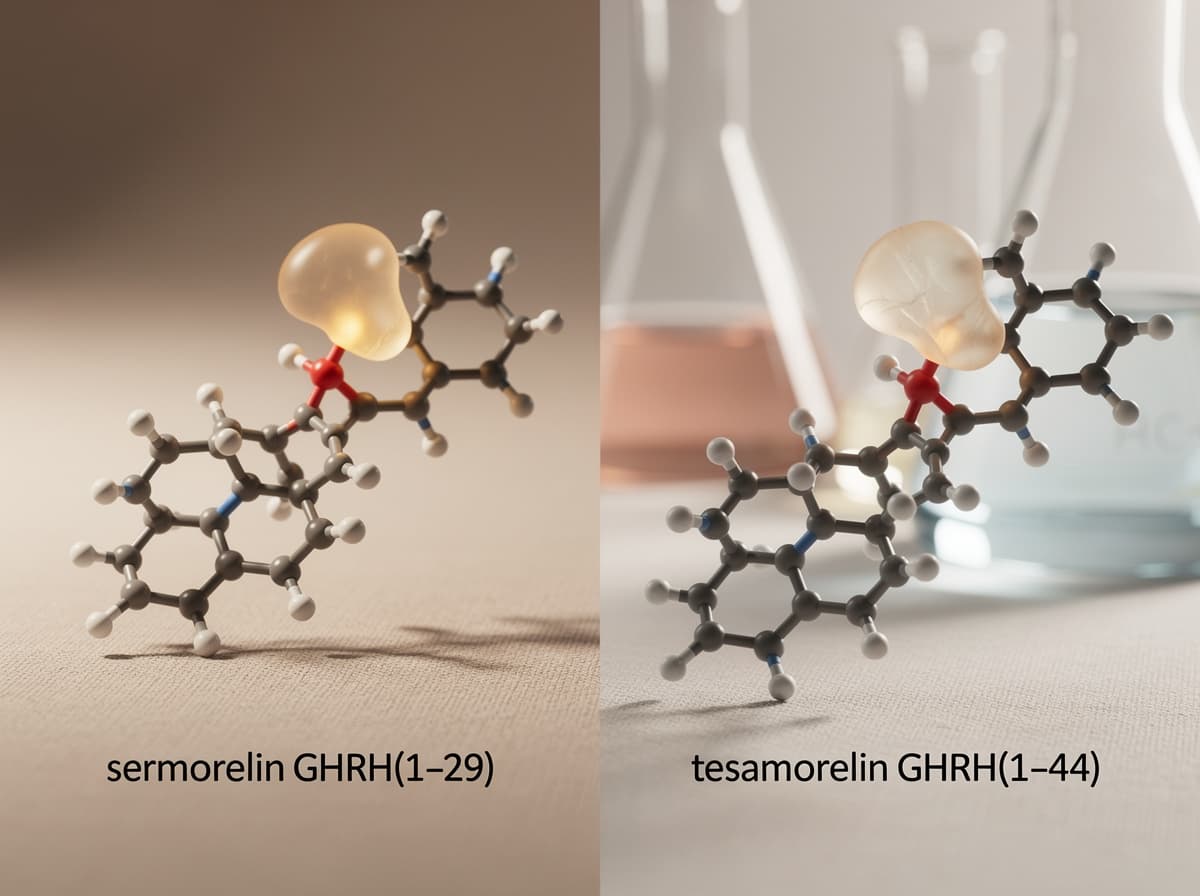
- Sermorelin is GHRH(1-29) with a 11-12 minute half-life; tesamorelin is a stabilized GHRH(1-44) analog with a ~26-38 minute half-life after multiple dosing.
- Tesamorelin is the only GHRH analog FDA-approved (Egrifta SV / Egrifta WR) and carries Phase III evidence for visceral fat reduction; sermorelin's commercial FDA approval was discontinued for business reasons.
- Tesamorelin has shown a 15-18% reduction in visceral adipose tissue at 26 weeks and a ~32% reduction in hepatic fat fraction at 12 months in HIV-associated populations.
- Research-published dose ranges: sermorelin ~100-300 mcg subcutaneous nightly; tesamorelin 1.4-2 mg subcutaneous daily.
- For visceral fat and ectopic liver fat, tesamorelin has the dossier. For broader GH-axis support without committing to a daily 2 mg injection, sermorelin remains the lighter-touch protocol.
How sermorelin works#
Sermorelin is a synthetic peptide corresponding to the first 29 amino acids of endogenous growth hormone-releasing hormone. Despite being a fragment, the (1-29) region retains essentially full biological activity of the 44-amino-acid full-length GHRH. It binds the GHRH receptor on anterior pituitary somatotrophs, activates the cAMP cascade, and triggers a pulsatile release of endogenous growth hormone.
The pharmacokinetic story is short and brutal. The halflife of Sermorelin is short, 11-12 minutes after either intravenous or subcutaneous administration. That brevity is driven by DPP-IV cleavage at the N-terminal tyrosine. The pituitary response itself is longer than the molecule's lifespan: The GH pulse initiated by this cascade continues for 2-4 hours. Long after the sermorelin molecule has been degraded and cleared.
Because sermorelin works through the body's own feedback loop, somatostatin tone still gates the response. This is why bedtime dosing matters more than dose escalation: GH pulses naturally rise during slow-wave sleep when somatostatin tone is low. Research has shown that sermorelin restores GH pulsatility rather than overriding the axis, which is why it has been positioned as a more physiological intervention than recombinant GH.
Walker's 2006 review in Clinical Interventions in Aging is the most-cited source for adult-onset use, and it frames sermorelin's safety advantage as a consequence of preserved negative feedback rather than any inherent potency advantage.
How tesamorelin works#
Tesamorelin retains the full 44-amino-acid GHRH backbone, then adds a chemical guard at the front door. Endogenous GHRH(1-44) has a plasma half-life measured in minutes because it is rapidly cleaved by dipeptidyl peptidase IV (DPP-IV) at the N-terminus. Tesamorelin's trans-3-hexenoic acid modification at that same N-terminal position creates steric hindrance that blocks DPP-IV cleavage while leaving the receptor-binding portions of the molecule intact.
The result is a longer pharmacokinetic window without abandoning pulsatility. Mean elimination half-life of 8 minutes in healthy individuals given a single 1.4-mg dose sub-Q. Mean elimination half-life of 18.6 minutes in HIV-infected patients given a single 2-mg dose sub-Q. After multiple dosing (once daily for 14 days), the mean elimination half-life was 37.8 minutes. That accumulation matters: by week two, the functional exposure is roughly three times what a single dose suggests.
Mechanistically, tesamorelin binds the same GHRH receptor as sermorelin. Tesamorelin binds to pituitary growth hormone-releasing factor (GRF) receptors and stimulates the secretion of endogenous growth hormone which has anabolic and lipolytic properties. Growth hormone exerts its effects by interacting with receptors on target cells such as osteoblasts, myocytes, hepatocytes, and adipocytes to promote the reduction of total fat mass. These effects are primarily mediated by IGF-1 produced in the liver and in peripheral tissues.
Dosing: sermorelin vs tesamorelin#
Research protocols for the two compounds diverge in both magnitude and cadence.
Sermorelin's research-published dose range sits in the microgram band. Research suggests sermorelin is commonly administered at doses starting from 100-200 mcg per day for body-composition objectives, often timed to bedtime to coincide with the natural GH pulse window. Research suggests that sermorelin is commonly administered at doses starting from 100-200 mcg per day for objectives like improved body composition, often in combination with other growth hormone secretagogues such as ipamorelin. When used in longevity research, sermorelin is typically cycled for three to six months.
Tesamorelin operates an order of magnitude higher. The FDA-labeled dose in HIV-associated lipodystrophy trials was 2 mg subcutaneous daily; the newer EGRIFTA WR (F8) formulation delivers a bioequivalent 1.28 mg per injection. Mean elimination half-life (t1/2) of tesamorelin was 11 minutes in healthy subjects after single dose subcutaneous administration of the 1.28 mg of EGRIFTA WR (11.6 mg/vial formulation).
This new formulation replaces EGRIFTA SV, reducing patient burden and improving treatment adherence by offering weekly reconstitution instead of daily. Tesamorelin F8 maintains bioequivalence to the original tesamorelin formulation and requires less than half the injection volume of its predecessor.
Timing differs as well. Sermorelin is typically dosed at night to ride the endogenous pulse; tesamorelin in the pivotal HIV trials was dosed once daily without strict bedtime anchoring, because its longer effective signal covers a wider window of pituitary responsiveness.
For dose modeling against bodyweight and protocol length, the Klarovel peptide calculator handles both compounds with the dose ranges drawn from the underlying trial literature.
Evidence: what the studies actually show#
There is no head-to-head trial of sermorelin versus tesamorelin. No head-to-head trial comparing the two compounds has been published. The comparison rests on the strongest primary study per side.
Tesamorelin: HIV-lipodystrophy Phase III. On November 10, 2010, the Food and Drug Administration approved tesamorelin (Egrifta) to treat HIV patients with lipodystrophy, a condition in which excess fat develops in different areas of the body, most notably around the liver, stomach, and other abdominal organs (visceral body fat). Tesamorelin was approved to induce and maintain a reduction of excess visceral abdominal fat in HIV-infected patients with lipodystrophy. Tesamorelin is the first FDA-approved treatment for lipodystrophy, and is a synthetic growth hormone releasing factor (GRF) that is administered in a once-daily injection. Studies have shown a clear visceral fat signal: Two Phase 3 trials (published in The Lancet in 2010) demonstrated 15–18% VAT (visceral adipose tissue) reduction at 26 weeks.
Tesamorelin: HIV-NAFLD. The follow-on hepatic fat trial led by Stanley et al. is documented at ClinicalTrials.gov NCT02196831 and published in Lancet HIV 2019. It enrolled 61 HIV-infected adults with hepatic fat fraction ≥5% and randomized them to tesamorelin 2 mg daily or placebo for 12 months. Preliminary evidence pointed to a meaningful liver-fat signal: a ~32% reduction in hepatic fat fraction versus no change in placebo. A companion paper found that tesamorelin associated with reduced hepatic gene-set expression in inflammation, tissue repair, and cell division pathways.
Sermorelin: adult evidence base. Sermorelin's adult evidence is thinner and largely older. The bulk of citations trace back to the Walker 2006 review and to the original Geref pediatric GHD trials. Studies have shown that sermorelin can increase 24-hour mean GH and IGF-1 in adults, but sample sizes are smaller and trial endpoints are more diffuse than the VAT-centric tesamorelin program.
The asymmetry is the headline: tesamorelin has Phase III data on a hard imaging endpoint; sermorelin has decades of adult off-label experience and a favorable safety profile but no FDA-grade efficacy dossier in adult body composition.
Side effects and contraindication profile#
Both peptides share the GHRH-class adverse-event signature: injection-site reactions, transient flushing, occasional arthralgia, and the theoretical concern of elevated IGF-1 over long horizons.
Sermorelin carries the lighter side-effect tail. The most frequently reported side effect is transient warmth and flushing of the face that passes within 5 minutes of administration. Other side effects reported are pain and redness at the injection site, nausea, vomiting, headache, a strange taste in the mouth, and tightness in the chest. Because the molecule clears in minutes and feedback regulation is intact, supraphysiological GH excursions are difficult to achieve. According to Walker, sermorelin is potentially safer than exogenous rhGH because it does not stimulate IGF-1 and is virtually incapable of causing overdose, given that the peptide merely stimulates endogenous hGH and its effects are regulated by somatostatin.
Tesamorelin has more documented adverse events because the trial population was larger and the exposure longer. The pivotal trial side-effect profile included injection-site pruritus, peripheral edema, and arthralgia. 2.7% in placebo), injection site pruritis (7.6% of treated vs. 0.8% placebo), and peripheral edema (6.1% in treated vs. 2.3% in placebo). With respect to serious adverse events (SAEs), prevalence was not statistically different (3.7% in treated vs. 4.2% in placebo). Antibody formation is a real but apparently non-neutralizing phenomenon: In a group of patients who had antibodies to tesamorelin after 26 weeks of treatment (56%) and were re-assessed 6 months later, after stopping EGRIFTA treatment, 18% were still ... 10% and 5% of EGRIFTA-treated patients, respectively. Changes in VAT and IGF-1 levels in patients with or without in vitro neutralizing antibodies were comparable.
Contraindications overlap. Both compounds should be avoided in active malignancy, pregnancy, and disrupted hypothalamic-pituitary axis function (history of pituitary surgery or radiation). Tesamorelin's label additionally flags potential CYP450 interactions through GH-mediated hepatic enzyme modulation, particularly with corticosteroids and sex steroids.
When to choose sermorelin#
Sermorelin is the right choice in a narrow set of user states:
- Adults with documented age-related GH decline who want the gentlest possible intervention. Sermorelin's short half-life and intact feedback regulation make it the lowest-ceiling option in the GHRH class.
- Sleep-quality objectives. Because GHRH directly modulates slow-wave sleep architecture and sermorelin is dosed at bedtime, users with sleep complaints often notice the sleep effect before any body-composition signal.
- Stacking with a GHRP (ipamorelin) on a budget-sensitive protocol. Sermorelin is the original GHRH partner for ipamorelin and is substantially cheaper per cycle than tesamorelin.
- Short cycles (3-6 months). Sermorelin is associated with quick on/off pharmacokinetics and a well-tolerated short-cycle profile.
When to choose tesamorelin#
Tesamorelin earns its higher dose, higher cost, and longer injection regimen in a different user state:
- Visceral adipose tissue as the primary target. This is the only indication with Phase III imaging data; preliminary evidence and the FDA label both point at VAT, not subcutaneous fat or weight.
- Documented hepatic steatosis (with appropriate clinical workup). The Stanley 2019 trial associated tesamorelin with hepatic fat fraction reduction in HIV-NAFLD, and the mechanism (GH-mediated lipolysis of ectopic fat) is biologically plausible outside HIV.
- Users who want the strongest evidence base. Tesamorelin is the only GHRH analog with a real regulatory dossier; for users who weight FDA review heavily, this is the deciding factor.
- Longer-duration protocols (≥26 weeks). The trial evidence is anchored at 26-52 week endpoints; shorter exposures undersell the VAT response.
Can you stack them?#
Stacking sermorelin and tesamorelin is not standard practice because the mechanism overlaps completely. Both bind the same GHRH receptor on the same somatotrophs. Adding sermorelin on top of tesamorelin produces no novel receptor engagement; it just adds an extra injection of a shorter-acting analog without amplifying the GH pulse meaningfully beyond what tesamorelin alone achieves.
The standard GHRH+GHRP pairing (sermorelin or tesamorelin with ipamorelin) is the legitimate stacking strategy: those compounds hit complementary receptors (GHRH-R and the ghrelin receptor / GHS-R1a) and their effects are supra-additive on GH release. Running sermorelin and tesamorelin together is redundancy, not amplification.
Verdict#
For users whose primary target is visceral adipose tissue, ectopic liver fat, or any body-composition endpoint backed by Phase III imaging data, tesamorelin is the better starting point. The trial dossier is unambiguous and the FDA review provides a regulatory floor that no other GHRH analog matches.
For users whose objective is general GH-axis support, sleep quality, or a low-commitment cycle paired with ipamorelin, sermorelin remains the cleaner, cheaper, and better-tolerated choice. Its short half-life is not a flaw to engineer around; it is a feature that preserves the body's negative-feedback architecture.
Neither peptide is interchangeable with the other. They sit at different points on the same mechanistic axis, and the deciding factor is whether the user's goal warrants the heavier evidentiary and dosing footprint that tesamorelin demands.
Run the numbers before you pick a side#
The sermorelin-versus-tesamorelin question is rarely answered by reading a comparison post. It is answered by bloodwork: baseline IGF-1, body composition imaging if visceral fat is the target, and an honest assessment of whether the protocol horizon is 12 weeks or 12 months. Klarovel's questionnaire maps user state to peptide candidates, and the peptide calculator handles the dose math for both compounds. Start there, then decide which molecule the data actually points to. See how Klarovel works or register to access the full protocol layer.
Frequently asked questions
Keep reading
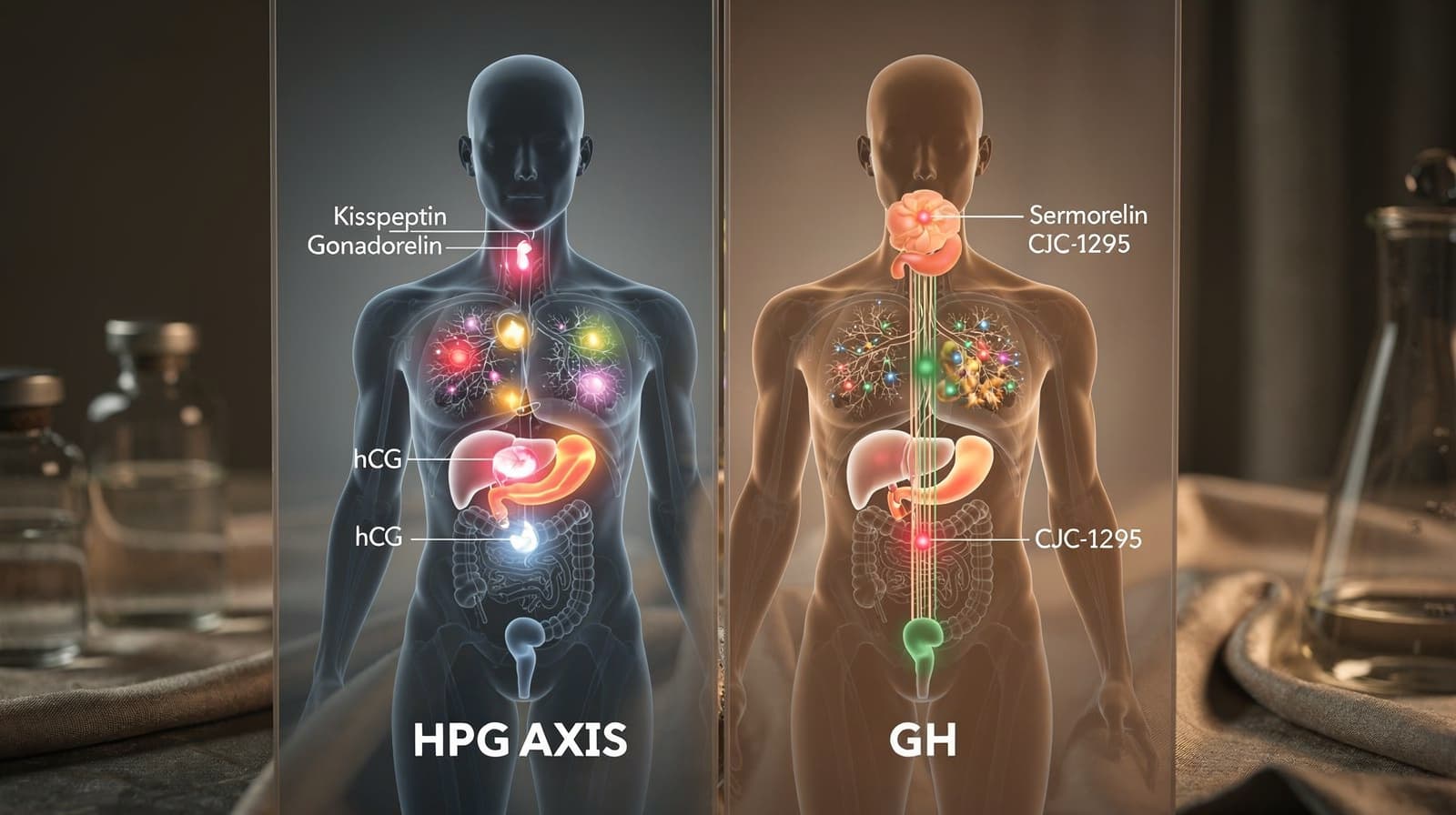
Peptides for Testosterone: Which Axis Actually Works
Most peptides for testosterone act on the growth hormone axis and never touch LH. Here is which compounds have measured serum testosterone in men.
Tirzepatide vs Retatrutide: What the 2026 Data Show
Retatrutide reached 28.3% weight loss at 80 weeks; tirzepatide 20.9% at 72. A side-by-side of receptor targets, trial data, tolerability and status.
Semax vs Selank: Mechanism, Evidence, and Stacking
Semax and Selank share a Moscow lab and an intranasal route, but hit different targets. Mechanism, Russian trial data, dosing logic, and 2026 FDA status.