

Some are, some are not, and it depends on the peptide and the channel. FDA-approved peptide drugs such as semaglutide, tirzepatide, tesamorelin and bremelanotide are legal with a prescription. A peptide that is the active ingredient of an approved drug can also be compounded by a 503A pharmacy on prescription. Most popular wellness peptides, including BPC-157, TB-500, CJC-1295 and ipamorelin, cannot currently be compounded, even though an FDA advisory committee recommended six of them for the 503A list in July 2026 (FDA, 2026); no rule has followed. Vials labeled "research use only" cannot lawfully be sold for people to use, which is what the FDA's August 2026 warning letters targeted (FDA warning letter, 2026). Most peptides are not DEA-controlled; human growth hormone is restricted by a separate statute. This article walks through each layer, with the state of play as of September 2026.
Key takeaways#
- Peptides are not a single legal category in the United States. Status depends on whether a peptide is FDA-approved, eligible for compounding under Section 503A or 503B, restricted, or sold only "for research use."
- Approved peptide products such as semaglutide, tesamorelin and bremelanotide are fully legal with a valid prescription; off-label prescribing is a lawful clinical decision once a drug is approved for any indication.
- None of the popular wellness peptides (BPC-157, TB-500, CJC-1295, ipamorelin, epitalon) is on the 503A bulks list or in FDA's Category 1, so none can currently be compounded under 503A. BPC-157, TB-500 and epitalon left Category 2 in April 2026; that alone does not authorize compounding.
- The DEA does not schedule most peptides as controlled substances, but human growth hormone (somatropin) is restricted under 21 U.S.C. 333(e), and several GH-releasing peptides are banned in competitive sport by WADA.
- In July 2026 the FDA's Pharmacy Compounding Advisory Committee recommended BPC-157, KPV, TB-500, MOTS-c, Semax and epitalon for the 503A bulks list. It is advice to the FDA, not a rule: as of September 2026 no proposed rule has been published.
The FDA defines four overlapping peptide categories, not one#
The Food and Drug Administration regulates peptides through the Federal Food, Drug, and Cosmetic Act, which means each compound is evaluated through the same lens as any other drug. Research suggests the public confusion stems from the fact that peptides span four distinct regulatory buckets that the agency treats very differently.
The first bucket is fully approved peptide drugs. Dozens of peptide drugs already have full FDA approval, and the history of FDA-approved peptides stretches back decades. Insulin was the first, isolated in 1921 and commercially available by the early 1920s. Since then, the FDA has authorized roughly 100 peptide-based therapeutics covering diabetes, cancer, osteoporosis, growth hormone deficiency, sexual dysfunction, rare genetic conditions, and more.
The second bucket is compounded peptides. State-licensed physicians and pharmacists that compound under section 503A of the FD&C Act may only compound drug products using bulk drug substances that comply with an applicable United States Pharmacopeia or National Formulary monograph if one exists, are components of FDA-approved drug products if a monograph does not exist, or appear on FDA's list of bulk drug substances that can be used in compounding.
The third bucket is peptides marketed as "research chemicals" or "not for human consumption," and the fourth is peptides explicitly restricted by FDA placement in Category 2 or by separate federal statute. Each bucket has different exposure for the buyer, the prescriber, and the supplier.

FDA-approved peptides are unambiguously legal with a prescription#
Several peptide products are FDA-approved with defined labeled indications. As of April 2026, FDA-approved prescription peptides with clear approved indications include semaglutide (type 2 diabetes, chronic weight management, cardiovascular risk reduction), tesamorelin (HIV-associated lipodystrophy only), and bremelanotide (hypoactive sexual desire disorder in premenopausal women). Liraglutide, tirzepatide, and several insulin and GnRH analogs round out the approved list.
Tesamorelin offers a useful timeline. The FDA approved tesamorelin on November 10, 2010, under the brand name Egrifta, for the reduction of excess abdominal fat in HIV-infected adults with lipodystrophy. It was the first and remains the only GHRH analog with active FDA approval in the United States. The most recent formulation, Egrifta WR, received supplemental FDA approval in March 2025.
Once a peptide is approved for any indication, off-label prescribing is lawful at a licensed physician's discretion. That is why tesamorelin appears in body-composition protocols well outside HIV care, and why semaglutide shows up in metabolic clinics that did not originate in diabetes management. The prescription itself, not the indication, is what determines legality at the patient level.
The 503A and 503B compounding pathways are narrower than they look#
Compounding is where most "are peptides legal" confusion lives. The 503A framework lets a state-licensed pharmacy prepare a patient-specific compound when no commercial product fits the need. But the bulk drug substance used must satisfy strict source criteria, and FDA has spent years sorting nominated substances into categories.
The interim lists for both 503A and 503B facilities are divided into three categories. Materials listed in Category 1 may be used as bulk drug substances provided that all other relevant legal and regulatory conditions are met. The FDA states that the agency does not intend to take action against a compounder for compounding drugs using bulk drug substances listed in Category 1. Substances in Category 2 (deemed to have safety risks) and Category 3 (deemed to have insufficient evidence for FDA evaluation) may not be compounded.
The practical effect for popular wellness peptides is significant. In 2023 the FDA placed BPC-157, TB-500, CJC-1295, ipamorelin and other peptides in Category 2. Several have since left it because their nominations were withdrawn, most in April 2026, but leaving Category 2 does not move a substance into Category 1. As of September 2026, ipamorelin remains in Category 2 for 503B outsourcing facilities and ibutamoren (MK-677) for both 503A and 503B (FDA Category 2 list). A January 2025 FDA guidance also closed the door to new additions: substances nominated on or after 7 January 2025 are no longer sorted into categories, so they get no interim enforcement discretion. What a 503A pharmacy can use is set by statute: a substance with a USP or NF monograph, the active ingredient of an FDA-approved drug, or a substance on the 503A bulks list (FDA). That is why sermorelin, the active ingredient of a discontinued approved drug, is compounded while BPC-157 is not.
The DEA scheduling question: most peptides are not controlled, but exceptions matter#
Peptides are not, as a class, controlled substances under the Controlled Substances Act. Anabolic steroids are Schedule III controlled substances, but peptides are structurally distinct from steroids and are not classified under this category. The Federal Food, Drug, and Cosmetic Act is the primary federal statute governing peptide regulation.
There are important exceptions. Some growth-hormone-related substances are subject to specific federal restrictions. Human growth hormone (somatropin) is controlled under a separate statute (21 U.S.C. 333(e)) that makes it illegal to distribute for non-approved purposes.
Sport-governance restrictions sit on top of federal law. The World Anti-Doping Agency Prohibited List bars GH-releasing peptides such as GHRP-2, GHRP-6, hexarelin, and ipamorelin, along with thymosin-β4 derivatives including TB-500. A peptide can be legal to possess under US federal law and still trigger a competition ban for an athlete subject to WADA jurisdiction.
"Research use only" peptides occupy a gray zone, not a safe harbor#
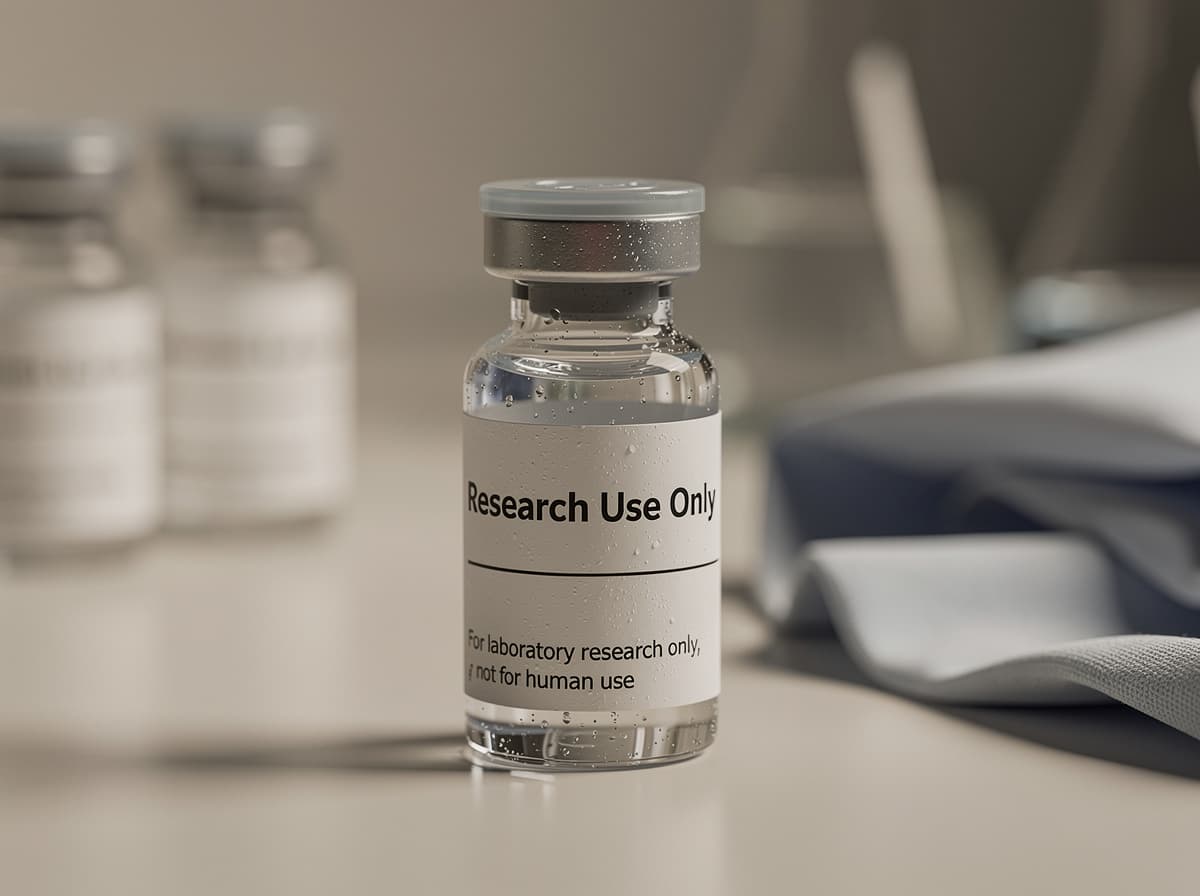
The most fraught corner of the market involves vials sold online labeled "research chemicals" or "not for human consumption." Preliminary evidence from FDA enforcement actions suggests this framing does not provide the protection sellers (or buyers) imagine. Peptides sold as "research chemicals" or "not for human consumption" exist in a legal gray area. While purchasing for legitimate research is legal, self-administration is not sanctioned by the FDA.
The agency has actively pursued sellers who use the research-use label as cover for human-consumption marketing. Buying these products carries downstream risk beyond the regulatory question: quality, identity, and contamination concerns are well-documented. HHS Secretary Robert F. Kennedy Jr. himself has acknowledged the problem publicly. Some in the compounding industry argue that FDA's restrictions have given rise to an illicit market of imported chemicals from China and other countries, which are not subject to U.S. drug standards. Kennedy has echoed those concerns. "With the gray market you have no idea if you're getting a good product," Kennedy told Rogan. "And a lot of this stuff that we've looked at is just very, very substandard."
In August 2026 the FDA sent warning letters to five online sellers of "research" peptides, naming semaglutide, tirzepatide, retatrutide, tesamorelin, bremelanotide and others as unapproved new drugs (FDA warning letter, 2026). The research label does not change what the product is when it is sold for people to inject.
The 2026 inflection point: PCAC review and political pressure#
The current regulatory picture is unusually fluid. On July 23 and 24, 2026, the Pharmacy Compounding Advisory Committee reviewed seven peptides for the 503A bulks list and recommended six: BPC-157, KPV, TB-500, MOTS-c, Semax and epitalon. It voted against emideltide (DSIP). FDA's own reviewers had recommended against all seven (FDA, 2026). The meeting followed public pressure on the agency, including from HHS Secretary Robert F. Kennedy Jr., who has said he is a fan of peptides. A committee vote is advice, not law: adding a substance takes a proposed rule, a comment period and a final rule, and as of September 29, 2026 the FDA has published no proposed rule. Current status per compound is on Klarovel's regulatory status tracker.
A procedural removal of peptides from Category 2 in April 2026 was associated with widespread misreporting. FDA announced on April 15, 2026, that these same substances will be removed from 503A Category 2 after seven calendar days because the nominations were withdrawn, although the agency confirmed it was still planning to bring them to PCAC. That procedural removal should not be read as a go-ahead to compound these peptides. Under FDA's current policy, removal of a bulk drug substance from Category 2 does not, on its own, authorize use of that substance in compounding or bring it within FDA's interim enforcement discretion policy for substances in Category 1.
The takeaway: the law has not changed yet, even if headlines suggest otherwise. Klarovel tracks each step on the regulatory status tracker; readers can compare US framing with the Norwegian equivalent in our companion Norwegian regulatory analysis and use the peptide calculator to plan around what is actually accessible through legitimate channels today.
What the GLP-1 compounding saga shows about FDA enforcement priorities#
The GLP-1 story offers the clearest recent window into how FDA actually moves. Semaglutide and tirzepatide were both added to the shortage list in 2022 due to surging demand, as was liraglutide. The resulting compounding market offered patients access to these agents at $150 to $300 per month, compared with brand-name costs that exceeded $1000. That access began to close in late 2024.
The wind-down was decisive. The Outsourcing Facilities Association filed federal lawsuits challenging both determinations, but courts denied preliminary injunctions in each case, and the enforcement deadlines held. As of mid-2025, compounding of essentially a copy of either agent was no longer legally permissible for 503A or 503B entities.
The current proposal goes further still. The May 2026 Federal Register notice proposes not to add semaglutide, tirzepatide and liraglutide to the 503B bulks list, finding no clinical need for outsourcing facilities to compound them from bulk substances. The FDA will decide after reviewing comments. For consumers, this means the lowest-cost compounded GLP-1 channel is closing, even though FDA-approved branded products remain available with a prescription. Klarovel does not sell or compound any of these drugs.
How Klarovel reads the 2026 peptide-legality picture#
The honest answer to "are peptides legal in the US" is: some peptides, in some contexts, through some channels, under some conditions. The framework is not designed to be simple, and pretending otherwise is how people end up with substandard product, regulatory exposure, or both. Klarovel does not sell peptides, and it takes no commission on anyone who does. It builds the protocol, dosing and evidence layer. If you want to build a peptide protocol that survives the next FDA reclassification cycle, create an account and start with the peptide calculator, or read how the platform works before making any decisions about sourcing.
Frequently asked questions
Keep reading
Buying Peptides in Norway: Customs and Legal Reality
Norwegian law bans mail-order medicinal products. Here is what Tollvesenet actually seizes, which peptides are on the doping list, and how to stay compliant.

Wegovy Side Effects: How Common, How Long, How Serious
What the Wegovy label and pooled STEP data actually report: incidence per side effect, median duration in days, and the one that does not fade.

Peptide Drug Interactions: What Research Actually Shows
Peptide drug interactions remain understudied. Here is what current research suggests about GLP-1 agonists, GH secretagogues, and repair peptides.