
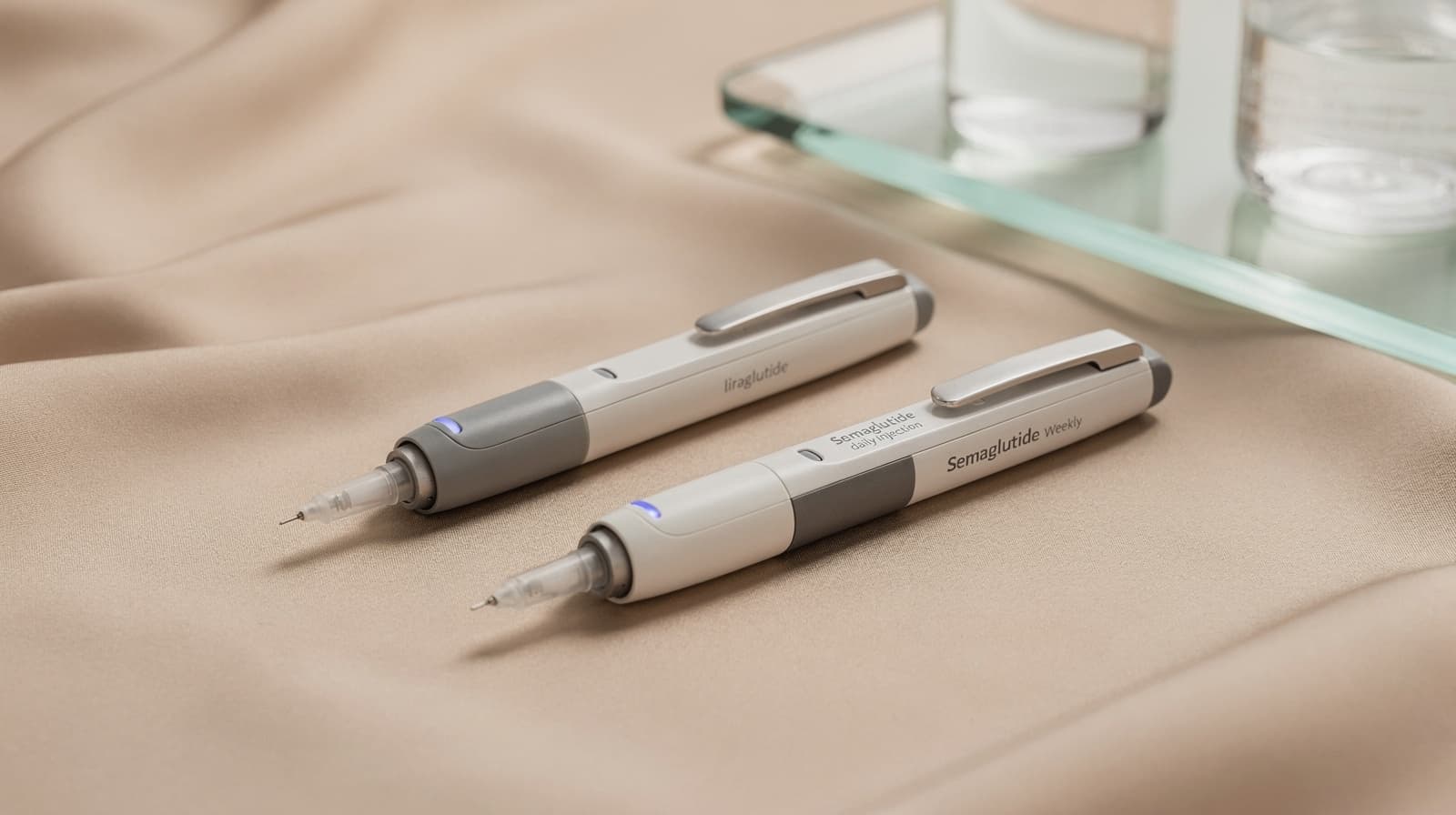
Two GLP-1 receptor agonists from the same manufacturer, sold under different brand names, with very different outcomes. Liraglutide (Saxenda, Victoza) and semaglutide (Wegovy, Ozempic) are often discussed as interchangeable, but the head-to-head data tell a sharper story. This guide walks through mechanism, dosing, the STEP 8 trial, cardiovascular outcomes, and when each one is the smarter starting point.
Key takeaways#
- Semaglutide produced roughly 2.5 times the weight loss of liraglutide in the only direct head-to-head trial (STEP 8), at the maximum approved doses for each.
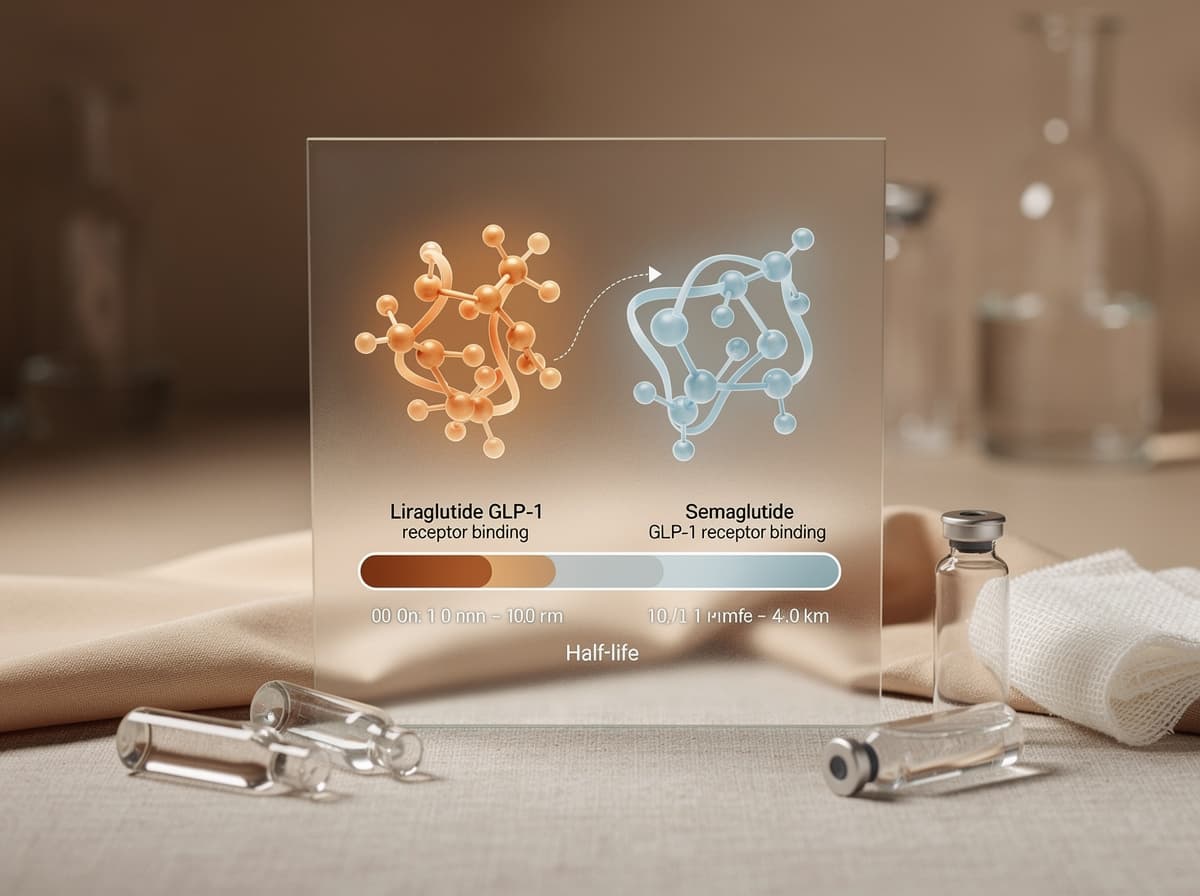
- Liraglutide is dosed once daily; semaglutide is dosed once weekly. The half-life gap is dramatic: about 13 hours versus 165 hours.
- Semaglutide has a confirmatory cardiovascular outcomes trial (SELECT) showing a 20% reduction in major adverse cardiac events. Liraglutide has its own positive cardiovascular trial (LEADER) in people with type 2 diabetes.
- Side effect profiles overlap heavily, with gastrointestinal events dominating both (84.1% vs 82.7% in STEP 8). Treatment discontinuation was not similar: 13.5% stopped semaglutide versus 27.6% liraglutide.
- For most adults seeking weight management without diabetes, research suggests semaglutide is the stronger starting point unless daily-dose flexibility, faster off-ramp, or specific tolerability issues argue otherwise.
How liraglutide works#
Liraglutide is a GLP-1 receptor agonist engineered for a longer plasma half-life than native GLP-1. According to the STEP 8 background, the addition of an albumin-binding C16 fatty acid side chain extends liraglutide's half-life to 13 to 15 hours. That half-life is the reason it must be injected once daily by the subcutaneous route. Receptor activation drives delayed gastric emptying, increased satiety signaling in hypothalamic appetite circuits, and glucose-dependent insulin release. The net effect, when paired with caloric restriction, is reduced energy intake and modest but consistent weight loss.
Liraglutide has been shown to lower cardiovascular event rates in people with type 2 diabetes. The LEADER trial recruited 9,340 patients with type 2 diabetes at high cardiovascular risk and demonstrated a significant reduction in the composite cardiovascular endpoint compared with placebo, establishing its risk profile in that population.
How semaglutide works#
Semaglutide is structurally related but engineered differently. Semaglutide's half-life is 165 hours, resulting from an amino acid replacement that prevents dipeptidyl peptidase 4 degradation and a C18 fatty diacid addition. Once-weekly dosing is the practical consequence, but the longer half-life also produces more sustained receptor occupancy at the hypothalamic targets that regulate appetite.
Mechanistically the two molecules hit the same receptor, but semaglutide appears to suppress caloric intake more aggressively. The reduction in caloric intake versus placebo appears to be larger with semaglutide (35%) than with liraglutide (approximately 16%), and semaglutide has been associated with reductions in food cravings, which is less evident with liraglutide. That difference shows up in clinical outcomes, not just on the satiety questionnaires.
Dosing: liraglutide vs semaglutide#
The dosing cadences are not interchangeable, and patients switching between them need a structured titration plan (dose-escalation calculator) rather than a one-to-one swap.
Liraglutide for weight management is administered once daily as a subcutaneous injection. The Saxenda label escalates from 0.6 mg in 0.6 mg weekly steps to a maintenance dose of 3.0 mg by week five. The daily cadence means missed doses are individually small but cumulatively meaningful; tolerance builds during the titration window.
Semaglutide for weight management is administered once weekly. In STEP 8, semaglutide was initiated at 0.25 mg and escalated to 2.4 mg over 16 weeks, with a 1.7 mg maintenance dose permitted if 2.4 mg could not be tolerated. Since March 2026 the Wegovy label also allows a 7.2 mg weekly dose (Wegovy HD) for adults who have tolerated 2.4 mg for at least 4 weeks; STEP 8 predates it. The slower titration is necessary because the longer half-life means each step takes weeks to reach steady state, and rushing it amplifies nausea.
A practical implication: liraglutide reaches steady state faster, so adverse events appear and resolve faster. Semaglutide takes longer to titrate up but also longer to wash out if you discontinue, which matters for surgical planning, pregnancy planning, and managing prolonged side effects.
Evidence: what STEP 8 and SELECT actually show#
The single most useful study for this comparison is STEP 8, the only randomized head-to-head trial of the two molecules at what were then their maximum approved weight-management doses (open-label between the active drugs). Among adults with overweight or obesity without diabetes, the trial asked what the effect of once-weekly subcutaneous semaglutide 2.4 mg versus once-daily subcutaneous liraglutide 3.0 mg is on weight loss when each is added to counseling for diet and physical activity.
The result was decisive. In this randomized clinical trial that included 338 participants, mean body weight change from baseline to 68 weeks was minus 15.8% with semaglutide versus minus 6.4% with liraglutide, a statistically significant difference. That is roughly 2.5 times the weight loss on semaglutide at the head-to-head endpoint. The published STEP 8 paper also reports significantly greater improvements across cardiometabolic risk factors on the semaglutide arm.
On the cardiovascular side, the SELECT trial provides the strongest outcomes evidence for semaglutide in non-diabetic populations. Among 17,604 patients with pre-existing cardiovascular disease, semaglutide at 2.4 mg once weekly reduced the risk of the composite cardiovascular endpoint of cardiovascular death, non-fatal myocardial infarction, or non-fatal stroke by 20% (hazard ratio 0.80; 95% confidence interval, 0.72 to 0.90). Liraglutide's cardiovascular evidence base (LEADER) is robust but restricted to people with type 2 diabetes, so the non-diabetic, weight-management-driven cardiovascular case is currently stronger for semaglutide.
Studies have shown that both molecules deliver meaningful metabolic improvements: blood pressure reductions, lipid changes, and HbA1c improvements track with weight loss in both arms. The magnitude, however, scales with how much weight comes off, and on average that favors semaglutide.
Side effects and contraindications#
The two molecules share most of their side effect profile because they share a mechanism. Transient, mild-to-moderate gastrointestinal disorders are the most frequently reported adverse events for both, with nausea most common during the dose-escalation period, a finding similar to that reported with liraglutide at 3.0 mg. Gallbladder-related disorders, principally cholelithiasis, are more common with GLP-1 receptor agonists in general.
Where they diverge:
- Onset of nausea: liraglutide front-loads the GI burden into the first two weeks because titration is faster. Semaglutide spreads it across 16 weeks.
- Discontinuation rates: not comparable in STEP 8. 13.5% stopped semaglutide for any reason versus 27.6% on liraglutide, even though gastrointestinal events were reported at similar rates (84.1% vs 82.7%).
- Injection burden: liraglutide is seven injections a week; semaglutide is one. This drives long-term adherence differences in practice.
- Washout: a missed liraglutide dose is forgiven within 24 hours; a discontinued semaglutide dose takes roughly five to seven weeks to fully clear.
Both carry the boxed warning for medullary thyroid carcinoma and are contraindicated in personal or family history of MTC or MEN 2. Both warrant caution in pancreatitis history. Preliminary evidence on gastroparesis risk with prolonged use is still maturing, and clinicians are increasingly flagging it pre-anesthesia.

When to choose liraglutide, when to choose semaglutide#
Liraglutide is the better starting point when the user-state involves: a need for fast on-ramp and fast off-ramp (e.g., short-term metabolic intervention before a structured program), a preference for daily dosing as a behavioral anchor, or specific insurance or supply-side reasons that make daily liraglutide more accessible than weekly semaglutide. It is also the more familiar molecule in Norwegian primary care, where Saxenda has a longer prescribing history than Wegovy.
Semaglutide is the better starting point for the larger group: adults with overweight or obesity, with or without pre-existing cardiovascular disease, who are targeting sustained weight reduction over 12 to 24 months. Research has shown weekly dosing improves adherence, the head-to-head efficacy gap is large, and the SELECT data add a cardiovascular risk-reduction case that liraglutide cannot match in the non-diabetic population. For users with prediabetes and elevated cardiometabolic risk, semaglutide is currently the better-evidenced choice.
Can you stack them?#
No. Stacking two GLP-1 receptor agonists is not standard practice because they compete at the same receptor; you do not get additive efficacy, but you do get additive gastrointestinal toxicity. The correct pattern is to choose one, titrate properly, and switch if tolerability or response is inadequate. If switching from liraglutide to semaglutide, discontinue daily liraglutide and begin semaglutide at 0.25 mg weekly using the standard 16-week escalation.
Combinations with other classes (e.g., GLP-1 plus GIP agonists like tirzepatide) are a separate question and represent a different mechanism profile, not a stack of two GLP-1s.
Verdict#
For adults with overweight or obesity and no specific reason to prefer daily dosing, semaglutide is the better starting point. The STEP 8 head-to-head showed roughly 2.5 times the weight loss at maximum doses, the SELECT trial added a 20% reduction in major adverse cardiac events in non-diabetic populations with established cardiovascular disease, and weekly dosing improves long-term adherence. Liraglutide remains a legitimate choice when daily cadence is preferred, when faster washout matters, or when supply or prescribing context favors it; for type 2 diabetes specifically, both molecules have established cardiovascular evidence and the choice is more nuanced. Use the peptide calculator and the intake questionnaire to translate your health profile and goals into a concrete starting protocol rather than relying on brand recognition.
Translate the evidence into your starting protocol#
Brand familiarity is the worst reason to choose between these two molecules. The evidence is asymmetric: semaglutide has the stronger weight-management data and a confirmatory cardiovascular outcomes trial in non-diabetic populations, while liraglutide retains specific advantages for users who want daily-dose flexibility, faster washout, or a more established prescribing history in Norwegian primary care. Run your health profile and goals through the peptide calculator and the how it works walkthrough to see which molecule the evidence actually points to for your context, widen the lens with the overview of how the GLP-1 weight-loss medications compared stack up, and use /register to start the protocol layer that fits.
Frequently asked questions
Keep reading

Peptides for Inflammation: Mapping BPC-157, KPV, and Thymosins
Peptides for inflammation compared by mechanism and evidence stage: BPC-157, KPV, thymosin alpha-1, and thymosin beta-4, with FDA status and safety notes.
Mounjaro vs Zepbound: Same Drug, Two Different FDA Labels
Mounjaro and Zepbound are the same drug, tirzepatide, at the same doses. The difference is the FDA label: diabetes for Mounjaro, weight loss for Zepbound.
Rybelsus for Weight Loss: Not Approved, and the Pill That Is
Rybelsus is not FDA-approved for weight loss and moves the scale only a little. The oral semaglutide approved for weight loss is the Wegovy pill at 25 mg.