
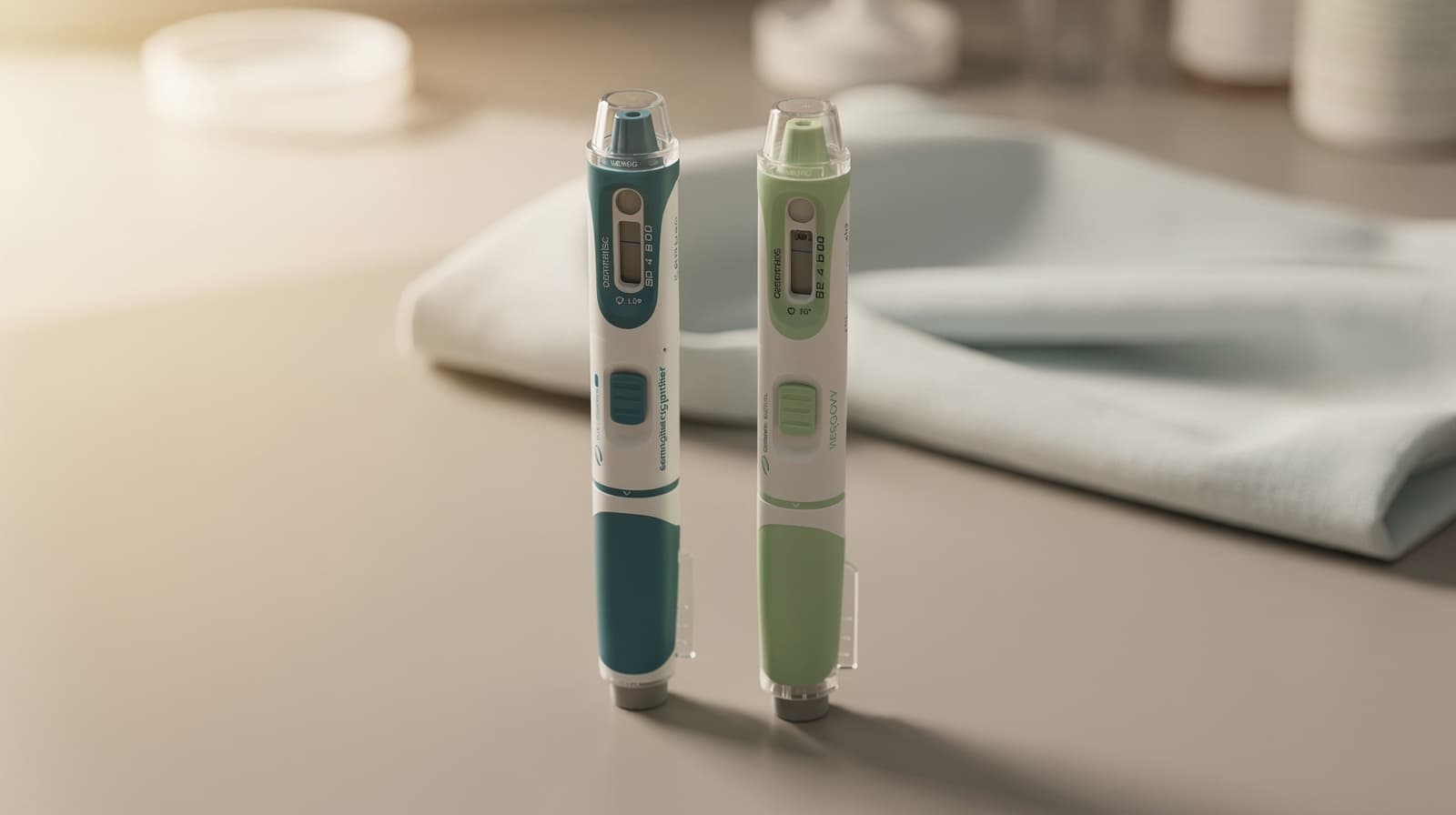
The pharmacy hands one patient a red-and-white pen called Ozempic and another patient a cream-coloured pen called Wegovy. Both contain the same molecule from the same factory in Denmark. The packaging differs, the dose ceiling differs, and the Norwegian reimbursement reality differs sharply. This guide unpacks what is actually distinct between the two semaglutide brands, what the trials measured, and how Norway's regulator currently treats each one.
Key takeaways#
- Both Ozempic and Wegovy contain semaglutide, a GLP-1 receptor agonist manufactured by Novo Nordisk; the molecule is identical.
- Ozempic tops out at 2.0 mg weekly and is approved for type 2 diabetes; Wegovy reaches 2.4 mg weekly and is approved for chronic weight management, with a new 7.2 mg "Wegovy HD" dose added in March 2026.
- In the STEP 1 trial, semaglutide 2.4 mg produced a mean weight reduction of 14.9% over 68 weeks versus 2.4% on placebo.
- The SELECT trial showed a 20% relative reduction in major adverse cardiovascular events on Wegovy 2.4 mg in adults with overweight or obesity and pre-existing cardiovascular disease.
- In Norway, Ozempic is reimbursable on blå resept only for type 2 diabetes; Wegovy has historically been hvit resept (patient pays), but DMP signalled in late 2025 that a negotiated price could open blå resept for severe obesity.
Both pens carry the same active molecule#
Semaglutide is a long-acting analogue of glucagon-like peptide-1 (GLP-1), a hormone the gut releases after meals. It is approved by the FDA as three separate brand-name medications, Ozempic, Wegovy, and Rybelsus, each with its own indications, preparations, and dosages. Research has shown the molecule slows gastric emptying, augments insulin release when blood glucose is high, and signals satiety in the central nervous system.
Novo Nordisk runs two parallel commercial tracks for the same compound. The company developed semaglutide, won approval for diabetes under the name Ozempic, then reformulated it at a higher dose and secured a separate FDA approval for weight loss under the name Wegovy. This is not a marketing quirk. Each indication required its own pivotal trial programme, its own regulatory submission, and its own label.
The practical consequence: the pens are not interchangeable at the pharmacy counter, even though the molecule inside them is.
The dose ceiling is the headline difference#
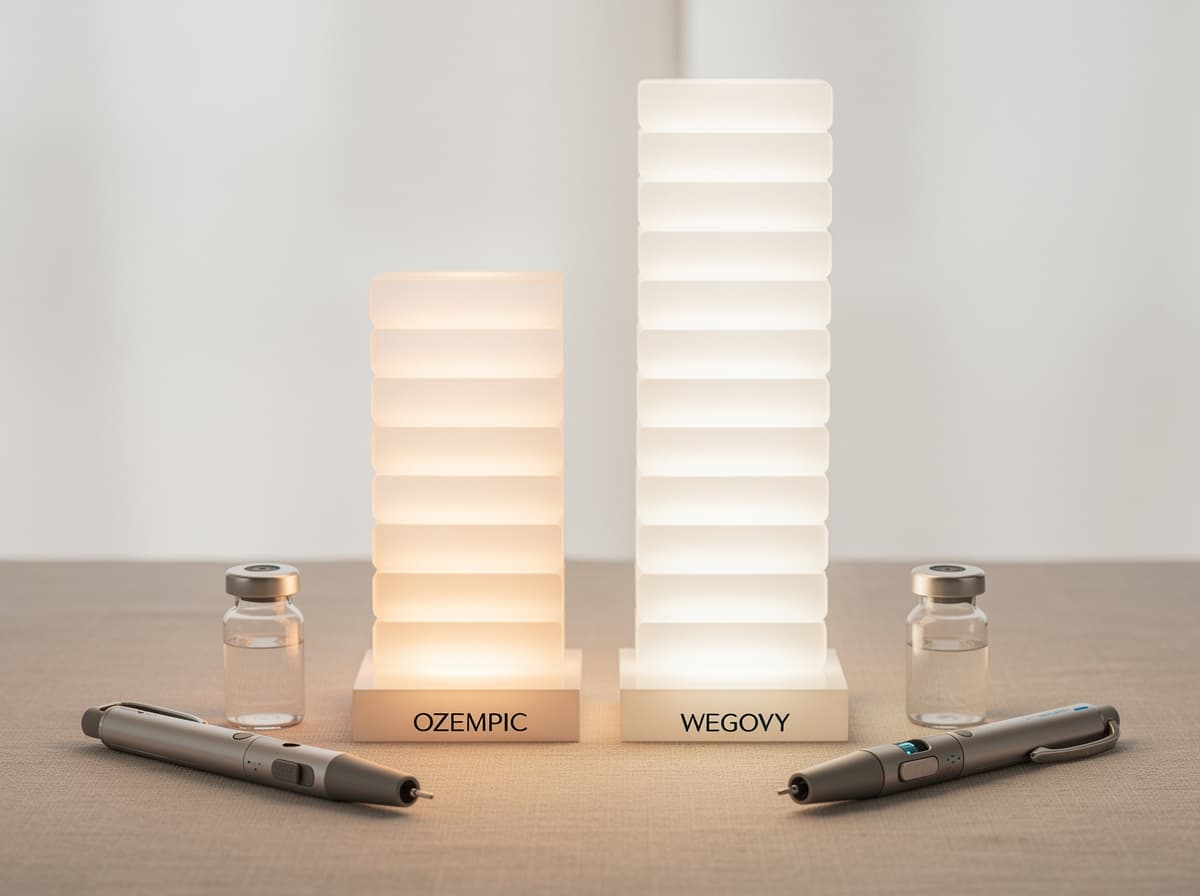
This is the single specification that matters most for outcomes. Wegovy's maximum dose of 2.4 mg weekly is 20% higher than Ozempic's maximum of 2.0 mg. Both brands titrate identically through the first four steps (0.25 mg, 0.5 mg, 1 mg) at four-week intervals; the divergence appears at the top of the ladder.
Wegovy titrates 0.25 → 0.5 → 1 → 1.7 → 2.4 mg weekly with 2.4 mg as the recommended maintenance dose, and a 7.2 mg high-dose option (Wegovy HD) was added to the label in March 2026. Ozempic titrates 0.25 → 0.5 → 1 → 2 mg weekly, with a maximum of 2 mg.The new Wegovy HD pathway is worth flagging. Novo Nordisk's 7.2 mg injection was approved on March 19, 2026, and the STEP UP trial reported an average weight loss of 20.7% of starting body weight over 72 weeks at this dose, compared with 17.5% on the standard 2.4 mg dose. Wegovy is also now available as a daily oral tablet at 25 mg maintenance, the first oral GLP-1 approved for weight loss.
The trial data behind each label#
Ozempic and Wegovy were not casually relabelled. Studies have shown they were measured against different primary endpoints, and that distinction shapes how clinicians interpret the evidence.
The pivotal weight-management trial for Wegovy was STEP 1. Researchers enrolled 1,961 adults with a BMI of 30 or greater (or 27 or greater with a weight-related coexisting condition) without diabetes, randomly assigned 2:1 to 68 weeks of weekly subcutaneous semaglutide 2.4 mg or placebo, plus lifestyle intervention. The mean change in body weight from baseline to week 68 was −14.9% in the semaglutide group compared with −2.4% in the placebo group, an estimated treatment difference of −12.4 percentage points (95% CI, −13.4 to −11.5; P<0.001). Read the full paper at NEJM.
The cardiovascular case for Wegovy 2.4 mg comes from SELECT. A primary cardiovascular end-point event occurred in 569 of 8,803 patients (6.5%) in the semaglutide group versus 701 of 8,801 (8.0%) on placebo (hazard ratio 0.80; 95% CI 0.72-0.90; P<0.001); in patients with pre-existing cardiovascular disease and overweight or obesity but without diabetes, weekly subcutaneous semaglutide 2.4 mg was superior to placebo in reducing the incidence of death from cardiovascular causes, nonfatal myocardial infarction, or nonfatal stroke at a mean follow-up of 39.8 months. The full trial is available at NEJM.
Ozempic's evidence base, by contrast, was built around glycemic control and cardiovascular risk reduction in people with type 2 diabetes. Preliminary evidence suggests the molecule's appetite and weight effects are dose-dependent: at Ozempic's 2.0 mg ceiling, real-world weight loss tends to be smaller than the 15% headline figure from STEP 1, which used the higher Wegovy dose.
Pen design and practical handling#
The hardware diverges almost as much as the dose. Both drugs come as prefilled injection pens, but Ozempic pens contain multiple doses of the medication while Wegovy pens contain a single dose. An Ozempic pen typically delivers four weekly doses; a Wegovy pen delivers one.
For users, the implications are concrete:
- Wegovy pens are colour-coded by dose strength, and you cannot change the dose on a pen; titration requires switching to the next colour.
- Ozempic's multi-dose design means fewer pharmacy visits but requires the user to dial the correct dose each week.
- Wegovy HD at 7.2 mg is not a single pen. You receive three 2.4 mg pens and inject all three at the same time each week to deliver the 7.2 mg dose.
Injection sites are identical for both: subcutaneous abdomen, thigh, or upper arm, once weekly, with site rotation recommended.
The Norwegian reimbursement gap is wider than the clinical gap#
This is where Norwegian readers hit the most consequential fork in the road. The molecule is the same; the Folketrygden treatment is not.
For Ozempic, the rule is narrow and strictly enforced. Research suggests Helfo audits show repeated misuse for off-label weight loss. Ozempic has a vektreduserende effekt, but it is not permitted to prescribe Ozempic on blå resept for the treatment of fedme or overvekt. Patients using Ozempic for diabetes pay a 60% co-pay capped at 400 kr per dispense; patients using it off-label for weight loss pay the full price on hvit resept.
For Wegovy, the picture has shifted in late 2025. Legemiddelverket (now DMP) initially declined blå resept for Wegovy in obesity treatment, on the basis that the medicine was not cost-effective relative to documented health effects given the severity of the condition. Then, in November 2025, the calculus changed. Price negotiations produced an offer that DMP now considers cost-effective for patients with a BMI of at least 35 who also have at least two weight-related conditions.
Because that patient group could include more than 70,000 people, treatment would cost Folketrygden more than 100 million kroner per year, and DMP cannot grant reimbursement at that scale without Stortinget allocating funds in the statsbudsjett, so DMP sent a recommendation to Helse- og omsorgsdepartementet to handle the case onward. As of mid-2026, the Storting decision is pending. Read the DMP statement at dmp.no.
In the meantime, Wegovy is available at Norwegian pharmacies on hvit resept (full self-pay). The same applies for off-label Ozempic for weight loss in non-diabetic patients.
Side-effect profiles are similar, intensity tracks the dose#
The adverse-event signal is dominated by the gastrointestinal tract. Nausea, vomiting, diarrhoea, constipation, and abdominal pain are the most consistently reported events across the STEP and SUSTAIN trial programmes. Studies have shown the intensity correlates with dose and with titration speed.
Side effects may be more common with Wegovy because doctors typically prescribe it at a slightly higher dosage than Ozempic. In STEP 1, nausea (44.2% vs 17.4%) and diarrhoea (31.5% vs 15.9%) were more common in the semaglutide group versus placebo, and discontinuation of medication due to GI side effects was also higher in the semaglutide group (4.5% vs 0.8%).
In SELECT, the higher dose translated to a meaningful discontinuation rate. Adverse events leading to permanent discontinuation of the trial product occurred in 1,461 patients (16.6%) in the semaglutide group and 718 patients (8.2%) in the placebo group (P<0.001).
The mitigation strategy is the same for both brands: titrate slowly, hold at a tolerable step rather than rushing to maintenance, and use the temporary fallback dose if needed (Wegovy permits a 1.7 mg holding dose if 2.4 mg is poorly tolerated).

How to think about which pen fits which question#
The decision rarely sits with the patient alone. It sits with the prescriber, the diagnosis, and the reimbursement code. A pragmatic frame:
- If the clinical target is type 2 diabetes (with or without established cardiovascular disease), Ozempic is the on-label, reimbursable choice in Norway.
- If the clinical target is chronic weight management at a BMI of 30 or greater (or 27 or greater with a weight-related condition), Wegovy is the on-label choice. Reimbursement, for now, remains restricted to a narrow individual-stønad pathway pending the Storting decision.
- If pre-existing cardiovascular disease coexists with overweight or obesity but not diabetes, the SELECT evidence base specifically supports Wegovy 2.4 mg.
Compounded or counterfeit semaglutide is a separate concern. The FDA has issued postmarket alerts on this; Klarovel does not stock peptides and does not encourage sourcing semaglutide outside the regulated supply chain.
If you want to map your own protocol logic without guessing at conversions, the Klarovel peptide calculator provides dose-and-volume planning for the semaglutide class. The how Klarovel works page explains the protocol layer specifically.
What to take away#
Ozempic and Wegovy are best understood as the same molecule packaged for two different clinical conversations. Ozempic carries the diabetes label, the lower dose ceiling, the multi-dose pen, and the Norwegian blå-resept pathway for type 2 diabetes. Wegovy carries the weight-management label, the higher dose ceiling, the single-dose pen, and a pending decision on Norwegian reimbursement for severe obesity. If you are mapping protocols, sourcing logic, or simply trying to understand which pen the prescriber chose and why, start with the indication and let the dose ceiling follow. For how these two semaglutide brands sit against the rest of the field, see how the GLP-1 weight-loss medications compared stack up. To build a protocol view that respects the regulatory layer, create a Klarovel account and let the platform handle the structured planning.
Frequently asked questions
Keep reading

MK-677 vs tesamorelin: oral GH versus visceral fat (2026)
Head-to-head on MK-677 vs tesamorelin: oral ghrelin mimetic versus injectable GHRH analogue, with VAT data, glucose risk, and a clear decision rule.

Dihexa vs Semax: which nootropic peptide wins in 2026?
Dihexa drives HGF-c-Met synaptogenesis; Semax upregulates BDNF and NGF. Compare mechanism, dosing, evidence and safety to choose the right tool.
Sermorelin vs Tesamorelin: Which GHRH Analog Wins in 2026?
Sermorelin vs tesamorelin compared on mechanism, half-life, dosing, and trial data. The deciding factor: visceral fat targeting versus general GH support.