

Depression research has shifted from the monoamine model toward neuroplasticity. That move has put one molecule at the centre of attention: brain-derived neurotrophic factor (BDNF). Two Russian-developed peptides, Semax and Selank, sit inside that conversation because they appear to raise BDNF and modulate the same neurotransmitter systems targeted by conventional antidepressants. This guide examines what the literature actually shows, where the evidence is thin, and how the research community frames responsible use.
Key takeaways#
- BDNF and neuroplasticity are now central to the biology of depression, and meta-analyses link rising BDNF to improvement in depressive symptoms.
- Semax, an ACTH(4-10) analogue, has been shown to raise BDNF and serotonin in animal models, with the strongest human data coming from Russian stroke-recovery trials rather than mood trials.
- Selank acts on the GABAergic, serotonergic, and enkephalin systems, with anxiolytic effects in a Russian clinical study similar to a benzodiazepine and no dependence reported, though dependence has not been formally studied.
- Neither peptide is approved by the FDA, EMA, or Norway's DMP for depression, and both lack large randomized placebo-controlled mood trials. FDA-approved antidepressants and psychotherapy remain the evidence-based treatments.
- Klarovel does not sell, source, or fulfil peptides; it curates the protocol and education layer only.
Why BDNF and neuroplasticity reframed the depression conversation#
Classical antidepressants were built around serotonin, norepinephrine, and dopamine. That framework is incomplete. Functions of the brain-derived neurotrophic factor (BDNF) and the other neurotrophins in the pathogenesis of depression are well known, the maladaptive neuroplastic changes in depression may be related to alterations in the levels of neurotrophic factors which play a central role in plasticity, and enhancement of neurotrophic factor signaling has therapeutic potential in this disorder.
The clinical evidence base is now substantial. A 2008 meta-analysis in the International Journal of Neuropsychopharmacology pooled 20 studies covering 1,504 subjects. Blood BDNF levels increased significantly after antidepressant treatment (effect size 0.62, 95% CI 0.36 to 0.88), and there was a significant correlation between changes in BDNF level and depression score changes (p=0.02) . A later systematic review in the International Journal of Molecular Sciences added that under physiological conditions BDNF plays a role in promoting neuronal survival, neurogenesis, neuronal differentiation and neuroplasticity .
This matters for peptide research because it opens a target. A molecule that reliably raises BDNF is doing something an SSRI eventually does through a longer chain of secondary signalling. Stress and depression cause neuronal structural and morphological changes by lowering BDNF levels , which is why pharmacologic BDNF upregulation has become a credible mechanistic angle in depression research.
Semax: ACTH(4-10) analogue with documented BDNF effects#
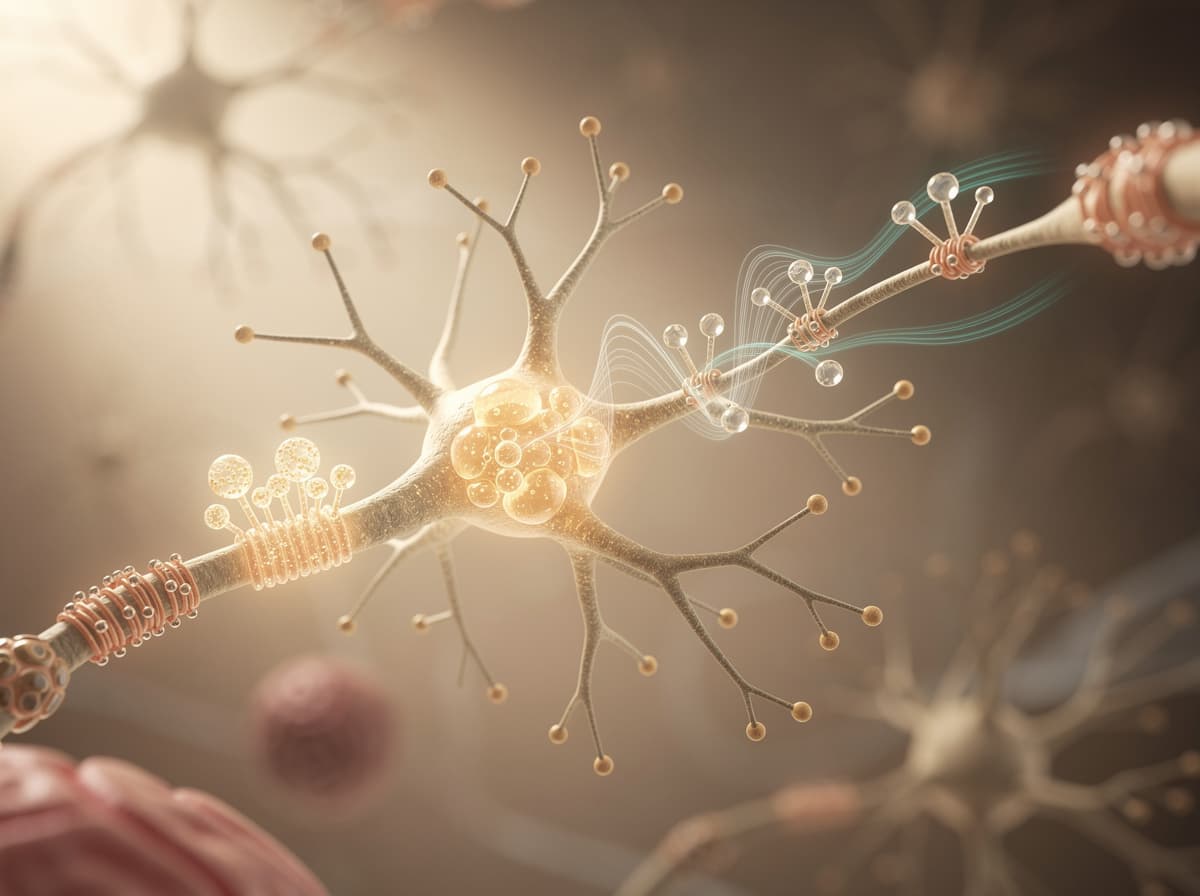
Semax is a synthetic heptapeptide based on the 4-10 fragment of adrenocorticotropic hormone. Its pharmacology is unusually well characterised for a peptide in this category. A 2006 study in the Journal of Neurochemistry found that the binding of tritium-labelled Semax was time dependent, specific and reversible with a dissociation constant of 2.4 nm, and intranasal Semax at 50 and 250 microg/kg produced a rapid increase in BDNF levels after 3 hours in the basal forebrain but not the cerebellum .
The mood-relevant mechanism is broader than BDNF alone. Preliminary evidence from rodent work indicates Semax raises hippocampal and cortical serotonin and produces mild anxiolytic and antidepressant-like effects after repeated administration. A 2008 CNS Spectrums communique by Chi-Un Pae explicitly raised the question of Semax as a depression candidate based on its combined BDNF and serotonergic profile.
The strongest human data, however, comes from stroke recovery, not mood. In a Russian study of 110 patients recovering from ischemic stroke, intranasal Semax in two 10-day courses of 6,000 mcg/day raised plasma BDNF and was associated with faster functional recovery compared with patients not given Semax (Gusev et al., 2018). That suggests the BDNF effect translates to humans, but the study was not placebo-controlled and it is not a depression endpoint. No large randomised placebo-controlled trial of Semax in major depressive disorder has been published in a Western indexed journal as of 2026.
Selank: GABAergic anxiolytic with antidepressant-adjacent effects#
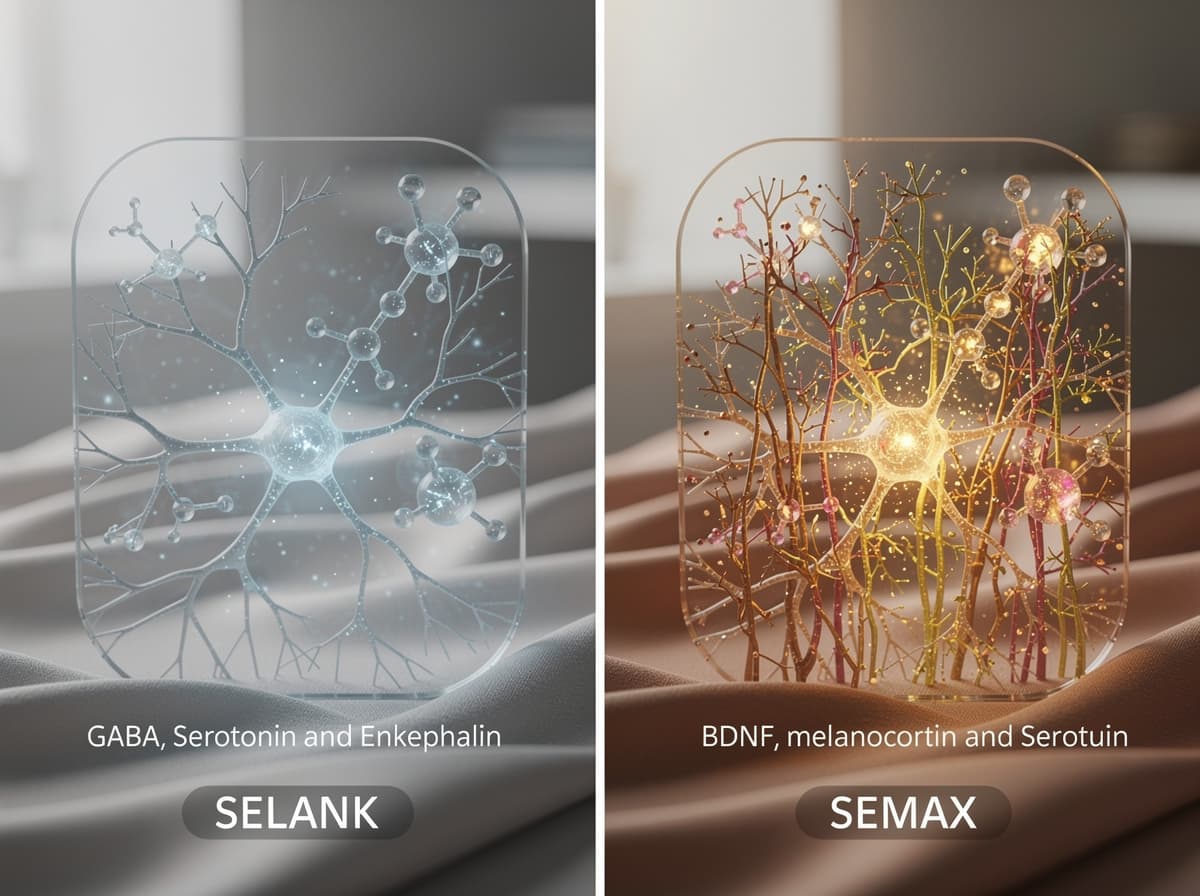
Selank is a synthetic analogue of the endogenous immunomodulatory peptide tuftsin. Its primary clinical positioning is anxiolysis, but its mechanism overlaps with depression biology in three ways: GABA, serotonin, and BDNF.
The GABA case is the most replicated. A 2017 Frontiers in Pharmacology paper summarised that clinical studies have shown Selank had an anxiolytic effect comparable to that of classical benzodiazepine drugs, which can enhance the inhibitory effect of GABA by allosteric modulation of GABA-A receptors, suggesting the molecular mechanism may relate to its ability to affect the GABAergic system . A separate 2017 rat study in Behavioural Neurology examined Selank combined with diazepam under unpredictable chronic mild stress and reported that the combined administration of Selank and diazepam amplifies their anxiolytic action; Selank not only modulates GABA-A receptors allosterically but also increases the affinity of diazepam to these receptors .
The depression-relevant angle is the serotonin and enkephalin system. Research has shown that Selank slows the degradation of endogenous enkephalins, which secondarily modulates serotonergic and dopaminergic tone. Studies have shown Selank also influences BDNF expression in the hippocampus, the same circuit implicated in the meta-analytic BDNF-depression link above. The clinical anxiolytic data is associated with a calm, non-sedating profile rather than the cognitive dulling typical of benzodiazepines.
What Selank does not have is direct major depressive disorder trial data. The Russian clinical record covers generalised anxiety disorder and neurasthenia, and the depression case is mechanistic and indirect, not established by registration trials.
How researchers compare Selank and Semax for low mood#
Both peptides are typically administered intranasally, both have decades of Russian clinical use, and both have minimal hormonal side effects. The differences matter when matching a peptide to a symptom profile.
Semax skews stimulating. Russian clinical applications of Semax range widely depending on indication, and for cognitive enhancement, doses are commonly reported in the lower end of the intranasal range. The subjective profile is closer to a mild dopaminergic and noradrenergic lift than to a sedating compound, which makes it more relevant to depression presentations dominated by anergia, anhedonia, and motivational flatness. Preliminary evidence points to a mood lift through the combined BDNF and serotonergic mechanism, with the caveat that higher doses can produce agitation in sensitive individuals.
Selank skews calming. It is typically dosed intranasally or subcutaneously based on the same Russian clinical lineage. Its profile fits depression presentations with prominent anxiety, rumination, and stress reactivity, which is the most common comorbidity pattern in mixed anxiety-depression. Because the anxiolytic effect is thought to operate partly through GABA-A modulation without direct benzodiazepine-site binding, the dependence and tolerance seen with benzodiazepines have not been reported, although no study has formally tested for them.
For researchers and adults working with a qualified clinician, the practical heuristic is mechanism-symptom matching: BDNF-led for anergic depression with cognitive blunting, GABA-led for anxious depression with autonomic hyperarousal. Klarovel's peptide calculator helps frame the protocol math, and the how-it-works page explains the curated protocol layer. Klarovel does not sell, source, or fulfil peptides.
What the evidence does not yet support#
A responsible read of the literature requires naming the gaps. Three are material.
First, no Phase 3 trial. Neither Semax nor Selank has completed a large randomised placebo-controlled trial in major depressive disorder published in a Western indexed journal. The BDNF link to depression response is well established at the population level, but that does not automatically translate into clinical benefit for these specific peptides at these specific doses.
Second, BDNF causality is not settled. A systematic review in Acta Neuropsychiatrica noted that according to present overall scientific data there is a possibly major pathophysiological role for BDNF neurotrophic systems to play in MDD, however the synthesis of evidence makes clear that likely no overall association of BDNF-related mutations with MDD exists, and solidifying evidence emerged on specific sub-conditions and stratifications based on demographic, clinico-phenotypical and neuromorphological variables . BDNF is part of the picture, not the whole picture.
Third, long-term safety in mood populations. The Russian clinical record is long for stroke and anxiety indications, but extended use in depression specifically has not been studied with the rigor applied to SSRIs or SNRIs.
This is why Klarovel positions the peptide layer as research and wellness adjacent to, not a replacement for, conventional psychiatric care. Anyone with active suicidal ideation, severe depression, bipolar disorder, or treatment-resistant depression needs a clinician, not a peptide protocol.
Where to go from here#
The honest summary is this: the BDNF-depression link is well established at the level of meta-analysis, Semax and Selank have credible mechanistic reasons to be studied for mood, and the human trial base for their use in depression specifically remains thin. That combination calls for curiosity paired with discipline, not enthusiasm paired with shortcuts.
If the science here resonates and the gaps are acceptable, the next step is a structured protocol layer rather than a search-and-purchase pattern. Create a Klarovel account to access the peptide protocol library and run dosing calculations against published research ranges. Klarovel does not sell, source, or fulfil peptides. The cognitive cluster also has a complete Selank guide that goes deeper on Selank's anxiolytic profile specifically.
Frequently asked questions
Keep reading
Wegovy Pill: How It Works, How to Take It, and Results
The Wegovy pill is semaglutide 25 mg taken daily, FDA-approved for weight loss in December 2025. How to take it, how well it works, and how it compares.

5-Amino-1MQ Guide: What the NNMT Evidence Actually Shows
5-Amino-1MQ is sold for fat loss, but every published result is preclinical. Read the NNMT mechanism, the circulating dosing range, and its FDA status.

Peptides for Men: What Works by Goal and Evidence Stage
Men search peptides for seven goals: muscle, fat loss, libido, hormones, recovery, hair, longevity. Here is the FDA status and trial evidence behind each.