

The "SARMs vs peptides" debate gets framed as two flavors of the same shortcut. It is not. The two compound classes differ in mechanism, regulatory status, and adverse event profile in ways that determine whether a protocol is defensible or reckless. This guide unpacks what the primary literature actually shows.
Key takeaways#
- SARMs bind androgen receptors directly; peptides act as receptor-specific signaling molecules that trigger downstream cascades rather than overriding endocrine output.
- No SARM has received FDA or EMA approval, and the FDA has issued explicit consumer warnings linking them to heart attack, stroke, liver injury, and psychiatric events.
- Some peptides (semaglutide, tesamorelin) are FDA-approved medicines; others (BPC-157, CJC-1295, ipamorelin) remain research compounds with primarily preclinical evidence.
- Both classes are prohibited under the WADA Code: SARMs under S1 (anabolic agents), most performance peptides under S2 (peptide hormones and releasing factors), and BPC-157 under S0 (non-approved substances).
- Liver toxicity is a documented SARM signal across multiple case reports; the comparable peptide safety question is unregulated sourcing, not intrinsic hepatotoxicity.
The mechanisms are not comparable#
SARMs and peptides are often discussed as interchangeable "alternatives to steroids," but they intervene in the body at fundamentally different levels. SARMs are synthetic androgen receptor ligands designed to have anabolic effects in muscle and bone while minimizing unwanted androgenic effects in areas like the prostate and cardiovascular system. Mechanistically, SARMs act as ligands by diffusing into the cell and binding to the androgen receptor in the cytoplasm, creating a receptor-ligand complex that translocates to the nucleus where it binds to DNA and acts as a transcriptional regulator. That is the same broad pathway anabolic steroids use; the "selective" framing refers to tissue distribution, not a different class of action.
Peptides operate one layer above. Peptides are short chains of amino acids that bind to cell surface receptors and trigger signaling cascades that produce targeted biological effects, from hormone release and tissue repair to immune modulation and metabolic regulation. Signaling peptides like these do not enter the cell to flip a transcription switch the way SARMs do. Instead, their specificity arises from the peptide's amino acid sequence and three-dimensional conformation, which determines which receptors it can bind, producing discrete pathway activation rather than broad anabolic transcription.
The practical consequence: a growth hormone secretagogue peptide nudges the pituitary to release more endogenous GH in its normal pulsatile pattern. A SARM does not nudge anything. It directly occupies the androgen receptor and forces transcription.

The regulatory picture is asymmetric#
This is where the comparison gets uncomfortable for SARM proponents. Despite being in clinical trials, no SARM has been approved by the Food and Drug Administration (FDA) or European Medicines Agency for pharmacotherapy. Although SARMs are often marketed as dietary supplements or "sold for research use only," they are considered unapproved drugs, and SARMs cannot be legally marketed in the U.S. as a dietary supplement or drug.
Peptides occupy a more fragmented regulatory space. Some are fully approved medicines: GLP-1 agonists like semaglutide, tesamorelin for HIV-associated lipodystrophy, and others have completed Phase 3 trials and carry full prescribing labels. Research-grade peptides such as BPC-157, CJC-1295, and ipamorelin do not. They sit in a category similar to where SARMs sit: unapproved, and often sold under "research use only" labels. In Norway, BPC-157, CJC-1295 and ipamorelin have also been on the national doping list since 15 September 2026 (FOR-2026-09-14-1794).
Klarovel does not sell, source, or fulfil peptides. Klarovel's role is the protocol layer, helping users think clearly about dose, timing, and what the evidence does and does not support. The peptide calculator and how it works pages explain that division of labor.
The SARM adverse event signal is real#
The strongest argument against treating SARMs as a casual alternative is the accumulating adverse event literature. The FDA has warned consumers about potential life-threatening side effects from SARMs, including an increased risk of heart attack and stroke. In pediatric and young adult populations specifically, SARMs have been associated with increased risk of heart attack or stroke, psychosis, sleep disturbances, sexual dysfunction, liver injury/failure, infertility, pregnancy miscarriage and testicular shrinkage.
Liver injury is the most consistently documented endpoint. SARMs such as LGD-4033 (Ligandrol) are associated with significant adverse effects, including hepatotoxicity, cardiovascular complications, endocrine disturbances, and psychiatric symptoms. Studies have shown a measurable lipid signal even at low doses: in a 12-week phase II trial of enobosarm (ostarine) in older adults, HDL fell in a dose-dependent way, by 17% at 1 mg/day and 27% at 3 mg/day versus placebo. A separate mechanistic review found that SARMs may increase the risk of cardiovascular diseases through implications on the renin-angiotensin system, smooth muscle cells, sympathetic nervous system, lipid profile, inflammation, platelet activity, and various other factors.
Case reports keep accumulating. A 2024 report on LGD-4033 described a 52-year-old man who presented with pruritic jaundice, significant weight loss, and elevated liver enzymes following three months of high-dose LGD-4033 use. A 2025 case involving stenabolic concluded that its structural and pharmacologic similarities to anabolic steroids raise concern for hepatotoxicity through an idiosyncratic immune-mediated mechanism.
The HPG axis behaves differently under each class#
Endogenous testosterone production is regulated by a feedback loop between the hypothalamus, pituitary, and testes. When exogenous androgen receptor agonists occupy those receptors, the hypothalamus reads sufficiency and reduces gonadotropin release, so LH and FSH fall and endogenous testosterone drops. This is a mechanism-level prediction, and it has been observed clinically in SARM users, which is why post-cycle protocols exist in the informal literature at all.
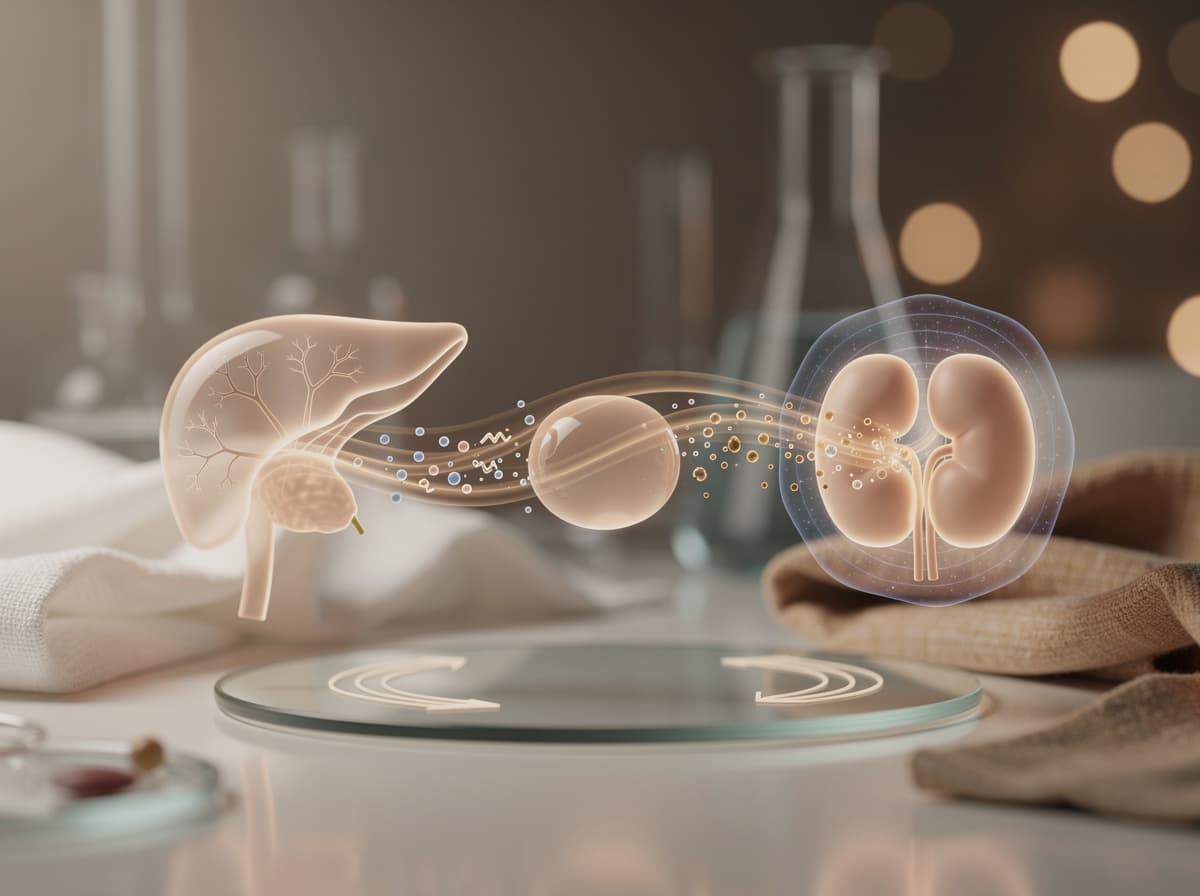
Peptides that stimulate GH release do not trigger this pathway because they do not occupy androgen receptors. Studies have shown that GH-releasing peptides preserve the pulsatile character of endogenous secretion and leave the HPG feedback loop intact. That does not make them risk-free; it means the failure modes are different. Peptide risks cluster around insulin sensitivity, water retention, and injection-site or supplier-purity issues, whereas SARM risks cluster around hepatotoxicity and hormonal suppression.
What the peptide evidence actually shows#
The peptide literature is uneven, and pretending otherwise damages the field. The strongest data sits with approved peptide medicines (GLP-1 agonists, tesamorelin) and with growth hormone secretagogues, which have decades of pharmacological characterization. CJC-1295 is a synthetic GHRH analog engineered to bind the GHRH receptor on pituitary somatotroph cells, and upon receptor binding it activates adenylyl cyclase, increasing intracellular cyclic AMP concentrations and triggering a cascade that promotes GH synthesis and secretion. Ipamorelin works through a parallel pathway: growth hormone secretagogues such as ipamorelin and MK-677 act on ghrelin receptors (GHS-R1a) to stimulate GH release.
For tissue repair, BPC-157 is the most studied compound and also the most honestly characterized. A 2025 systematic review screened 544 articles from 1993 to 2024 and after duplicates were removed, 36 studies were included (35 preclinical studies, 1 clinical study). The mechanism work is solid: experimental evidence reveals that BPC-157 supports angiogenesis, collagen synthesis, fibroblast activity, and modulation of nitric oxide pathways, contributing to enhanced healing of muscle, tendon, ligament, bone, and gastrointestinal tissue. Research has shown that BPC-157 upregulates growth hormone receptor expression in tendon fibroblasts, which preliminary evidence suggests is one mechanism behind its tendon healing effects in rodent models.
But the honest read is that the vast majority were preclinical, primarily conducted in rats, with very limited clinical data in humans. The mechanism is plausible. The human efficacy data is thin. That is a different statement from "SARMs cause liver injury in documented case reports." Both honesty positions matter.
Both classes are banned in sport#
Anyone competing under WADA jurisdiction needs to understand: this is not a loophole. SARMs are prohibited at all times on the WADA Prohibited List and are not approved for human use by any regulatory body. The 2026 list explicitly names andarine, enobosarm (ostarine), LGD-4033 (ligandrol), RAD140, S-23 and YK-11 as examples under S1.
Performance peptides are banned under a parallel category. The WADA S2 class covers growth hormone-releasing hormone (GHRH) and its analogues (e.g. CJC-1293, CJC-1295, sermorelin and tesamorelin), growth hormone secretagogues (GHS) and their mimetics including anamorelin, capromorelin, ibutamoren (MK-677), ipamorelin. TB-500 is named under S2 as a thymosin-β4 derivative, and BPC-157 is named under S0 (non-approved substances); both are prohibited at all times. A "research chemical" label does not change anti-doping liability; an athlete with a positive test does not get an exemption because the bottle said "not for human consumption."
Choosing the right comparison frame#
If the question is "which class can I use to gain muscle faster," that is the wrong question and probably the wrong site. If the question is "what does the evidence actually support for recovery, body composition, or longevity research," the framing changes:
- For documented anabolic effect with a known adverse event signal: SARMs sit closer to anabolic steroids than the marketing suggests. The hepatic and cardiovascular signals are real.
- For targeted tissue repair signaling: peptides like BPC-157 have mechanistic plausibility and consistent preclinical data, but the human evidence base remains preliminary.
- For endocrine optimization: growth hormone secretagogues have decades of pharmacology behind them and may support pulsatile GH release without exogenous HGH, but they are prohibited in sport and remain research compounds outside specific approved indications.
- For approved medical indications: specific peptide medicines (semaglutide for metabolic disease, tesamorelin for lipodystrophy) have full clinical trial evidence and prescribing labels.
The honest answer to "SARMs vs peptides" is that they are not interchangeable categories. They are different molecular tools with different risk profiles, different evidence bases, and different regulatory standings. Treating them as the same conversation flattens information the user needs.
The bottom line#
SARMs and peptides are not two versions of the same thing. SARMs are unapproved androgen receptor agonists with a documented adverse event profile that includes liver injury and cardiovascular signals. Peptides are a heterogeneous class spanning approved medicines, well-characterized research compounds, and speculative experimental molecules. The serious work is in treating each compound on its own evidence base rather than collapsing the categories into a "shortcut" narrative. To build a protocol grounded in primary sources instead of forum lore, register for a Klarovel account and start with the calculator.
Frequently asked questions
Keep reading
Peptides for Inflammation: Mapping BPC-157, KPV, and Thymosins
Peptides for inflammation compared by mechanism and evidence stage: BPC-157, KPV, thymosin alpha-1, and thymosin beta-4, with FDA status and safety notes.

Mounjaro vs Zepbound: Same Drug, Two Different FDA Labels
Mounjaro and Zepbound are the same drug, tirzepatide, at the same doses. The difference is the FDA label: diabetes for Mounjaro, weight loss for Zepbound.

Rybelsus for Weight Loss: Not Approved, and the Pill That Is
Rybelsus is not FDA-approved for weight loss and moves the scale only a little. The oral semaglutide approved for weight loss is the Wegovy pill at 25 mg.