

Norway entered 2026 with a weight-loss medication landscape that looked nothing like it did three years ago. Three GLP-1-based injectables are authorised for weight management (with Ozempic authorised for diabetes), an oral semaglutide tablet won EU approval in July 2026, and a triple agonist has posted some of the largest weight-loss figures yet reported in a phase 3 trial. This guide maps every approved option for Norwegian patients, plus the research-only frontier, with the reimbursement reality that actually determines who pays what.
Key takeaways#
- Three GLP-1-based medicines are approved for weight management in Norway: Wegovy (semaglutide), Mounjaro (tirzepatide) and Saxenda (liraglutide); Ozempic remains type 2 diabetes-only.
- None of the GLP-1 weight-loss medications has pre-approved reimbursement from folketrygden; individual reimbursement is granted only in very rare exceptions, on application from a doctor at a public hospital. DMP recommended Wegovy for a narrower group in November 2025, and that decision now rests with the Storting.
- At list price, a 4-week Wegovy 2.4 mg pen costs NOK 3,205.40 and a 4-week Mounjaro 15 mg pen NOK 5,753.70 (Felleskatalogen maximum pharmacy prices as listed in October 2026).
- Wegovy's standard dose has been shown to deliver ~15% mean weight loss; the 7.2 mg maintenance dose about 21%; Mounjaro 15 mg about 21% in SURMOUNT-1.
- A 2024 to 2025 rationing order stopped Ozempic being dispensed on white prescription; it was lifted on 31 March 2025, but DMP still asks doctors to prescribe Ozempic only for diabetes.
- Retatrutide, a triple agonist still in phase 3, reduced weight by 23.7% (treatment-regimen estimand) or 28.7% (efficacy estimand) at 12 mg in TRIUMPH-4.
The four GLP-1 medications you can actually get on prescription in Norway#
Norway's regulatory landscape in 2026 contains exactly four GLP-1 class medications with a Norwegian marketing authorisation for weight management or with established off-label use that was subsequently restricted. The distinction between them is not just dose, but mechanism, frequency, and what folketrygden will and will not pay for.
Wegovy (semaglutide 2.4 mg) has been available in Norway since January 2023 as an anti-obesity drug, marking the first time semaglutide carried a dedicated obesity label in the country. The same strict reimbursement restrictions apply for semaglutide (Wegovy), available in Norway since January 2023. Research has shown average weight loss of around 15% after 68 weeks when combined with lifestyle changes, and the European Commission approved a higher 7.2 mg maintenance dose in February 2026 that has been associated with about 21% mean body weight loss in trial participants. On average, participants with obesity, without diabetes, taking Wegovy 7.2 mg had these results: 21% body weight loss for those on Wegovy 7.2 mg when everyone took the medicine as planned, compared to about 2% weight loss for those taking placebo. About 1 in 3 people lost 25% or more of their body weight. Body composition improved with the majority (84%) of weight loss with Wegovy 7.2 mg coming from fat mass, with tests showing preserved muscle functioning.
Mounjaro (tirzepatide) is the only dual GIP and GLP-1 receptor agonist on the Norwegian market. The active substance in Mounjaro, tirzepatide, acts in the same way as glucagon-like peptide-1 (GLP-1) and glucose-dependent insulinotropic polypeptide (GIP). These hormones are produced in the gut and bind to specific receptors (targets) in the body, such as, among others, the pancreas and brain. This increases the amount of insulin that the pancreas releases in response to food and helps lower blood glucose levels in people with type 2 diabetes. Preliminary evidence from the EMA registration dossier has shown that people who used Mounjaro in combination with diet and physical activity for 72 weeks reduced their weight by at least 15% on average, depending on the dose they were given. This compares with 3% in people who were given a placebo. Over 85% of people taking Mounjaro were able to reduce their weight by at least 5%, compared with 35% of people given placebo. The maximum approved dose in Europe is 15 mg once weekly.
Saxenda (liraglutide 3.0 mg) was the first GLP-1 medication approved for obesity in Norway, with EU marketing authorisation since 23 March 2015. Liraglutide (ATC code: A10BJ02, Saxenda) is a glucagon-like peptide-1 receptor agonist (GLP-1RA) also used as a glucose-lowering drug. The glucagon-like peptide-1 hormone is a physiological regulator of appetite and calorie intake. The SCALE Obesity trial established a roughly 8% mean weight loss at 56 weeks, about half of what Wegovy delivers and well under half of Mounjaro's top-dose effect. Saxenda requires daily injection because liraglutide has a half-life of approximately 13 hours.
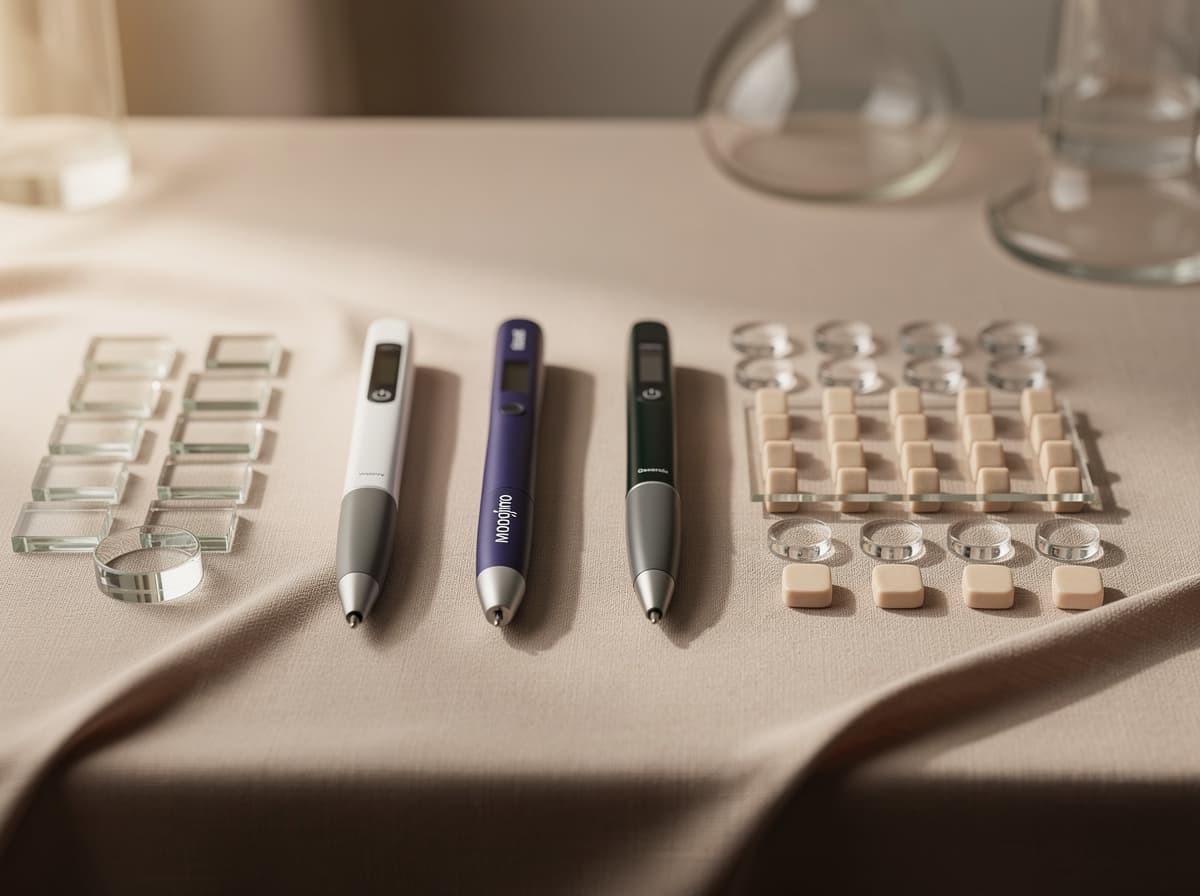
Ozempic, the fourth GLP-1 medicine in this guide, is the exception that proves the rule. It is approved for type 2 diabetes only, and the regulatory situation around it changed materially in 2024.
Why Ozempic is no longer a weight-loss option in Norway#
The Ozempic story is the most important regulatory case study in recent Norwegian pharmaceutical history. Research suggests that the off-label use of Ozempic for weight management drove costs to folketrygden of approximately NOK 1.4 billion in 2023, with a substantial fraction of prescriptions likely inappropriate. In 2023, Norway recorded a significant increase in the consumption of the popular diabetes medicine Ozempic. The Norwegian Directorate of Health reimbursed NOK 1.4 billion for Ozempic to over 64 000 patients. Yet, at least one-quarter of these prescriptions may have been inappropriate. Ozempic, indicated for type 2 diabetes in combination with other diabetes medicines, gained popularity for its hunger-reducing effects and associated weight loss benefits. The surge in off-label demand led to unpredictable supply and shortages, often requiring the use of more expensive foreign packs. In response, the Norwegian Medical Products Agency (DMP) strongly advised against off-label prescribing of Ozempic. DMP reminded doctors that Ozempic should not be prescribed using reimbursement prescriptions (ensuring medicines public coverage) for treating obesity, but only for diabetes in combination with another diabetes drug and when cheaper alternatives have been tried.
The response was structural. Following adoption of an amendment to the Medical Product Act, on July 1, 2024, the Norwegian Medical Products Agency (NOMA) started to ration Ozempic, allowing only diabetic patients with special co-treatment prescriptions to receive the product. Under the new rationing framework, pharmacies can no longer fill hvit resept (white prescriptions), which are only partially covered in limited cases by the Norwegian National Insurance Scheme, for Norwegian packages of Ozempic as of July 1, 2024.
The rationing itself was lifted on 31 March 2025 once supply stabilised, and pharmacies may again dispense Ozempic against a white prescription, but the prescribing guidance did not soften. The Directorate for Medical Products (DMP) explicitly recommends that doctors continue to prescribe Ozempic only to diabetes patients and to use Wegovy for patients who need semaglutide for weight management. The blue prescription criteria for Ozempic still require an individual Helfo application and combination use with metformin, sulfonylurea, or insulin, with at least one of those tried at the highest tolerable dose without achieving sufficient glycemic control. Helfo can now also consider individual applications for semaglutide monotherapy for some patients.
For the Norwegian consumer in 2026, the practical takeaway is simple: Ozempic is not authorised or reimbursed for weight loss, DMP asks doctors not to prescribe it for that purpose, and Wegovy is the semaglutide product with the weight-management indication.
Reimbursement reality: why most patients pay out of pocket#
The single most misunderstood aspect of the Norwegian weight-loss medication landscape is the gap between approval and reimbursement. A medication can be fully approved by EMA and carry a Norwegian marketing authorisation while remaining entirely a patient-pay product.
That is exactly the situation for every GLP-1 weight-loss medication in Norway today. The GLP-1 analogues Saxenda (liraglutide) and Wegovy (semaglutide) are approved for the treatment of obesity. The treatment must be paid by the patient, but can in exceptional cases be covered on blue prescription after application from a doctor at a public hospital. Patients with severe obesity can also receive individual reimbursement for treatment with Xenical (orlistat) and Mysimba (bupropion and naltrexone).
In practice, the individual reimbursement criteria are narrow. Individual coverage is, as a rule, not granted, and only in very rare cases where the patient differs clearly from the group as a whole. The examples the Directorate of Health lists include a life-threatening medical situation, congenital genetic conditions or brain injury affecting appetite regulation, serious mental illness, extensive musculoskeletal defects, intracranial hypertension and problems related to organ transplantation; there is no BMI threshold that qualifies on its own. For the majority of Norwegian patients seeking semaglutide or tirzepatide for weight management, the treatment is a private-pay expense.
Two decisions may change that. In November 2025, after price negotiations, DMP found Wegovy cost-effective for patients with a BMI of at least 35 and at least two weight-related diseases, a group of more than 70,000 people; because the cost exceeds DMP's 100 million kroner mandate, the Storting must fund it in a state budget, and until then Wegovy stays on white prescription. For Mounjaro, DMP declined pre-approved reimbursement in type 2 diabetes in 2026, and its blue-prescription assessment for obesity was still ongoing (Nytt om legemidler 10/2026).
What the medicines cost at the pharmacy#
Prescription medicine prices in Norway are capped. These are the maximum pharmacy retail prices listed on Felleskatalogen in October 2026; each pen holds four weekly doses, so one pen covers four weeks. Prices are revised regularly, so check Felleskatalogen for the current figure.
- Wegovy FlexTouch (Felleskatalogen): 0.25 mg, 0.5 mg and 1 mg pens NOK 1,748.20; 1.7 mg NOK 2,605.00; 2.4 mg NOK 3,205.40.
- Mounjaro KwikPen: 2.5 mg NOK 2,370.60; 5 mg NOK 3,207.80; 7.5 mg and 10 mg NOK 4,489.70; 12.5 mg and 15 mg NOK 5,753.70.
At those prices, a year on Wegovy 2.4 mg maintenance is roughly 13 pens, about NOK 41,700, and a year on Mounjaro 15 mg about NOK 74,800, before any discount a pharmacy may offer.
This is a deliberate policy choice. Studies have shown that when liraglutide and bupropion-naltrexone were under more permissive reimbursement, total Norwegian anti-obesity drug sales grew from 1.1 million euros in 2017 to 91.8 million euros in 2022 . The 2023 reimbursement restrictions on both Saxenda and Wegovy were the direct policy response.
The non-GLP-1 options: Mysimba and Xenical#
Two older, non-peptide medications remain available in Norway for weight management and represent the lower-cost end of the reimbursement-eligible spectrum.
Mysimba (bupropion-naltrexone) is an oral combination that targets central appetite pathways through a different mechanism than the incretins. Research has shown utilization patterns growing rapidly: in 2017, only 265 individuals filled a prescription, compared to 42,808 in 2022. The medication is associated with lower mean weight loss than the GLP-1 class, typically in the 4-6% range, but the access path is more open. In 2022, 67.7% of all bupropion-naltrexone users received reimbursement (78.6% among men and 63.5% among women).
Xenical (orlistat) is a peripheral-acting lipase inhibitor with a long safety record but modest efficacy. It blocks roughly 30% of dietary fat absorption and is associated with gastrointestinal side effects directly proportional to dietary fat intake. Studies have shown mean weight loss of approximately 3-5% over 12 months, and orlistat remains on the individual reimbursement list for severe obesity.
Both options sit in a different therapeutic category than the GLP-1 class and may support patients who cannot tolerate injectables, have contraindications to GLP-1 receptor agonists, or face cost barriers to private-pay semaglutide and tirzepatide.

What's coming: oral semaglutide and the triple agonist frontier#
Two pipeline developments matter for any Norwegian considering the medium-term landscape.
The first is oral semaglutide for weight management. The Food and Drug Administration (FDA) has approved Wegovy (semaglutide) tablets, the first oral glucagon-like peptide-1 (GLP-1) receptor agonist for the treatment of obesity. Research has shown that the OASIS 4 phase 3 trial achieved an average weight loss of about 17% (16.6%), when used along with a reduced calorie diet and exercise and if all patients stayed on treatment, compared to about 3% (2.7%) for placebo. The European Commission approved Wegovy tablets (oral semaglutide 25 mg) on 15 July 2026, following a positive CHMP opinion on 21 May 2026. Norway follows EU authorisations through the EEA, but launch timing and price in Norway are separate decisions.
The second is retatrutide, Eli Lilly's not-yet-approved triple hormone receptor agonist. Preclinical data points and now phase 3 data point to a step change in efficacy. The TRIUMPH-4 trial reported topline results in December 2025, in 445 adults with obesity or overweight and knee osteoarthritis. At 68 weeks, participants on retatrutide 12 mg lost an average of 28.7% of their body weight and those on 9 mg 26.4%, versus 2.1% on placebo (efficacy estimand, which assumes everyone stayed on treatment). By the treatment-regimen estimand, which counts everyone randomised, the figures were 23.7% (12 mg), 20.0% (9 mg) and 4.6% (placebo). Knee pain scores fell by up to about 75%. However, the safety signal deserves attention. Lilly did report a safety signal called dysesthesia in 8.8% and 20.9% of patients on the 9 mg and 12 mg doses, respectively. In the placebo arm, just 0.7% of patients reported this side effect. Dysesthesia is an abnormal sense of touch that causes normal sensations to feel unusual or painful.
Retatrutide is not yet approved anywhere. GlobalData, parent company of Clinical Trials Arena, predicts a 2027 approval for retatrutide. Klarovel sells nothing and does not source or fulfil retatrutide; it is not a clinical option in Norway. Any source claiming to sell retatrutide for human use is operating outside the Norwegian regulatory framework.
How to compare the options without getting lost#
The comparison frame that actually matters for a Norwegian patient is not "which drug loses the most weight in trials" but "which path through approval, prescription, and payment fits my situation." The Klarovel peptide calculator and how-it-works guide can help structure that decision against your own BMI, comorbidity profile, and budget reality.
For most patients, the decision tree in 2026 looks like this. If severe obesity comes with exceptional medical circumstances of the kind listed above, a public-hospital doctor's Helfo application for individual reimbursement is the starting point. If you meet the label criteria (BMI of 30 or more, or 27 or more with a weight-related condition) and can afford private-pay treatment, Wegovy or Mounjaro are the highest-efficacy approved options. If injectable adherence is a barrier, Saxenda's daily format with shorter half-life may suit some patients despite lower mean efficacy. If GLP-1 contraindications exist or cost is prohibitive, Mysimba and Xenical remain in the toolkit. If you are reading about retatrutide and triple agonists, you are looking at the 2027-2028 horizon, not the current prescribing landscape.
The honest version#
The Norwegian weight-loss medication landscape in 2026 is more pharmacologically rich than at any prior point in history, and simultaneously more restrictive in payer terms than in most of Western Europe. That tension is the entire story. Approval is real. Reimbursement is the exception. Patient out-of-pocket cost is the rule. The science has run ahead of the policy framework, and the gap will widen further when retatrutide eventually lands.
The right move for any Norwegian patient is to start with an honest assessment of the regulatory category, the eligibility criteria, and the realistic cost picture before getting attached to a specific drug name. Register with Klarovel to receive structured protocol guidance, use the peptide calculator to model dose schedules against your own profile, or read the broader guide to peptides for weight loss for the mechanism context behind each option. The decision deserves clinical precision, not Instagram-driven impulse.
Frequently asked questions
Keep reading
Peptides for Inflammation: Mapping BPC-157, KPV, and Thymosins
Peptides for inflammation compared by mechanism and evidence stage: BPC-157, KPV, thymosin alpha-1, and thymosin beta-4, with FDA status and safety notes.
Mounjaro vs Zepbound: Same Drug, Two Different FDA Labels
Mounjaro and Zepbound are the same drug, tirzepatide, at the same doses. The difference is the FDA label: diabetes for Mounjaro, weight loss for Zepbound.
Rybelsus for Weight Loss: Not Approved, and the Pill That Is
Rybelsus is not FDA-approved for weight loss and moves the scale only a little. The oral semaglutide approved for weight loss is the Wegovy pill at 25 mg.