

Cagrilintide and semaglutide get framed as competitors, but the most interesting data of 2025 shows they are most powerful when paired. The REDEFINE trials reframed this entire comparison: the question is no longer "which one wins" but "when does each one make sense on its own, and when do you stack them?" This guide walks through the mechanism, the dosing, the trial data, and a clear decision rule.
Key takeaways#
- Semaglutide is a GLP-1 receptor agonist with the largest single-agent obesity dataset in the world; STEP 1 documented a mean 14.9% weight reduction at 68 weeks.
- Cagrilintide is a long-acting amylin and calcitonin receptor agonist; as monotherapy at 2.4 mg it produces roughly 8 to 12% weight loss over 26 to 68 weeks.
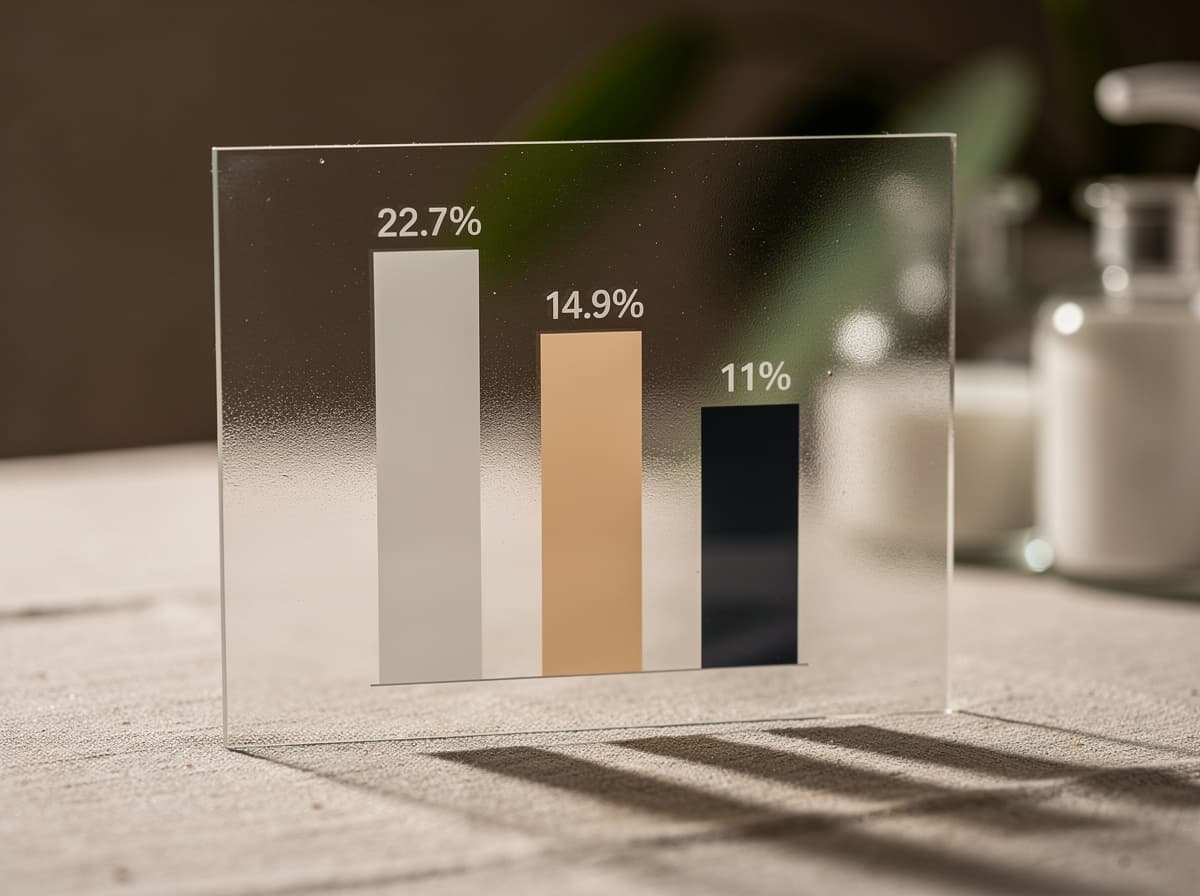
- The combination (CagriSema) delivered 20.4% mean weight loss in REDEFINE 1 counting everyone randomized (22.7% among participants who stayed on treatment), against 14.9% for semaglutide alone and 11.5% for cagrilintide alone.
- Semaglutide has dedicated cardiovascular outcome data (a 20% MACE reduction in SELECT); cagrilintide does not yet have an equivalent CV endpoint trial.
- GI side effects are the dominant tolerability issue for both, and the combination roughly doubles the GI event rate compared with placebo (79.6% versus 39.9%).
- Cagrilintide is not approved. Novo Nordisk filed CagriSema with the FDA in December 2025 and expects a decision in the fourth quarter of 2026.
How cagrilintide works#
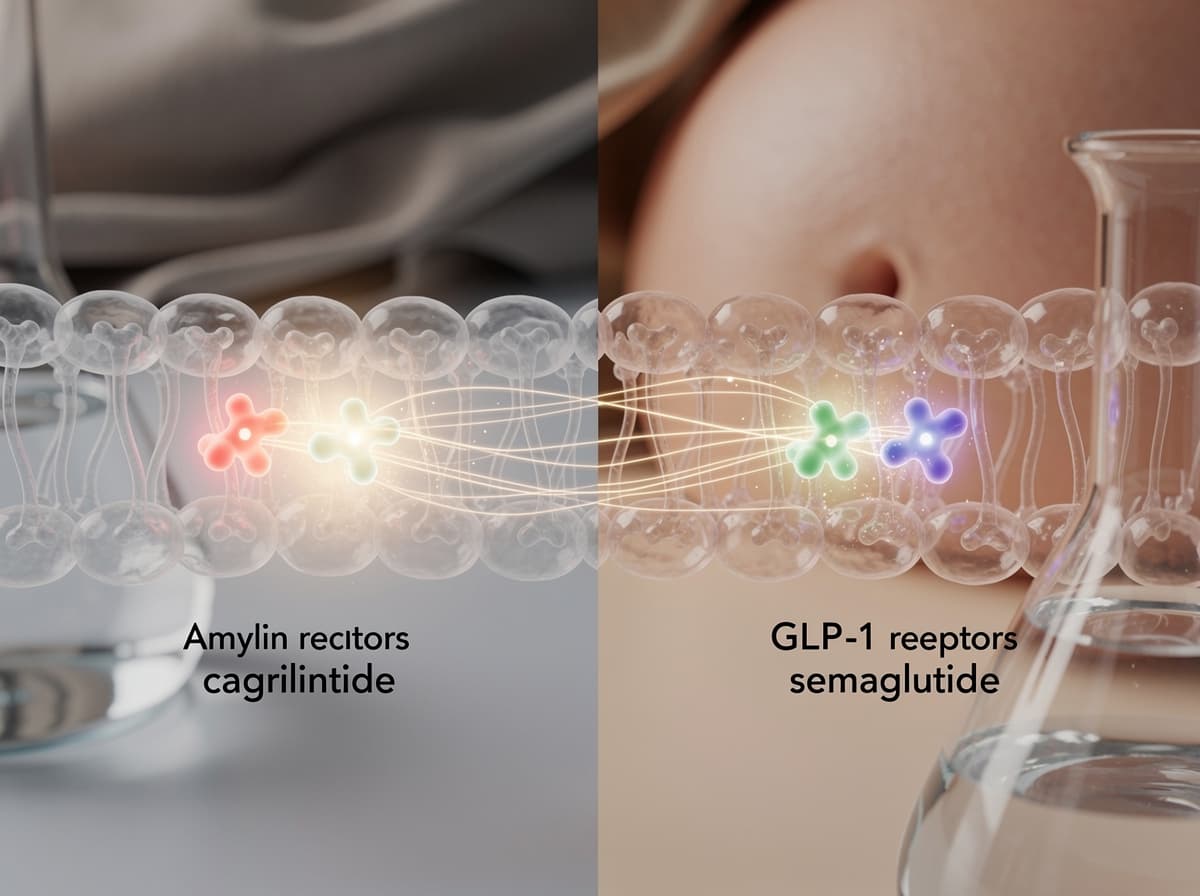
Cagrilintide is a long-acting synthetic analogue of amylin, a 37-amino-acid hormone co-secreted with insulin from pancreatic beta cells. It binds amylin receptors (AMY1R, AMY2R, AMY3R) and the calcitonin receptor, putting it in the dual amylin and calcitonin receptor agonist (DACRA) class. In clinical trials, the half-life of cagrilintide (0.16 to 4.5 mg) ranged from 159 to 195 hours, with an elimination half-life of 7 to 8 days, making it suitable for once-weekly dosing.
The mechanism is non-incretin. Amylin slows gastric emptying in the stomach, suppresses post-prandial glucagon release in the pancreas, and activates homeostatic and reward centers in the brain to suppress appetite and reduce food intake. Critically, cagrilintide was engineered to prevent the amyloid-fibril aggregation that limits native amylin, using 14E and 17R mutations to create a stabilising salt bridge in the central helix. An N-terminal C20 fatty acid drives albumin binding and the long half-life.
Because the amylin and GLP-1 pathways are mechanistically independent, the rationale for combining cagrilintide with semaglutide is biological, not just additive. Research suggests the two molecules act on complementary brain regions involved in both hedonic and homeostatic appetite regulation.
How semaglutide works#
Semaglutide is a GLP-1 receptor agonist with a half-life of roughly 7 days, also suitable for once-weekly subcutaneous administration. It is the most extensively studied anti-obesity peptide on the market, with established weight-loss and cardiovascular indications under the Wegovy brand at the 2.4 mg dose. The mechanism is incretin-based: GLP-1 receptor activation increases glucose-dependent insulin secretion, suppresses glucagon when glucose is elevated, slows gastric emptying, and reduces appetite via hypothalamic and hindbrain signalling.
The pivotal weight-loss evidence comes from STEP 1. In adults with obesity or overweight with one or more weight-related coexisting conditions and without diabetes, mean weight loss was 14.9% from baseline with semaglutide as an adjunct to lifestyle intervention, exceeding placebo by 12.4 percentage points.
86% of participants attained at least 5% weight loss. The trial is published in NEJM.
The cardiovascular dataset is what sets semaglutide apart from every other obesity peptide. In the SELECT trial, once-weekly semaglutide compared with placebo produced a 20% reduction in major adverse cardiovascular events in individuals with overweight or obesity without diabetes. Full results are in NEJM.
Dosing: cagrilintide vs semaglutide#
Both peptides use a slow titration schedule to manage GI tolerability. Research protocols typically share a similar cadence:
For semaglutide 2.4 mg (weight-management dose), research-published titration starts at 0.25 mg weekly, escalates every four weeks through 0.5, 1.0, 1.7 mg, and reaches the 2.4 mg maintenance dose by week 17.
For cagrilintide, the phase 3 REDEFINE protocols use the same step pattern: 0.25 mg, then 0.5, 1.0, 1.7, and 2.4 mg, with each dose held for four weeks before escalation. The earlier phase 2 dose-finding trial tested 0.3 to 4.5 mg weekly with a shorter escalation of up to 6 weeks. From a baseline weight of approximately 100 kg, treatment with 2.4 mg and 4.5 mg cagrilintide resulted in weight loss of 9.7% and 10.8% respectively at week 26, compared to 3.0% with placebo (trial-product estimand).
For CagriSema, the published phase 3 protocol escalates both molecules in parallel, ending at cagrilintide 2.4 mg plus semaglutide 2.4 mg once weekly. The slower the titration, the better the GI tolerability profile. Klarovel's peptide titration calculator generates the week-by-week escalation table for the semaglutide and cagrilintide arms so users can compare side-effect ramps against the actual dose schedule.
Evidence: what the studies actually show#
The two cleanest comparative datasets come from the REDEFINE program; REDEFINE 1 compared CagriSema to each monotherapy and to placebo in the same trial.
REDEFINE 1 randomized 3,417 adults with overweight or obesity (without diabetes) in a 21:3:3:7 ratio to CagriSema, semaglutide 2.4 mg alone, cagrilintide 2.4 mg alone, or placebo over 68 weeks. CagriSema participants achieved a mean body weight reduction of 20.4%, compared to 3.0% with placebo at week 68, a treatment difference of 17.3 percentage points.
Counting everyone randomized, 53.6% of participants receiving CagriSema achieved at least 20% weight loss and 19.3% lost 30% or more; among those who stayed on treatment the figures were about 60% and 23%. Cagrilintide alone in the same trial produced 11.5% weight loss and semaglutide alone 14.9%, consistent with prior STEP data (all treatment-policy estimands). Among participants who stayed on treatment, CagriSema reached 22.7%. Full results are in NEJM.
REDEFINE 2 enrolled adults with type 2 diabetes, a population that historically responds less to weight-loss pharmacotherapy. CagriSema achieved 13.7% weight loss compared to 3.4% with placebo. The combination also improved glycaemic control with a low incidence of hypoglycaemia.
For semaglutide as a standalone agent, the case is built on two pillars. STEP 1 documents the 14.9% mean weight reduction at 68 weeks. SELECT documents a 20% MACE reduction in patients with established cardiovascular disease but without diabetes, an outcome cagrilintide has not yet demonstrated independently. Preliminary evidence on CagriSema's cardiovascular profile is encouraging, with post-hoc analyses showing a 10.9 mmHg systolic blood pressure reduction in REDEFINE 1, but the dedicated CV outcomes trial (REDEFINE 3) is still ongoing.
Side effects and contraindication profile#
Both peptides carry the gastrointestinal signature of the appetite-suppression class. The key difference is magnitude when combined.
For semaglutide 2.4 mg monotherapy, the dominant adverse events are nausea (44% in STEP 1, versus 17% on placebo), constipation, diarrhea, and vomiting. Studies have shown most events are mild to moderate and concentrate during the dose-escalation window.
For cagrilintide monotherapy, the profile is similar but slightly different in distribution. Nausea is dose-dependent, with phase 2 data showing rates from roughly 20% at low doses to nearly 47% at 4.5 mg. Injection-site reactions were among the most frequent adverse events in the phase 2 cagrilintide trial.
For CagriSema, the combination amplifies the GI burden. Gastrointestinal adverse events affected 79.6% of the cagrilintide-semaglutide group versus 39.9% in the placebo group, including nausea, vomiting, diarrhoea, constipation, or abdominal pain, mainly transient and mild-to-moderate in severity.
Specifically, nausea was reported in 55% versus 12.6%, constipation in 30.7% versus 11.6%, and vomiting in 26.1% versus 4.1%. Despite that burden, discontinuation rates due to adverse events were low at 6% for CagriSema versus 3.7% for placebo.
Shared class-level contraindications: personal or family history of medullary thyroid carcinoma, multiple endocrine neoplasia syndrome type 2, and prior episodes of pancreatitis. Slowed gastric emptying can also affect the absorption of oral medications with narrow therapeutic windows.
When to choose cagrilintide#
Cagrilintide as a standalone protocol makes sense in a specific set of scenarios:
- The reader has tried a GLP-1 agonist and developed clinically meaningful intolerance, particularly persistent nausea that did not resolve through titration. Cagrilintide's amylin mechanism may support appetite regulation without re-triggering GLP-1-specific adverse events.
- The reader is interested in a non-incretin approach for mechanistic reasons (for instance, post-bariatric surgery contexts where GLP-1 axis manipulation is less desirable).
- The reader plateaued on GLP-1 monotherapy and wants to add a complementary mechanism rather than escalate semaglutide further. In the 20-week phase 1b trial, adding cagrilintide 2.4 mg to semaglutide 2.4 mg produced an additional 7.4 percentage points of weight loss versus semaglutide plus placebo (17.1% versus 9.8%).
Cagrilintide as monotherapy is the weaker option when the primary outcome is maximum weight loss; semaglutide outperformed it within REDEFINE 1 at the same 2.4 mg dose (14.9% versus 11.5%).
When to choose semaglutide#
Semaglutide as a standalone protocol is the better starting point when:
- The reader's risk profile includes established cardiovascular disease. The SELECT data on a 20% MACE reduction is the strongest CV signal in the class.
- The reader has type 2 diabetes and needs glycaemic benefit alongside weight loss. Semaglutide has been shown to improve HbA1c independently of weight effects.
- Access and regulatory certainty matter. Semaglutide 2.4 mg is approved in the US and EU under the Wegovy brand; cagrilintide is still unapproved.
- The reader is treatment-naive and wants the most studied, most predictable starting point in the obesity-peptide category.
Can you stack them?#
Yes, and the stack is the most evidence-backed combination protocol in obesity pharmacology as of 2026. CagriSema is a fixed-dose combination of cagrilintide 2.4 mg and semaglutide 2.4 mg, designed for once-weekly subcutaneous administration. Studies have shown the two molecules hit complementary receptor families and produce supra-additive weight loss compared to either alone.
The trade-off is tolerability. The combination roughly doubles the GI event rate relative to placebo. For most readers, the practical sequence is: establish tolerance on semaglutide first, reach maintenance dose, then evaluate whether the additional 5 to 8 percentage points of weight loss from adding cagrilintide is worth the additional GI burden. Stacking from day one is not standard practice outside of the REDEFINE protocol design.
Verdict#
For most adults with overweight or obesity and no specific contraindication, semaglutide is the better single-agent starting point. It has the larger evidence base, the dedicated cardiovascular outcome data, and the regulatory approval. Cagrilintide monotherapy underperformed semaglutide on weight loss within REDEFINE 1 and lacks an equivalent CV trial.
But the framing as a binary choice misses the point. Research has shown the combination is where the real ceiling lives for these two molecules: a mean 20.4% weight reduction counting everyone randomized (22.7% on treatment), with more than half of participants losing at least 20%. That is in the range of tirzepatide, though below retatrutide's phase 3 results and below tirzepatide 15 mg in the head-to-head REDEFINE 4 trial. If the goal is maximum weight loss and the reader can tolerate the GI side effects, the CagriSema-style stack is the protocol the evidence points to. If the goal is the strongest cardiovascular signal, semaglutide alone remains the cleaner choice until REDEFINE 3 reads out.
The decision rule, in one sentence#
If the priority is cardiovascular risk reduction and regulatory certainty, semaglutide is the answer; if the priority is maximum weight loss and the reader can tolerate the GI burden, the CagriSema-style stack is where the evidence points. To quantify which one a specific health and goal profile actually favors, run the inputs through the peptide calculator and start with the questionnaire, then cross-reference against the cagrilintide complete guide, the wider overview of how the GLP-1 weight-loss medications compared, and the disclosures at /disclosures before committing to a protocol direction.
Frequently asked questions
Keep reading

Peptides for Inflammation: Mapping BPC-157, KPV, and Thymosins
Peptides for inflammation compared by mechanism and evidence stage: BPC-157, KPV, thymosin alpha-1, and thymosin beta-4, with FDA status and safety notes.
Mounjaro vs Zepbound: Same Drug, Two Different FDA Labels
Mounjaro and Zepbound are the same drug, tirzepatide, at the same doses. The difference is the FDA label: diabetes for Mounjaro, weight loss for Zepbound.

Rybelsus for Weight Loss: Not Approved, and the Pill That Is
Rybelsus is not FDA-approved for weight loss and moves the scale only a little. The oral semaglutide approved for weight loss is the Wegovy pill at 25 mg.