

Tesamorelin peptide is a stabilized analog of growth hormone-releasing hormone (GHRH), and the only GHRH analog currently approved and marketed in the US (also commonly searched as "tesamorlin"). Sold as Egrifta SV and Egrifta WR, it is approved to reduce excess abdominal fat in adults with HIV and lipodystrophy, at 1.4 mg (SV) or 1.28 mg (WR) injected once daily (Egrifta WR label); the original Egrifta and the pivotal trials used 2 mg. Outside that indication a physician can prescribe it off-label, which is lawful because it is an approved drug. This guide covers what the trials showed, the dosing, and how it compares with the unapproved GHRH and GHRP peptides.
What Tesamorelin is#
Tesamorelin is a synthetic 44-amino-acid analogue of native growth hormone-releasing hormone (GHRH). Native GHRH is rapidly degraded in plasma; Tesamorelin is modified with a trans-3-hexenoic acid tail that makes it more resistant to enzymatic breakdown than native GHRH (the current label gives a mean elimination half-life of about 11 minutes after a single subcutaneous dose). That stability is enough to sustain a meaningful therapeutic GHRH signal from a once-daily subcutaneous dose.
Mechanistically, Tesamorelin activates pituitary GHRH receptors, the same target as CJC-1295, Sermorelin, and other GHRH analogues. Receptor activation triggers endogenous GH release, which drives IGF-1 elevation over subsequent hours.
What distinguishes Tesamorelin is the selectivity for visceral fat. In the pivotal Falutz et al. trial (NEJM, 2007), Tesamorelin has been shown to reduce visceral adipose tissue (the deep abdominal fat associated with metabolic disease) by 15.2% over 26 weeks against a 5.0% increase on placebo, with minimal effect on subcutaneous fat. This pattern, visceral-selective fat loss, is the clinical signature that differentiates Tesamorelin from other GH-axis peptides.
FDA approval and the HIV indication#

Tesamorelin was approved by the FDA in 2010 under the brand name Egrifta, later reformulated as Egrifta SV and, in March 2025, Egrifta WR. The indication is HIV-associated lipodystrophy: in HIV patients on antiretroviral therapy, distinctive patterns of body-fat redistribution occur, often with marked accumulation of visceral fat that carries cardiovascular and metabolic risk. Tesamorelin is approved specifically to reduce that visceral fat accumulation.
This is a relatively narrow approved indication. Tesamorelin is not approved for general weight loss, general GH-axis use, or age-related body-composition changes in non-HIV populations. Outside the approved indication, a physician may prescribe tesamorelin off-label, which is lawful for an approved drug. That is a different position from CJC-1295 and ipamorelin, which are not approved for any use and cannot currently be compounded in the US (CJC-1295 was voted down 0 to 13 by an FDA advisory committee in December 2024, FDA minutes).
Tesamorelin is not authorized in the EU or Norway. Its European application was withdrawn in 2012 after the EMA's committee concluded it could not be approved, citing doubts about clinical benefit and the IGF-1 rise (EMA).
Dosing#

Tesamorelin dosage in the published evidence base splits cleanly between the FDA-approved indication and research-use protocols. The pivotal HIV-lipodystrophy trials used 2 mg once daily. The current labels use different formulations: 1.4 mg once daily for Egrifta SV (label) and 1.28 mg once daily for Egrifta WR, which are not interchangeable.
Approved dose (HIV-associated lipodystrophy):
- Dose: 1.4 mg (Egrifta SV) or 1.28 mg (Egrifta WR) subcutaneously once daily; 2 mg in the original formulation and trials
- Site: abdomen, rotating sites; the labels do not specify a time of day
- Duration: typically 6–12 months; continued use assessed against ongoing clinical benefit
Research-use dosing (for general GH-axis effects):
- Dose: 1–2 mg subcutaneously once daily
- Cycle length: 8–12 weeks on, 4 weeks off
Reconstitution: a typical vial contains 5 mg of Tesamorelin lyophilised with mannitol. Reconstitution with 2 mL of bacteriostatic water gives 2.5 mg/mL. A 2 mg dose = 0.8 mL = 80 syringe units. The peptide calculator handles any vial size and target dose.
Tesamorelin is sensitive to shear stress. Vigorous shaking during reconstitution can inactivate the peptide. Use gentle swirling and a 30–60 second rest.
Expected effects#
Tesamorelin's expected effects track the GH-axis activation pattern, with specific emphasis on body composition:
Short-term (weeks 1–4): improved sleep quality, mild transient water retention, gradual IGF-1 elevation
Medium-term (weeks 4–16): noticeable reduction in visceral adipose tissue, minor changes in subcutaneous fat, modest lean-mass preservation or gain
What the registration trials actually measured#
The visceral-fat figure is trial-dependent, so both pivotal numbers are worth having rather than a single headline.
In the phase 3 trial published in the New England Journal of Medicine (Falutz et al. 2007), visceral adipose tissue fell 15.2% on tesamorelin and rose 5.0% on placebo. Triglycerides fell 50 mg/dL against a 9 mg/dL rise, and the total-cholesterol-to-HDL ratio fell 0.31 against a 0.21 rise (p < 0.001 for all).
The six-month efficacy phase reported in JAIDS (Falutz et al. 2010) measured a smaller effect on the same endpoint: VAT −10.9% (−21 cm²) against −0.6% (−1 cm²) on placebo, p < 0.0001, with trunk fat, waist circumference and waist-hip ratio all improving and no change in limb or abdominal subcutaneous fat. IGF-1 rose significantly, and glucose parameters did not move.
Read together, roughly 11% to 15% is the defensible range for VAT reduction over about six months, not the 20% that circulates in summaries. Dhillon's 2011 review in Drugs covers the approved indication in full, and Stanley et al. in Lancet HIV extended the question to non-alcoholic fatty liver disease, which is where most of the newer tesamorelin literature now sits.
Long-term (16+ weeks on therapy): sustained VAT reduction, improved lipid profile (typically lower triglycerides, improved HDL), and research suggests improved insulin sensitivity in most users when bloodwork is monitored across the cycle
IGF-1 monitoring is important. Target is to keep IGF-1 in the upper half of the age-adjusted reference range without exceeding it. Klarovel's questionnaire integrates bloodwork scheduling with the protocol.
Side effects#
Tesamorelin's side-effect profile is well characterised from the FDA approval trials:
- Injection-site reactions (~25%, mild to moderate)
- Joint pain and muscle pain (~10–15%)
- Transient water retention in the first 1–3 weeks
- Mild carpal tunnel symptoms (fluid retention in tissues around the median nerve)
- Elevated fasting glucose (less pronounced than with MK-677; worth monitoring)
Less common but more serious:
- Hypersensitivity reactions (rash, flushing)
- Mannitol hypersensitivity (contraindication for known sensitivity)
- Pituitary hormone changes
Tesamorelin vs CJC-1295#
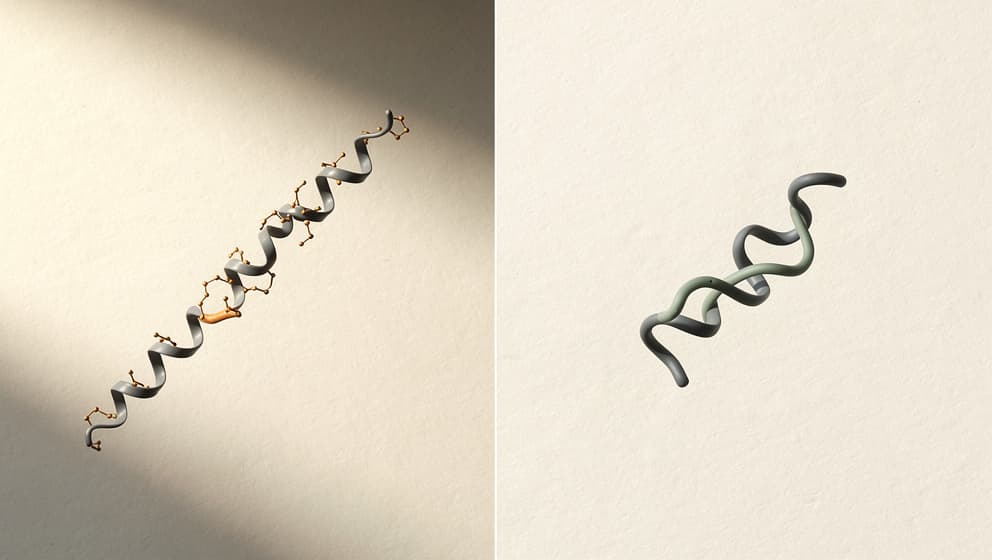
Both are GHRH analogues. The differences that matter:
| Tesamorelin | CJC-1295 (no DAC) | |
|---|---|---|
| Half-life | ~11 min (label, single dose) | ~30 min |
| FDA approval | Yes (Egrifta, HIV-lipodystrophy) | No |
| Structural modification | Trans-3-hexenoic acid tail | Amino-acid substitution |
| Approved dose | 1.4 mg (SV) or 1.28 mg (WR) daily | None |
| Research dose | 1–2 mg daily | 100 mcg per injection, 1–3× daily |
| Cost per mcg | Typically higher | Typically lower |
For general GH-axis effects, CJC-1295 (no DAC) is the more cost-efficient choice with a longer research-use track record. For users who specifically want the visceral-fat-reduction profile documented in FDA approval trials, Tesamorelin has the clinical evidence edge. For users who want an approved medicine, Tesamorelin is the only option in the GH-axis peptide class.
Direct comparisons: CJC-1295 vs tesamorelin, Ipamorelin vs tesamorelin, MK-677 vs tesamorelin.
Practical framework#
Three questions filter the Tesamorelin decision:
- Is the goal visceral fat reduction specifically? Tesamorelin's FDA approval data supports this indication. For general body-composition goals, the difference from CJC-1295 is minor.
- Is regulatory approval important? If the user's framework requires an FDA-approved GH-axis peptide, tesamorelin is the only one currently marketed; there is no EMA-approved option.
- Is cost a factor? Tesamorelin (Egrifta) at approved dose is substantially more expensive per month than research-use CJC-1295 at equivalent effect. For cost-sensitive research protocols, CJC-1295 (no DAC) is typically the entry point.
For protocol planning, Klarovel's questionnaire handles screening. The peptide calculator handles dose math. The Ipamorelin guide covers the common GHRP pairing. For class-level mechanism, see the GLP-1 class explained (different class, but similar framing).
Tesamorelin is the GH-axis peptide with the strongest approval credentials and a specific, documented clinical use case. It is not the cheapest or the most versatile option in the class. For visceral-fat-focused protocols in users who want regulatory-approved pharmacology, it's the right choice. For general GH-axis support, the CJC-1295 + Ipamorelin stack covers most use cases at lower cost. To place Tesamorelin's GHRH-analogue mechanism in the wider context of how the system works, the GH axis explained maps the full GH-IGF-1 pathway.
Frequently asked questions
Keep reading
Kisspeptin Peptide: What Human Trials Show About HPG Axis
Kisspeptin peptide switches on the brain's reproductive axis. See what human trials actually show about LH timing, testosterone, and dosing limits.

LL-37 Peptide: Evidence, Risks, and Unanswered Questions
LL-37 peptide kills bacteria by rupturing membranes, but human evidence stops at topical ulcer trials and one gene-therapy study, not injections.

Wegovy Pill: How It Works, How to Take It, and Results
The Wegovy pill is semaglutide 25 mg taken daily, FDA-approved for weight loss in December 2025. How to take it, how well it works, and how it compares.