
Kisspeptin peptide gets marketed online as a daily hormone booster, but the human trial record tells a narrower story. Researchers have used it for two decades to probe the hypothalamic-pituitary-gonadal axis in controlled, short-duration settings, not as a self-administered daily regimen. This piece walks through what KISS1R activation actually does, what single-dose trials measured, and why repeated dosing runs into a wall the marketing rarely mentions.
Key takeaways#
- A single kisspeptin-54 infusion raised mean LH from 4.2 to 10.8 U/L at 90 minutes in the first human trial, a landmark finding from Dhillo et al., 2005.
- Twice-daily subcutaneous dosing in women with hypothalamic amenorrhea produced tachyphylaxis (receptor desensitization) within about two weeks, according to Jayasena et al., 2009.
- Kisspeptin-54 and kisspeptin-10 are not interchangeable: KP-54 has a plasma half-life roughly seven times longer than KP-10, which changes how each is dosed in a study.
- A 2023 JAMA Network Open trial of 32 men with hypoactive sexual desire disorder reported no serious adverse events, with transient flushing as the most common complaint.
- Kisspeptin remains investigational. No kisspeptin product carries FDA or EMA approval, and multiple Phase 2 trials are still recruiting as of 2026.
Kisspeptin Triggers the Brain's Master Reproductive Switch#
Kisspeptin peptide activates KISS1R receptors on hypothalamic neurons that control reproduction, triggering GnRH release that drives pituitary LH and FSH secretion and downstream testosterone or estradiol production. It functions as the master signal that starts the entire hypothalamic-pituitary-gonadal axis cascade, not a hormone that acts directly on the gonads.
That upstream position is what separates kisspeptin from almost everything else marketed in the same category. Kisspeptin is the furthest-upstream molecular trigger of the HPG axis, activating KISS1R on hypothalamic GnRH neurons to drive the entire cascade from GnRH to LH, FSH, and gonadal hormone production. It does not touch the pituitary or testes or ovaries on its own. It touches the one population of neurons that decides whether GnRH gets released at all.
This mechanism sits next to, but separate from, the growth hormone axis that many other research peptides target. Readers who want the GH side of the picture should see the GH axis pillar guide, because kisspeptin's reproductive cascade runs on a parallel but distinct hormonal track. The two systems interact at the margins (gonadal steroids influence somatotropic signaling and vice versa), but kisspeptin's job starts and mostly ends inside the HPG axis.
The practical implication is specificity. Kisspeptin peptide does not raise growth hormone, does not act as an appetite signal in isolation, and does not produce effects through a direct receptor on the testes or ovaries. Every downstream change, LH, FSH, testosterone, estradiol, traces back through GnRH first. That chain of custody is why researchers use kisspeptin as a probe: it lets them test whether a patient's GnRH neurons and pituitary gonadotrophs still work, without guessing which part of the axis is broken.
The KISS1R Receptor Sits Upstream of GnRH, LH, and FSH#
The kisspeptin receptor KISS1R sits directly on GnRH neurons, and kisspeptin binding to that receptor is the step that triggers GnRH release, pituitary LH, and FSH secretion. Nothing upstream of KISS1R in this cascade has an approved pharmacological probe; it is the first controllable node in the entire reproductive axis.
Both KISS1 and KISS1R are crucial gatekeepers of GnRH neuron, triggering neuroendocrine puberty after the resurgence of GnRH pulsatility. That gatekeeper role is not theoretical. In human patients, a mutation of KISS1R at different sites results in either precocious, delayed, or absent puberty. People born with a nonfunctional KISS1R receptor do not go through puberty on schedule, because the GnRH pulse generator that depends on it never gets switched on. People with gain-of-function mutations in the same kisspeptin receptor KISS1R can enter puberty early.
Mechanism · receptor cascade
Kisspeptin binds KISS1R first, GnRH second, LH and FSH third
The peptide never touches the pituitary or gonads directly; it starts the chain one receptor above GnRH.
This single-receptor dependency also explains why kisspeptin research reads differently from most peptide literature. There is no redundant pathway to fall back on. If KISS1R is blocked, desensitized, or genetically absent, GnRH pulsatility collapses regardless of how much kisspeptin is circulating. That fact becomes important later, when daily dosing protocols run into receptor desensitization rather than runaway stimulation.
Kisspeptin Neurons Cluster in the Hypothalamus and Differ by Sex#
Kisspeptin neurons in the hypothalamus are not spread evenly between the sexes; they cluster in two distinct nuclei, and one of those clusters is sexually dimorphic. The arcuate nucleus (ARC) and the anteroventral periventricular nucleus (AVPV) each house kisspeptin neurons, but they serve different jobs and appear in different numbers depending on sex.
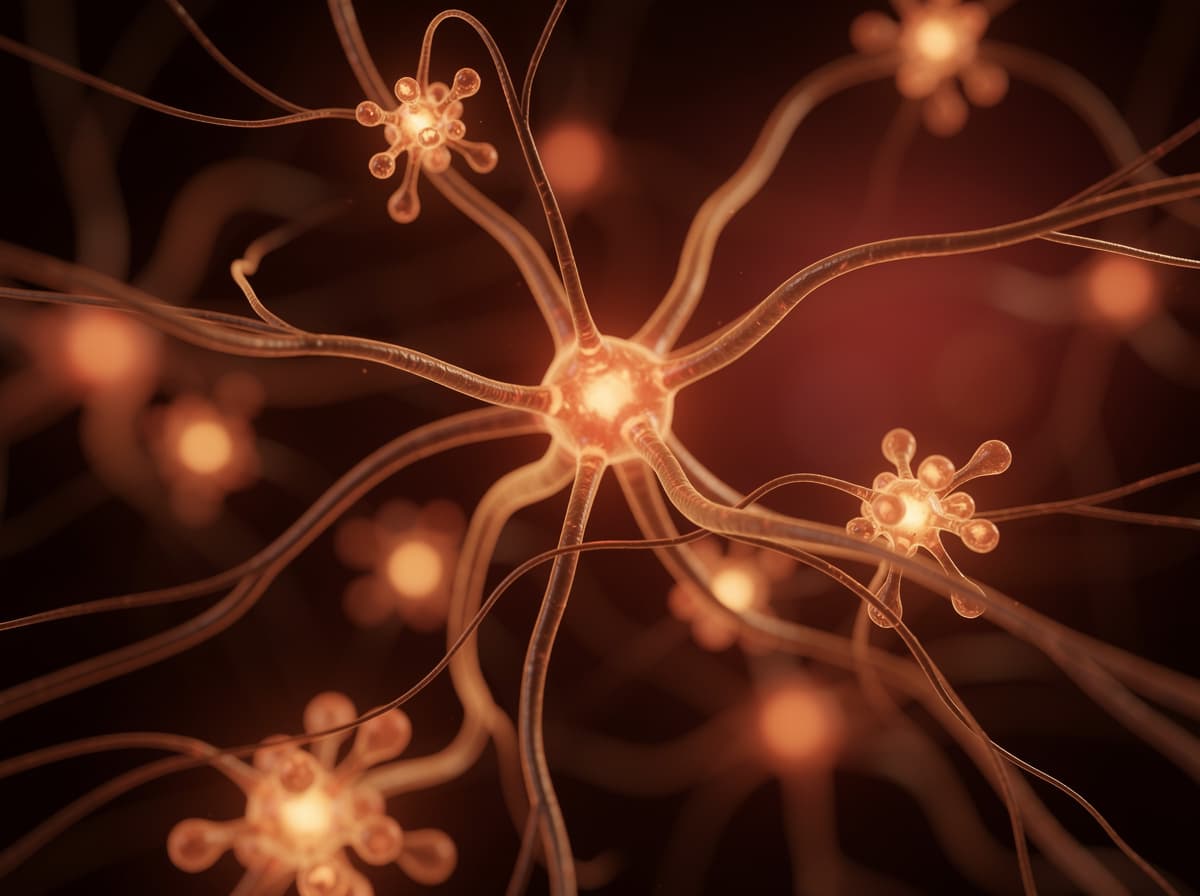
In both females and males, the arcuate nucleus contains more Kiss1 neurons than the AVPV, but the AVPV displays sexual dimorphism: female AVPV contains significantly more Kiss1 neurons than males'. That difference is not subtle. The AVPV kisspeptin population shows 10 to 20 fold more kisspeptin-positive neurons in females than males. The arcuate population, by contrast, shows comparable density across sexes and is thought to drive the ongoing pulsatile rhythm of GnRH release rather than the once-a-cycle surge.
This anatomical split maps onto function. In females, high levels of estrogens and progesterone stimulate kisspeptin neurons of the AVPV to induce the preovulatory surge of GnRH and LH, whereas in the male, GnRH and gonadotrophic hormone release are negatively regulated by circulating testosterone, partly through the activity of kisspeptin neurons of the arcuate nucleus. The AVPV cluster of kisspeptin neurons in the hypothalamus is what generates the ovulatory LH surge in women. Men largely lack an equivalent surge-generating population, which is one reason exogenous kisspeptin produces a different hormonal signature depending on sex and, in women, depending on menstrual cycle phase.
The origin of that sex difference traces back to early development. In rodents, the AVPV region is sexually dimorphic, with a greater number of kisspeptin neurons in females compared with males, and this sexual dimorphism is caused by neonatal exposure to testosterone, which is aromatized into estrogen and causes defeminization of the AVPV region. Whether that developmental mechanism translates precisely to humans is still being worked out, but the adult anatomical difference is well established across species.
A Single Kisspeptin Dose Raises LH Within 30 to 90 Minutes in Human Trials#
A single kisspeptin dose raises LH measurably within 30 to 90 minutes in the human trials that have tested it, with the exact timing depending on the dose, the isoform, and the route of administration. This is the single most replicated finding in the kisspeptin literature.
The original 2005 study set the template. In six healthy men given a 90-minute intravenous infusion of kisspeptin-54, mean 90-minute LH rose to 10.8 U/L against 4.2 U/L on saline, FSH rose to 3.9 U/L against 3.2 U/L, and mean 180-minute testosterone rose to 24.9 nmol/L against 21.7 nmol/L on Dhillo et al., J Clin Endocrinol Metab, 2005. Subsequent dose-finding work in the same group found that near-maximal LH release occurs at a specific infusion rate, and both KP-10 and KP-54 acutely stimulate a gonadotrophin rise in healthy men, with a first LH peak within 60 minutes of administration.
Trial evidence · acute response
LH climbs within the first 90 minutes, then kisspeptin clears
Schematic time course reflecting the direction and timing of LH change reported after a single kisspeptin dose, not exact trial values.
Route changes the clock. Intranasal kisspeptin-54 administration to healthy men resulted in rapid, clinically significant, and dose-dependent increases in circulating LH levels, followed by sustained elevations throughout the sampling period, compared to placebo. Intravenous infusion, subcutaneous bolus, and intranasal spray each produce a rise, but the shape and peak timing of that curve differ by route, which is part of why trial design (not a universal onset number) determines how long kisspeptin-10 takes to work in any given study. For readers who want the unit conversions and dose math behind these trial figures, the peptide dosing math guide covers that ground in detail so this piece can stay focused on what the trials measured.
Daily Kisspeptin Dosing Desensitizes the Receptor Over Time#
Daily kisspeptin dosing desensitizes the KISS1R receptor instead of sustaining the LH rise seen after a single dose. This is the finding that most directly contradicts the marketing claims attached to kisspeptin as a daily hormone-boosting regimen.
The key study tested this directly in women with hypothalamic amenorrhea. The observed decline in response is attributed to desensitization of the hypothalamus with daily KP-54 administration; estrogen levels remained consistent, and ultrasound findings did not indicate folliculogenesis. A single injection worked. Two weeks of twice-daily injections did not sustain that effect. Researchers then tried a less frequent schedule, and KP-54 administration twice weekly resulted in a lower degree of desensitization compared to twice-daily administration, but it did not restore menstruation in women with hypothalamic amenorrhea. Spacing doses out slowed the desensitization associated with chronic exposure, but it did not eliminate the problem or produce the clinical outcome researchers were after.
Can you take kisspeptin every day based on this evidence? The honest answer from the trial record is that daily dosing has been tested, and the receptor response collapses well before any sustained hormonal benefit can be measured. A separate continuous-infusion study in three healthy men illustrates the same ceiling from a different angle: continuous administration of kisspeptin resulted in an immediate increase in LH concentrations, from a baseline of 2.8 to 3.8 mIU/mL to peak values of 17.5 to 30.6 mIU/mL, reached within 12 to 20 hours of infusion onset, after which LH concentrations declined by 13 to 47% from peak to the end of the infusion. Even inside a single continuous exposure window, the signal fades.
This desensitization pattern is not unique to kisspeptin; it is a known feature of receptor biology under sustained agonist exposure, and it is part of why pulsatile or single-bolus protocols dominate the human trial literature rather than fixed daily injections.
Kisspeptin-10 and Kisspeptin-54 Are Not Interchangeable in Study Design#
Kisspeptin-10 and kisspeptin-54 are not interchangeable in study design because they differ in length, clearance speed, and the dosing pattern each requires to produce a measurable effect. Treating them as the same compound at different doses misreads the pharmacology.
The clearest head-to-head data come from a 2015 study that dosed both isoforms and GnRH itself in the same cohort. At the doses tested, intravenous administration of either kisspeptin-10 or kisspeptin-54 was associated with similar levels of gonadotrophin secretion in healthy men, though GnRH itself was more potent than either kisspeptin isoform. So kisspeptin-10 vs kisspeptin-54 is not a story of one being dramatically stronger than the other at matched trial doses. It is a story of duration.
Researchers who repeated injections of kisspeptin-10 every 10 minutes over an hour still failed to reproduce the sustained LH rise observed after a single kisspeptin-54 injection, and testing showed that only kisspeptin-54 could activate GnRH neurons behind the blood-brain barrier, suggesting kisspeptin-10 may be less able to cross it. That blood-brain barrier difference, combined with a shorter plasma half-life, is why kisspeptin-10 vs kisspeptin-54 study designs diverge: KP-10 protocols typically use frequent boluses or continuous infusion to compensate for rapid clearance, while KP-54 trials have used single boluses, twice-daily dosing, or longer infusions.
Study design · isoform contrast
Same receptor, different clock: KP-10 clears fast, KP-54 persists
Kisspeptin-10 and kisspeptin-54 hit the same KISS1R receptor but require different dosing patterns in trials because of their clearance and brain-barrier differences.
Neither isoform has been formulated into an approved product, so these are study-design facts, not dosing recommendations. The practical takeaway for interpreting the literature is simple: a kisspeptin-10 trial and a kisspeptin-54 trial testing a similar research question can still report very different timing and persistence of effect, purely because of which isoform was used.
Human Trials Link Kisspeptin to Testosterone Changes, Not Automatic Increases#
Human trials link kisspeptin to testosterone changes, but those changes are modest, dose-dependent, and conditional on intact Leydig cell function, not an automatic or linear increase. Does kisspeptin increase testosterone? Research has shown the trial-based answer is: sometimes, modestly, and only as a downstream consequence of the LH rise it produces.
The original 2005 trial found a measurable but moderate change. Mean 180-minute testosterone rose to 24.9 nmol/L against 21.7 nmol/L on saline. That is a real difference, but it is far smaller in relative terms than the LH response that preceded it. A separate study in men with low testosterone and type 2 diabetes reported a larger relative shift: an 11-hour kisspeptin-10 infusion raised LH from 3.9 to 20.7 IU/L and testosterone from 8.5 to 11.4 nmol/L against each participant's own baseline, without a placebo arm for comparison. The gap between the LH response and the testosterone response in both studies illustrates a consistent pattern: LH moves first and dramatically, testosterone follows later and more modestly, a lag associated with the time Leydig cell steroidogenesis takes to ramp up after an LH pulse.
Continuous-infusion data reinforce the same ceiling. FSH and testosterone rose modestly in parallel with the LH increase during 24 hours of continuous kisspeptin-10 infusion in healthy men. Preliminary evidence suggests that whether kisspeptin increases testosterone in any individual case also depends on cycle phase in women and baseline gonadotropin status in men; a patient with primary testicular failure will not see a testosterone rise no matter how strongly LH responds, because the problem sits downstream of the hormone kisspeptin can influence.
Anyone tracking testosterone or LH changes from a kisspeptin research protocol needs a baseline measurement to interpret the result at all. The peptide bloodwork guide covers which labs are used to establish that baseline and how often they are typically repeated, though blood work is a tool for interpretation rather than a prerequisite for starting any protocol.
Subjects Report Mild, Short-Lived Effects During Kisspeptin Trials#
Subjects in kisspeptin trials report mild and short-lived effects, most commonly flushing, with serious adverse events rarely recorded across the published human studies. How do you feel on kisspeptin, according to the people who have actually received it in controlled settings? Largely unremarkable, with one consistent exception.
The most detailed modern safety data come from the 2023 HSDD trial in men. Kisspeptin increased participant-reported flushing, and kisspeptin was well tolerated, with no side effects or adverse events reported beyond that flushing signal. Kisspeptin had no significant clinical effects on blood pressure or heart rate, and flushing itself is a common feature encountered by roughly 25% of men during ordinary sexual arousal, which may partly explain the overlap.
Trial-registry safety tables tell a similar story in other populations. In a hyperprolactinemia study comparing intravenous and subcutaneous kisspeptin, reported events were limited to mild fatigue, injection-site pain, upper respiratory infection, and, in one subcutaneous participant, nausea. None rose to a severe or dose-limiting category. A separate consent-form summary for an ongoing insulin-signaling study notes that over 300 volunteers across research studies have received kisspeptin to date with no adverse effects attributed to the peptide itself.
None of this means kisspeptin is free of theoretical risk. The same receptor pathway that produces the intended LH surge can, in IVF settings, interact with ovarian hyperstimulation risk, although a second dose of kisspeptin-54 improved oocyte yield in women at high risk of ovarian hyperstimulation syndrome without increasing the frequency of ovarian over-response or moderate OHSS compared with a single dose. That comparison is reassuring relative to the standard hCG trigger, but it is not the same as zero risk. How do you feel on kisspeptin across the literature, in short, is mostly "fine, with occasional warmth in the face," but the underlying hormone shifts still carry the same screening considerations as any research protocol that moves LH, FSH, estradiol, or testosterone.
Kisspeptin Is Studied as a Subcutaneous Injection, Not an Oral Peptide#
Kisspeptin is studied almost exclusively as a subcutaneous or intravenous injection in human trials, not as an oral peptide, because it does not survive gastrointestinal digestion in a form that reaches the bloodstream intact. Where should kisspeptin be injected, based on the trial record? Under the skin of the abdomen or thigh, matching the subcutaneous route used across the IVF trigger, hypothalamic amenorrhea, and hypogonadism studies cited in this guide.
Subcutaneous administration of kisspeptin to human female volunteers increased plasma LH in all phases of the menstrual cycle, with the effect greatest in the pre-ovulatory phase and least in the follicular phase. That subcutaneous route has also been the one used in the IVF trigger trials, where kisspeptin-54 was given as a single subcutaneous bolus before oocyte retrieval. Intravenous infusion remains common in mechanistic research because it allows precise control of the dose rate over time, something a subcutaneous bolus cannot replicate as cleanly. Intranasal delivery is the newest route under study, and early trial data suggest it produces a faster relative LH peak than slower intravenous protocols, though it remains investigational rather than standardized.
Where kisspeptin is injected matters less than how consistently it is reconstituted and handled before injection, since degraded or improperly mixed peptide will not produce the dose a protocol assumes. The mechanics of drawing up a subcutaneous dose correctly, including reconstitution volume and storage, are covered step by step in the guide to reconstituting peptides rather than repeated here. What this guide can say plainly is that no human trial has tested an oral kisspeptin formulation with meaningful bioavailability, so any claim of an oral kisspeptin product sits outside the published research base entirely.
Kisspeptin Research Sits in Early Human-Trial Status, Not FDA Approval#
Kisspeptin research sits in early human-trial status, and no kisspeptin product currently carries FDA or EMA approval for any indication. This distinction matters more than most marketing copy admits.
Kisspeptin is not approved by the U.S. Food and Drug Administration, which means it is considered investigational and can only be used in research studies. That status has not changed recently. Multiple Phase 2 trials remain active as of 2026, spanning hypothalamic amenorrhea, idiopathic hypogonadotropic hypogonadism, and basic GnRH neuronal function.
The registry entries themselves are useful evidence of where this research actually stands. A Massachusetts General Hospital study of subcutaneous kisspeptin in patients with reproductive disorders lists a recruiting status with an estimated completion date years out, and a related hypothalamic amenorrhea trial from the same sponsor is likewise listed as actively recruiting, with results not expected before 2030. These are not completed Phase 3 programs sitting on a regulator's desk. They are mid-stage human studies still gathering participants.
This stage of evidence is not a reason to rank kisspeptin against other research compounds as more or less credible; early human-trial status is simply where kisspeptin sits today, with a substantial and growing body of mechanistic and safety data behind it. Readers who want the broader regulatory picture for research peptides generally, including how compounding rules and FDA review categories work, can find that context in Klarovel's disclosures. What can be said plainly here is that no prescribing label, no approved dose, and no standardized manufacturing monograph exists for kisspeptin-10 or kisspeptin-54 in the United States or the European Union as of this writing.
Kisspeptin Fits Into the Broader GH and Reproductive Axis Research Landscape#
Kisspeptin fits into a broader landscape of hormone-axis research peptides without competing directly against growth hormone secretagogues, because it operates on a separate axis entirely. Readers evaluating a research protocol often encounter kisspeptin alongside GH-axis peptides and assume they serve similar goals; the trial data argue otherwise.
The HPG axis that kisspeptin acts on governs reproduction: GnRH, LH, FSH, testosterone, and estradiol. The GH axis that other research peptides target governs growth hormone, IGF-1, and body composition signaling. KISS1R is also expressed in limbic regions including the amygdala, hippocampus, and nucleus accumbens, which is the structural basis for the sexual and emotional brain-processing effects documented in the HSDD trials discussed earlier in this guide. That limbic expression pattern has no direct analog in GH-axis peptide pharmacology, underscoring that kisspeptin's research footprint is genuinely distinct.
Researchers studying reproductive hormone axes have shown interest in kisspeptin specifically because it offers a way to test GnRH neuron function without bypassing the hypothalamus the way exogenous GnRH analogs do. Studies have shown that kisspeptin administration can reveal whether a patient's reproductive axis failure originates at the hypothalamic level or further downstream, a diagnostic distinction that matters for conditions like idiopathic hypogonadotropic hypogonadism. This diagnostic angle, not a bodybuilding or longevity angle, is where most of the serious, ongoing human trial activity is concentrated.
For readers mapping where kisspeptin sits relative to the growth hormone side of the research peptide landscape, the GH axis pillar guide lays out that separate system in full, so the comparison can be made without this guide re-explaining GH mechanics it was never built to cover. The two axes interact at the margins through shared nutritional and metabolic inputs, but the receptors, trial populations, and endpoints barely overlap.
Kisspeptin Peptide Research Deserves Precision, Not Hype#
Kisspeptin peptide has one of the more mechanistically clear stories in the research peptide world: a single receptor, a single upstream position in a well-mapped axis, and two decades of published human trials to show for it. That clarity is exactly why the daily-dosing marketing built around it does not hold up against the tachyphylaxis data. The honest picture is a compound with real, replicated acute effects and real limits on how those effects can be sustained.
Klarovel's membership exists to help readers hold that kind of nuance without losing it in a sales pitch. Explore the peptide calculator to see how trial doses translate across units, read how membership works, or register to track kisspeptin alongside the rest of the research landscape with the same evidence-first approach used throughout this guide.
Frequently asked questions
Keep reading
LL-37 Peptide: Evidence, Risks, and Unanswered Questions
LL-37 peptide kills bacteria by rupturing membranes, but human evidence stops at topical ulcer trials and one gene-therapy study, not injections.

Wegovy Pill: How It Works, How to Take It, and Results
The Wegovy pill is semaglutide 25 mg taken daily, FDA-approved for weight loss in December 2025. How to take it, how well it works, and how it compares.
5-Amino-1MQ Guide: What the NNMT Evidence Actually Shows
5-Amino-1MQ is sold for fat loss, but every published result is preclinical. Read the NNMT mechanism, the circulating dosing range, and its FDA status.