
LL-37 peptide kills bacteria on contact, yet the same molecule drives one of the most studied autoimmune skin flares in dermatology. That split identity makes it a magnet for oversold claims online, from wound serums to fat-loss stacks. This guide sorts the evidence by stage, from petri dish to the single completed gene-therapy trial, so readers can weigh what research actually supports.
Key takeaways#
- The CAMP gene encodes a precursor of roughly 170 amino acids; only a 37-residue fragment, LL-37, becomes active once cleaved.
- A phase IIb trial of topical LL-37 in 148 patients with venous leg ulcers found a statistically significant healing difference at the lower dose (P = 0.0439), but not across the full group.
- The only completed human trial that delivered LL-37 through gene transfer rather than injected peptide targeted melanoma, not wounds, using intratumoral plasmid injections (NCT02225366).
- LL-37 holds no FDA approval for any indication, and no published trial tests it for weight loss.
- Psoriatic skin lesions can carry LL-37 concentrations in the milligram-per-milliliter range, far above the microgram levels seen in healthy tissue.
LL-37 is the only cathelicidin antimicrobial peptide the human body produces#
Humans carry a single cathelicidin gene, CAMP, and LL-37 is the only mature peptide it yields. Mice and pigs carry several cathelicidin genes, but the human genome keeps just one. That peptide belongs to the broader cathelicidin antimicrobial peptide family found across mammals, where each member folds into a similar amphipathic helix but differs in sequence and target range. The human version is stored inside neutrophil granules and the lamellar bodies of skin cells, waiting for a signal to activate. Because there is no backup gene, every antimicrobial, immune-signaling, and wound-related role attributed to LL-37 in this guide traces back to that one cathelicidin antimicrobial peptide.
A 170-amino-acid precursor called hCAP-18 is cleaved to release active LL-37#
hCAP-18 is the inactive form that must be cut before LL-37 can do anything. The full preproprotein runs to roughly 170 amino acids and stays folded shut inside storage granules, a design that keeps the cytotoxic fragment from damaging the cell that made it. Research on neutrophils has been shown that proteinase 3, one of three serine proteases released from azurophil granules, is the enzyme solely responsible for freeing LL-37 once hCAP-18 is exocytosed. In skin, kallikrein enzymes handle the same job. This hCAP-18 precursor cleavage step is a timing switch, not a side reaction: the peptide only becomes active outside the cell, in the exact space where bacteria are most likely to be waiting.
LL-37 kills bacteria by punching holes in microbial cell membranes#
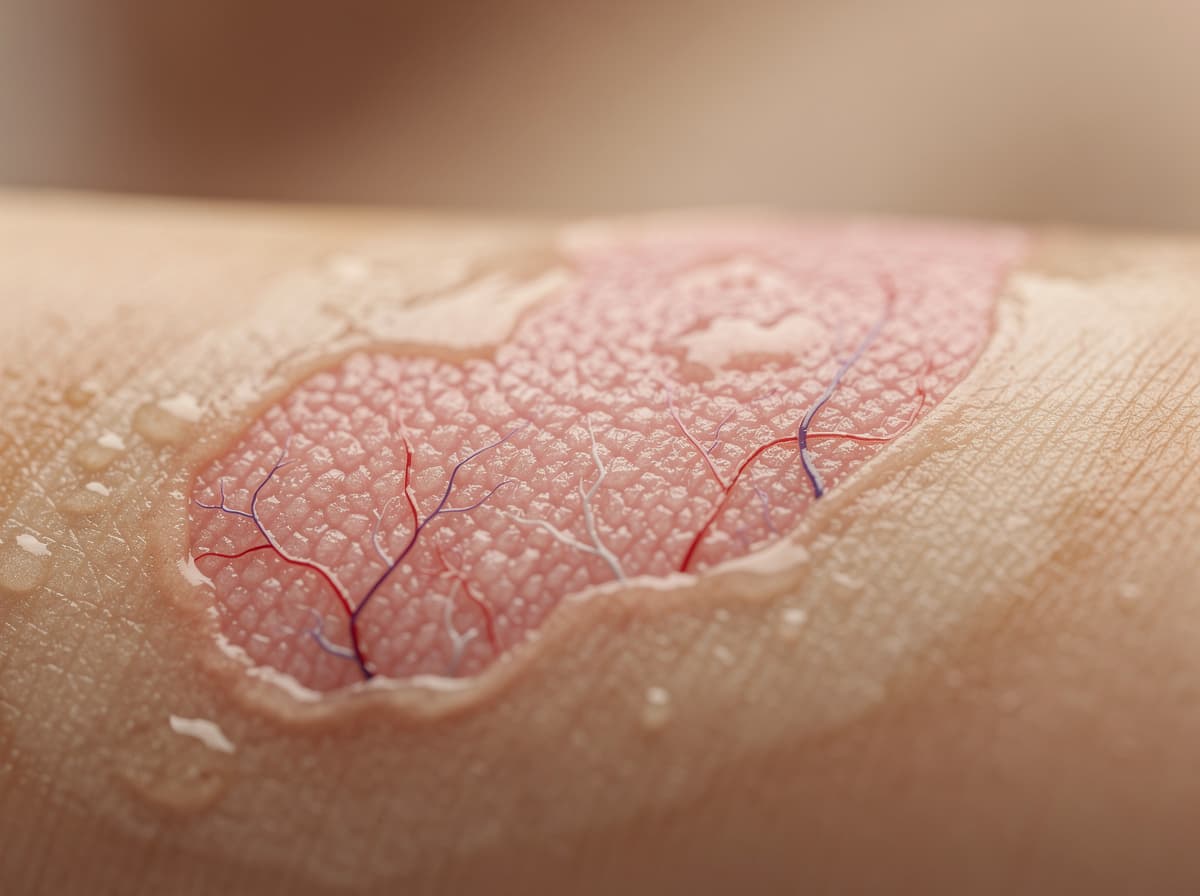
What does LL-37 peptide do once it is free? It destroys bacteria by physically tearing their outer membrane apart. The peptide's positive charge draws it toward the negatively charged phospholipids that coat most bacterial membranes, and its amphipathic helix buries one face into the lipid layer while the other stays exposed to water. Enough copies accumulating in one spot bend the membrane into a pore, and that pore lets ions and cell contents leak until the microbe collapses. This is a blunt, physical mechanism, not a lock-and-key interaction with one receptor, which is part of why what LL-37 peptide does works against such a wide range of bacteria, fungi, and even some enveloped viruses.
Mechanism · membrane disruption
LL-37 moves from membrane contact to pore formation to bacterial lysis
A stepwise view of how one peptide embeds in, destabilizes, and finally tears open a microbial membrane without binding a single protein target.
LL-37 also binds FPR2 and P2X7 receptors to recruit and activate immune cells#
Beyond rupturing membranes, LL-37 doubles as a signaling molecule that calls in immune cells. It binds formyl peptide receptor 2 (FPR2, also called FPRL1) on neutrophils and monocytes, a signal that has been shown to delay neutrophil self-destruction and extend the window those cells have to fight infection. It also engages the purinergic receptor P2X7, which is tied to inflammasome activity and cytokine release. Together, these receptor interactions mean LL-37 does more than kill microbes directly; it also recruits reinforcements, shapes how long those reinforcements survive, and nudges nearby tissue into an inflammatory state. That dual action, direct killing plus receptor signaling, is central to both its usefulness and its capacity to cause problems in the wrong context.
Preclinical research links LL-37 to faster wound closure and new blood vessel growth#
Animal and cell-culture studies tie LL-37 to two separate steps in tissue repair: keratinocyte migration and new vessel formation. In one widely cited study, researchers demonstrated that human cathelicidin activates keratinocyte migration in culture, and that delivering the peptide gene to excisional wounds in diabetic mice improved re-epithelialization and granulation tissue formation. Separate work using skin electroporation of an hCAP-18/LL-37 plasmid in a hindlimb ischemia model found increased blood perfusion and higher expression of angiogenic signals such as VEGF and SDF-1. These findings sit entirely in animal and cell models. Preclinical data points toward a repair-promoting role for LL-37, but preclinical results do not automatically translate into a reliable effect once a peptide reaches human skin.
The only completed human wound trial delivered LL-37 through gene therapy, not peptide injection#
The single completed LL-37 trial that used gene delivery, rather than an injected or topical peptide, targeted melanoma tumors, not open wounds. That phase I/II study, NCT02225366, injected LL-37-encoding plasmid DNA directly into cutaneous metastases and tracked antitumor immune activity, not wound closure. The actual human wound evidence looks different: a phase IIb trial in 148 patients with venous leg ulcers applied synthetic LL-37 peptide topically twice weekly, and a separate randomized trial tested LL-37 cream in diabetic foot ulcers. Neither of those wound studies used gene transfer. The evidence stage, in short, splits cleanly: one completed human gene-therapy trial exists for cancer, and a handful of completed human peptide trials exist for chronic wounds, with no trial combining the two approaches.
Excess LL-37 is implicated in psoriasis and other autoimmune skin flares#
Too much LL-37 in the wrong cellular context turns a defense peptide into a trigger for autoimmune inflammation. LL-37 psoriasis research traces back to a landmark 2007 study showing that the peptide binds fragments of self-DNA released by dying skin cells and smuggles that DNA into plasmacytoid dendritic cells, where it activates receptor TLR9 and drives a burst of interferon-alpha production. That mechanism, first described in Nature, is now considered central to LL-37 psoriasis pathology. Follow-up work extended the same logic to self-RNA, where LL-37 engages TLR7 in dendritic cells and TLR8 in myeloid cells, amplifying the same inflammatory loop through a second nucleic acid route.
LL-37 bound to self-DNA or self-RNA can trigger an interferon cascade#
This cascade is distinct from the membrane-killing mechanism described earlier, and it runs through immune receptors rather than a bacterial target. Dying keratinocytes release fragments of their own DNA and RNA, and LL-37's positive charge condenses those fragments into dense complexes that would otherwise go unnoticed by the immune system. Once a plasmacytoid dendritic cell takes up that complex, the nucleic acid reaches an endosomal compartment where TLR9 or TLR7 is waiting, and the cell responds by pumping out interferon-alpha. That interferon surge is associated with the inflammatory signature seen in psoriatic lesions and, per some of the same review literature, in related skin and connective-tissue conditions.
Mechanism · autoimmune signaling
Self-DNA bound to LL-37 turns a skin alarm into an interferon surge
A second, distinct pathway from bacterial killing: LL-37 converts the body's own genetic debris into a trigger for autoimmune inflammation.
Researchers are testing LL-37 and its analogs against antibiotic-resistant bacteria#
Because LL-37 kills through physical membrane disruption rather than a single molecular target, it is harder for bacteria to evolve resistance against it, which is why researchers keep returning to it as a template for new antimicrobials. Review literature on infected and biofilm-forming wounds describes LL-37's activity against multiple Gram-positive and Gram-negative pathogens, including strains that no longer respond well to standard antibiotics. A separate 2025 review of cathelicidin structure and function notes that cyclic and dimeric analogs have been engineered specifically to resist the rapid protease degradation that limits natural LL-37 in the body. None of this work has produced an approved antimicrobial product. It remains a preclinical research direction, built on the observation that membrane-disrupting peptides sidestep the resistance mechanisms bacteria use against conventional antibiotics.
Early oncology research shows LL-37 can promote or suppress tumor growth depending on context#
LL-37's role in cancer depends heavily on which tumor type and tissue compartment is studied, and the data run in both directions. On one hand, intratumoral LL-37 reduced tumor growth in mouse melanoma models through a mix of direct cell killing and enhanced antitumor immune activity, a finding that supported moving into the human trial NCT02225366. On the other hand, separate research on melanoma biopsies found that LL-37 expression rises with tumor stage and that the peptide can stimulate pro-angiogenic factors that help tumors invade surrounding tissue. A broader review of LL-37 in cancer describes this as context-dependent, with the same molecule acting as either an antitumor agent or a tumor-promoting signal depending on cancer type, dose, and route of delivery. Neither direction has been resolved into a settled clinical answer.
LL-37 holds no FDA approval for any human indication#
As of 2026, no FDA-approved product anywhere contains LL-37, for any condition. The agency's public list of substances reviewed for compounding under Section 503B, maintained on FDA.gov, tracks which bulk substances outsourcing pharmacies may legally use, and LL-37 does not appear among the substances FDA has accepted for that list. That absence matters because it means LL-37 cannot legally be compounded into a prescription product under that pathway either. Every human trial discussed in this guide, the venous leg ulcer studies, the diabetic foot ulcer study, and the melanoma gene-therapy trial, was conducted as investigational research, not as a path to a marketed product. The lack of LL-37 FDA approval is not a temporary gap waiting to close; it reflects how early the human evidence base still is. Readers weighing regulatory status against the research summarized in this guide may find Klarovel's disclosures useful for understanding how that status shapes what can and cannot be claimed.
What you can buy as LL-37 is sold as a research chemical, not a regulated drug#
Outside the clinical trials already described, LL-37 circulates commercially labeled strictly for laboratory use. Suppliers sell it as a research chemical, with purity certificates and no claim of human application, because that is the only legal framing available given the lack of LL-37 FDA approval. Nothing about that labeling implies safety or efficacy for self-administration; it simply reflects where the substance sits in the regulatory pipeline. Klarovel does not sell or stock LL-37 or any other peptide. Its membership gives members tools and reference material, nothing more, and any decision about sourcing a research compound rests entirely with the individual and the supplier they choose.
Reported LL-37 side effects come from research settings, not controlled clinical trials#
Reported LL-37 side effects include local redness, itching, and mild irritation at application sites in wound trials, plus flu-like symptoms after intratumoral injection. Laboratory studies also document cell damage at high concentrations. No controlled trial has systematically tracked long-term safety, so the full side-effect profile remains incompletely mapped.
The venous leg ulcer trial reported that its highest dose arm, 3.2 mg/mL, produced more frequent and more severe local reactions than the lower doses, a pattern the trial authors tied to a bell-shaped dose-response curve rather than a simple more-is-better relationship. LL-37 side effects documented in the melanoma gene-therapy trial included typical injection-related reactions at the tumor site. None of these studies followed participants long enough to rule out delayed immune effects, and given LL-37's documented role in triggering interferon responses, that gap matters. Readers tracking inflammatory or immune markers around LL-37 exposure may want to start with Klarovel's bloodwork guide to understand which baseline panels are worth establishing first, and its contraindications guide before considering any immune-activating peptide at all.
High local concentrations of LL-37 become cytotoxic to human cells in lab studies#
LL-37 does not distinguish perfectly between microbial and human membranes once its concentration climbs high enough. Research on atherosclerotic plaques found that LL-37 has been shown to be cytotoxic to vascular smooth muscle cells at concentrations the peptide reaches naturally in diseased tissue. Separate work on leukocyte membranes found that LL-37 concentrations can exceed 1 mg/mL in psoriatic skin lesions, compared with far lower levels in healthy tissue, and that the peptide selectively damages the membranes of cells already under stress. This concentration-dependent toxicity is consistent with LL-37's blunt, physical killing mechanism: a peptide that works by physically disrupting membranes cannot fully tell a bacterium from a human cell once local levels get high enough.
No published evidence supports LL-37 for fat loss or weight management#
LL-37 weight loss claims circulating online have no basis in the published trial record. Every completed human study of LL-37, wound healing trials and the melanoma gene-therapy trial alike, measured skin repair or antitumor response, not body composition, appetite, or metabolic markers. No peer-reviewed trial has tested LL-37 for weight management in any form, injected, topical, or otherwise. The LL-37 weight loss narrative appears to borrow credibility from unrelated peptide categories, such as GLP-1 receptor agonists, that do have controlled trial data for weight change. LL-37's biology, an antimicrobial and immune-signaling peptide with no known metabolic receptor target, gives no mechanistic reason to expect an effect on fat mass, and no study has looked for one.
Online protocols use topical, subcutaneous, or intradermal routes without clinical consensus#
There is no single accepted route for LL-37 outside the completed trials, and protocols circulating online diverge sharply from each other. The human trials that exist used topical cream or solution applied directly to a wound surface, or intratumoral injection under clinical supervision, neither of which maps cleanly onto the subcutaneous or intradermal routes described in informal online protocols. Deciding when to take LL-37 peptide, and through which route, is not something any completed trial has standardized, because no trial tested a general-purpose dosing schedule outside its specific wound or tumor context. Anyone evaluating when to take LL-37 peptide based on an online protocol is relying on anecdote, not controlled data, and should understand that the reconstitution and handling steps those protocols assume are a separate skill set; Klarovel's reconstitution guide covers that process in general terms, though it does not fill the gap in dosing evidence specific to LL-37.
LL-37 cost varies widely because no standardized product or dose exists#
LL-37 cost differs enormously from one supplier to the next because there is no regulated reference product to anchor pricing against. A compound sold only as a research chemical, with purity and concentration set independently by each manufacturer, will naturally show wide price swings. LL-37 cost also reflects the peptide's relative synthesis difficulty and its lower sales volume compared to better-known research peptides. Because no dose has been validated for general use, cost-per-dose comparisons are not meaningful in the way they might be for an approved product with a fixed, FDA-reviewed concentration.
LL-37 clears the bloodstream quickly, but its tissue effects may last longer#
How long do peptide injections last for LL-37 specifically? No published study has measured a precise plasma half-life, but the available evidence points to rapid clearance. A 2025 review of cathelicidin pharmacology describes LL-37 as rapidly degraded by host proteases and serum-binding factors, which limits how long free peptide circulates after it reaches the bloodstream. Tissue-level effects appear to outlast that circulating window: the venous leg ulcer trial dosed participants only twice weekly and still measured a healing difference across the following days, which only makes sense if the peptide's downstream effects on cell migration and vessel growth persist well beyond its own presence in the tissue. So how long do peptide injections last in a meaningful sense for LL-37: the molecule itself, briefly; its biological footprint, apparently longer, though no trial has mapped that gap with hard numbers.
Schematic · clearance vs tissue effect
Plasma LL-37 falls fast while tissue effects persist longer
No study has published exact LL-37 half-life figures, so this curve shows only the direction of the mismatch between clearance and lingering tissue activity.
The evidence stage of each LL-37 claim should guide how much weight you give it#
Every claim about LL-37 sits at a different point on the evidence ladder, and conflating those stages is where most of the overstated benefits online come from. The membrane-killing mechanism is backed by decades of in vitro and structural work. The wound-healing signal has preclinical animal support plus a handful of completed human peptide trials with mixed results. The gene-therapy delivery route has exactly one completed human trial, and it targeted cancer, not tissue repair. The autoimmune and interferon mechanisms are well documented in human tissue samples but have not been turned into a therapeutic intervention. Weight loss has no human or animal evidence at all. Readers comparing LL-37 to other innate-immune-derived peptides will find a similar pattern with KPV, another peptide built on preclinical-stage evidence; Klarovel's KPV guide walks through that comparison in more detail. The honest summary is not that LL-37 is proven or disproven. It is that each specific claim about it needs to be checked against its own evidence stage, not against the peptide's reputation as a whole.
LL-37 rewards careful reading, not quick conclusions#
LL-37 is one of the better-documented peptides at the mechanistic level and one of the thinnest at the human-trial level, and both of those facts are true at once. Research suggests its membrane-disrupting killing mechanism and its receptor signaling are solid, repeated findings. Human trial evidence stays limited to wound healing and one cancer study, with no completed research on weight loss, no FDA approval, and no settled dosing standard. Readers who want to understand where a given peptide sits on that evidence ladder, LL-37 or otherwise, can start with Klarovel's peptide calculator and how membership works, or go ahead and create an account to track the research as it develops.
Frequently asked questions
Keep reading
Kisspeptin Peptide: What Human Trials Show About HPG Axis
Kisspeptin peptide switches on the brain's reproductive axis. See what human trials actually show about LH timing, testosterone, and dosing limits.

Wegovy Pill: How It Works, How to Take It, and Results
The Wegovy pill is semaglutide 25 mg taken daily, FDA-approved for weight loss in December 2025. How to take it, how well it works, and how it compares.
5-Amino-1MQ Guide: What the NNMT Evidence Actually Shows
5-Amino-1MQ is sold for fat loss, but every published result is preclinical. Read the NNMT mechanism, the circulating dosing range, and its FDA status.