

73% of people on Wegovy report a gastrointestinal side effect, mostly nausea, diarrhea and vomiting, and 4.3% stop taking it because of one. Most episodes are short (a median of 8 days for nausea, 3 for diarrhea and 2 for vomiting), and constipation is the exception, lasting a median of 47 days. Most writing calls Wegovy side effects mild and temporary without saying how long temporary is; the pooled trial data answers it in days.
Key takeaways#
- 73% of people on Wegovy report a gastrointestinal side effect, and 4.3% stop taking it because of one. Those two numbers are usually quoted apart, and together they are the whole story.
- Median duration: nausea 8 days, diarrhea 3 days, vomiting 2 days. Individual episodes are short.
- Constipation is the exception at a median of 47 days, roughly six times longer than nausea, and its prevalence plateaus rather than declining.
- Side effects concentrate during dose escalation and taper after roughly week 20, which is when the 2.4 mg maintenance dose is reached.
- Hair loss is on the FDA label: 3% on Wegovy 2.4 mg versus 1% on placebo in adults (about 4% of women), and 5.8% on the 7.2 mg dose. It is neither a myth nor a sign something has gone wrong.
- The 7.2 mg dose (Wegovy HD, approved March 2026) adds one effect worth knowing: dysesthesia, an altered or painful skin sensation, reported by 22% of patients on 7.2 mg versus 6% on 2.4 mg.
Wegovy and Ozempic are the same molecule at different doses#
Both are semaglutide. Ozempic is licensed for type 2 diabetes at up to 2 mg weekly; Wegovy is licensed for weight management at a usual maintenance dose of 2.4 mg weekly, with a 7.2 mg option (Wegovy HD) added in March 2026. The side-effect profile is the same family of effects, and the higher maintenance dose is why the weight-management trials report them more often.
That matters for searching. Most published "Ozempic side effects" data at weight-management doses is in fact Wegovy trial data, because that is where the 2.4 mg evidence was generated. Klarovel covers the brand split separately in Ozempic versus Wegovy.
One note for readers in Norway: Ozempic is reimbursed there only for type 2 diabetes, and Wegovy is the semaglutide product marketed for weight management.
How often each side effect actually occurs#
From the Wegovy prescribing information, pooled across the adult weight-management trials. N = 2,116 on Wegovy 2.4 mg against 1,261 on placebo.
| Side effect | Wegovy 2.4 mg | Placebo |
|---|---|---|
| Nausea | 44% | 16% |
| Diarrhea | 30% | 16% |
| Vomiting | 24% | 6% |
| Constipation | 24% | 11% |
| Any gastrointestinal reaction | 73% | 47% |
| Severe gastrointestinal reaction | 4.1% | 0.9% |
Read the last two rows together. Nearly three quarters of people report something, and about one in twenty-five reports it as severe. Research has shown 99.5% of these events were non-serious and 98.1% mild to moderate.
Beyond the gut, the label lists abdominal pain (20%), headache (14%), fatigue (11%), dyspepsia, dizziness, bloating, belching, flatulence, reflux and gastroenteritis among reactions occurring in 5% or more of adults on 2.4 mg. Hair loss (3%) and dysesthesia (2%) sit just below that line at 2.4 mg.
How long they last, which is the part usually left out#
This is the number that answers the question most people came with. From a pooled analysis of STEP 1 to 3:
| Side effect | Median duration on Wegovy | On placebo |
|---|---|---|
| Vomiting | 2 days | similar |
| Diarrhea | 3 days | similar |
| Nausea | 8 days | similar |
| Constipation | 47 days | 35 days |

Constipation is the outlier and it is not close. Nausea resolves in about a week. Constipation runs closer to seven weeks, and while the prevalence of nausea, diarrhea and vomiting peaks around week 20 and then falls, constipation plateaus around week 10 and stays. Studies have shown this is consistent with the way GLP-1 receptor agonists slow gastric motility, which is also part of how the drug works.
The practical reading: if you are three weeks in and still nauseated every day, that is outside the median and worth raising with a prescriber. If you are constipated at week six, that is squarely within what the trials describe.
Who actually stops taking it#
Reported rates of "side effects" sound alarming until you look at how many people they drive off the drug.
- 6.8% discontinued for any adverse reaction, against 3.2% on placebo.
- 4.3% discontinued specifically for a gastrointestinal reaction, against 0.7% on placebo.
- The individual drivers were nausea (1.8%), vomiting (1.2%) and diarrhea (0.7%).
- A further 12.5% reduced the dose or paused temporarily rather than stopping.
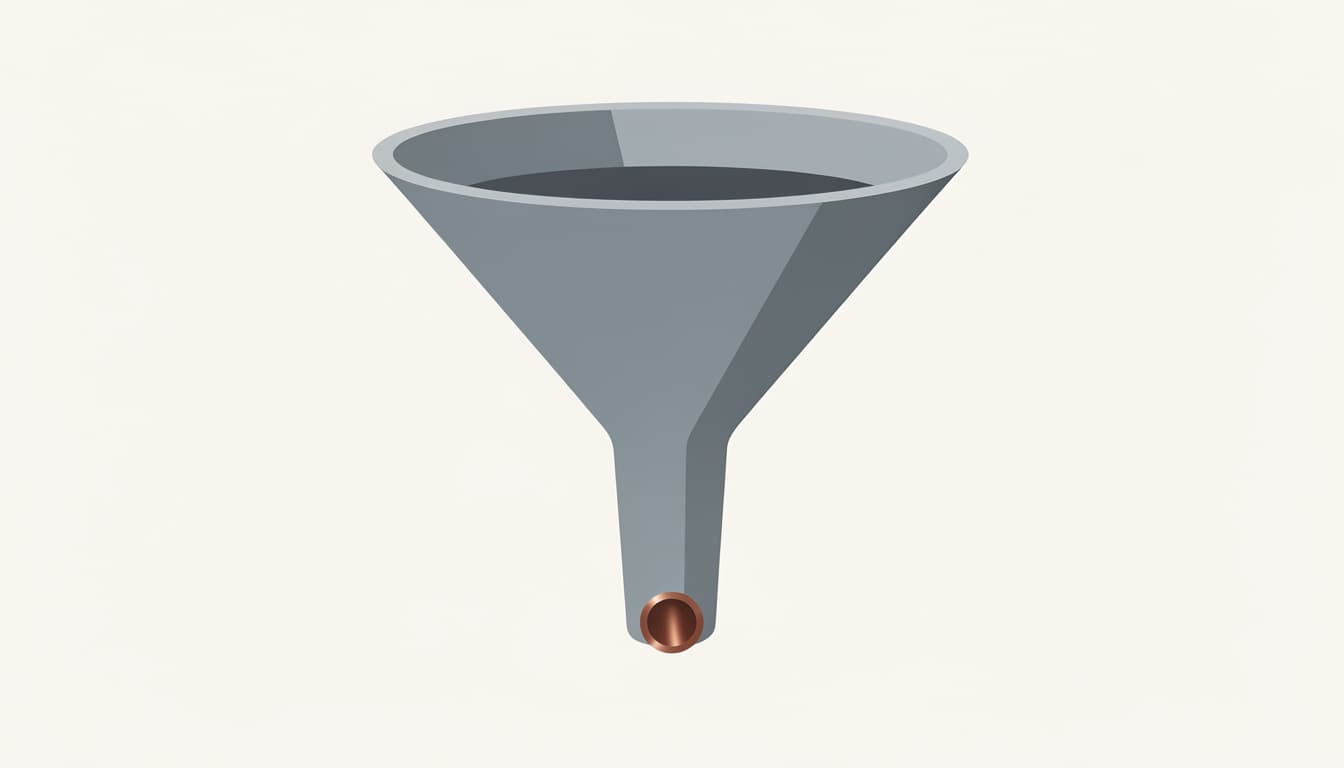
So 73% feel something, about 1 in 8 adjusts the dose, and about 1 in 23 stops. Most discontinuations happened during escalation rather than at the maintenance dose.
Worth one caveat on generalizing those figures. In the much larger and longer SELECT cardiovascular trial, which ran 17,604 patients with existing cardiovascular disease, discontinuation for adverse events was 16.6% against 8.2% on placebo. An older, sicker population on the same drug stopped it far more often, and the weight-management trial figures should not be read as the ceiling.
The ones that are not gastrointestinal#
Hair loss is on the label. In adults on 2.4 mg it was reported by 3.3% versus 1% on placebo (4% of women, 0.9% of men), and by 5.8% on the 7.2 mg dose, per the current label. The label notes these reactions were associated with weight reduction. Rapid weight loss from any cause is associated with telogen effluvium, a shedding phase that typically reverses, so the mechanism is not necessarily the drug acting on hair directly. Either way, someone searching whether semaglutide causes hair loss deserves the straight answer: it is a labeled reaction, not a rumor.
Gallbladder disease is more common, and not only because of the weight loss. Cholelithiasis was reported by 1.6% of Wegovy-treated adults against 0.7% on placebo, and cholecystitis by 0.6% against 0.2%. The label makes a point that is easy to miss: the excess held even after accounting for the degree of weight loss. Rapid weight loss alone does not explain it.
What the 7.2 mg dose adds. In the two 72-week STEP UP trials behind Wegovy HD, dysesthesia (tingling, burning or painful skin sensation) was reported by 22% of patients on 7.2 mg, 6% on 2.4 mg and 0.3% on placebo, and it rose with dose and blood levels. Among those affected, about a quarter had the dose reduced, and most whose dose was reduced or paused recovered; nausea (39% vs 35%) and vomiting (22% vs 16%) also ran a little higher than on 2.4 mg. Discontinuation for adverse reactions was 5% on both doses.
Alcohol is not a labeled interaction, and that is not the same as no effect. There is no contraindication, but many people report reduced desire for alcohol on GLP-1 receptor agonists, and that observation is now itself under study. Alcohol is also a gastric irritant, which is unlikely to help during escalation.
The tablet does not trade side effects for convenience#
Wegovy now exists as a daily tablet as well as a weekly injection, and the obvious hope is that swallowing it is gentler than injecting it. The trial numbers do not support that.
OASIS 4, which tested the 25 mg oral dose against placebo over 64 weeks, reported gastrointestinal adverse events in 74.0% of the tablet group against 42.2% on placebo. The injection figure on this page is 73%. Those are different trials with different populations and are not a head-to-head comparison, so the right reading is not "the tablet is 1% worse". It is that both land in the same range, and nothing in the data suggests the oral route avoids the GI burden.
What does change is the shape of the schedule rather than the profile.
Daily instead of weekly. A missed tablet is a smaller event than a missed injection, and the recovery differs. That is a question for a prescriber rather than a chart.
The administration rules are part of the dose. The tablet is taken on an empty stomach with no more than 4 ounces of water, swallowed whole, with at least 30 minutes before eating, drinking anything else, or taking other oral medicines. Those conditions are what the absorption data assumes. Taken with food, it is no longer the dose the label describes.
The escalation is shorter. Three steps over 90 days against four over roughly sixteen weeks. Since GI effects concentrate during escalation rather than at the maintenance dose, a shorter ladder is not automatically an easier one.
The dose figures themselves are on a completely different scale, 1.5 to 25 mg daily against 0.25 to 2.4 mg weekly, which the Wegovy pill dosage chart sets out in full. And there is now more than one semaglutide tablet in circulation, covered in the Ozempic pill explained.
What the numbers add up to#
Wegovy's side-effect profile is common, mostly short-lived, concentrated in the escalation window, and severe in a small minority. The figure worth carrying is not 73% and not 4.3% alone, but the distance between them: most people feel something, most of it passes within days, and few people stop.
The two facts that surprise readers are that constipation behaves completely differently from the rest, and that hair loss is a labeled reaction. Both are in the primary sources and neither is widely reported.
For the dosing schedule these effects track against, see the Wegovy complete guide and its titration chart. For how semaglutide compares with the rest of the class, see peptides for weight loss. Complete the Klarovel questionnaire to see what the engine recommends from a full health profile rather than from a side-effect list.
Frequently asked questions
Keep reading
Buying Peptides in Norway: Customs and Legal Reality
Norwegian law bans mail-order medicinal products. Here is what Tollvesenet actually seizes, which peptides are on the doping list, and how to stay compliant.

Peptide Drug Interactions: What Research Actually Shows
Peptide drug interactions remain understudied. Here is what current research suggests about GLP-1 agonists, GH secretagogues, and repair peptides.

Peptide Bloodwork Panel: The Baseline Labs That Matter
A research-grade guide to peptide bloodwork panels: which markers to draw, when to retest, and how to read IGF-1, lipase, and metabolic shifts safely.